
VEMC-Blogs

7 Effective Ways to Improve your Air Piping Design

Air Piping
Air Piping

Have you discovered recently that you are not getting the most from your compressed air systems? Air compression systems need a lot of investment. So, if they are not performing at their optimum, there’s a need to investigate further.

One of the usual suspects in the case of inefficient compressor systems is the air piping design within the system. Often, improving it can go a long way in boosting the efficiency of your air compressors. This also ensures that the tools within your compressor are getting adequate air to function optimally.

Having problems with air supply? These are some effective ways you can improve the air piping design and make your air compressor systems more efficient:

1. Eliminate quick couplings – Quick couplings, despite their benefits, can increase the chances of leakage. You should avoid using them, except when you require a fast and easy disconnect of the hand tool or paint gun. In all other scenarios, connecting your machine to a hard pipe or a flexible connection with a hose pipe should be more than enough. 

2. Consider the pipe length – The length of airflow directly impacts the pressure in your machines. The longer the airflows, the more significant the pressure drop. Hence, pipe length should be an important factor for consideration when optimizing your piping design. Understanding your compressed air needs and aligning pipe length accordingly can be beneficial in making your system more efficient. 

3. Evaluate the pipe diameter – Pipe diameter too plays an important role in determining whether your systems are receiving adequate air or not. Consider this — will you draw enough air into your lungs from a straw as compared to without it? In the same way, the pipe diameter should be big enough to ensure adequate air flow into the systems. Trying to pass high-volume compressed air through a small diameter pipe can be detrimental. The high velocity can cause more friction and lead to a significant loss in air pressure. This would be reason enough to choose a pipe with an appropriate diameter after careful consideration. 

4. Reduce piping elbows – Nothing affects air pressure as much as piping elbows. Those sharp changes in direction severely impact air pressure. So, fewer the elbows, the better. If you must use piping elbows, the long radius elbows are a better choice. This is because they cause lesser friction than the short radius ones and hence, lead to lesser pressure drops. 

5. Check the size of components – Ensure that you don’t overlook the size of your components when optimizing your piping design. When the filters, valves, regulators, and quick connections, are appropriately sized, they improve the airflow in your systems significantly. When they are undersized, airflow gets restricted and consecutively, pressure is reduced. It’s also important to avoid quick connect couplings as much as possible since they lead to considerable pressure drops. 

6. Eliminate leakage – Testing regularly for leakage in your compressed air systems is a must to ensure their optimal functioning. The most common material used for piping is PVC and PVC pipes become brittle with usage. In comparison, aluminium and copper pipes leak less. Aluminium also has the added advantage of not rusting or scaling. This helps keep your air compressor system clean. The common phrase “a stitch in time saves nine” applies here — repairing the smallest of leaks can save you a fortune in annual repair costs. 

7. Consult air compressor experts – It may not be possible for you to know all the nitty-gritties of your piping designs. Thankfully, there are air compressor experts, like VEMC, who can help prevent unnecessary breakdowns or repair expenditures. 

With these tips, you can successfully get the most out of your air compressor systems. An efficient compressor system can help save money and time, while offering smoother airflow. 

For your reference, here’s a chart to guide you in choosing the right pipe length and diameter for your compressed air systems: 

Source

VEMC is ISO 9001:2015 certified and a pioneer in the field of electromechanical engineering products, allied equipment, and services. With more than 72 years of industry experience, we provide best-in-class solutions and customised support in this field. We are the authorised dealers of ELGi air compressors. Contact us at +919819907445 and we would be happy to help you determine the right air compressor for your needs.

5 Reasons Why It Is Worth Investing In Solar For Companies

Solar power is becoming increasingly popular among companies in India. With the country becoming a proponent of solar energy globally, India’s total installed solar energy capacity has increased 19.3 times in the last 8 years. Many organisations are considering investing in solar energy and with good reason. For them, it’s a win-win situation. Energy costs make up for a large proportion of expenses for businesses, both big and small, and hence, cost-efficiency is always a critical goal. There is also the need to be socially responsible and include sustainability in brand ethos. Solar energy helps them meet most of these goals.

So, if you are considering making the switch to solar energy, it could be absolutely worth it.

5 reasons why solar energy is worth investing in

1. Reduced overhead expenses – Going the solar route can help companies save huge on energy costs. Since most of the things in a workspace, such as computers and electrical equipment, run on power, solar energy can help reduce dependency on erratic energy sources. The fluctuating prices of non-renewable fuels too will not affect you. You can let solar energy take over the majority of your existing energy sources. This way, you have more control over the quantity and cost of energy. 

2. Dependable power supply – Power outages are not uncommon in India and unreliable power supply can create interruptions in business. With solar power, you can expect a reliable and stable power supply. India’s total land area gets about 5,000 trillion kWh with most parts receiving around 4-7 kWh per sq. m. per day. Hence, with solar panels in place, you can generate sufficient solar energy to run your operations. 

3. Ease of maintenance – Installing solar panels in your workspaces can be an efficient and one-time investment. They are made from durable materials and can be long lasting. You can rely on expert solar panel EPC companies, such as VEMC, to help assess your energy requirements, check the available installation area, confirm the budget, and install the solar panels accordingly. 

4. Long-term savings – Solar energy helps save costs in the long run. You will need to make a one-time investment for the installation. Post that, you can start enjoying the returns on your investment. The maintenance costs are not exorbitant either. 

5. Sustainable and ideal for CSR – Investing in solar energy can help save the environment. You will be able to invest in a clean energy source, cause less pollution, and reduce your dependency on fossil fuels. Solar power also makes for a good investment to meet your corporate social responsibility (CSR) goals. This can help you stand out to your customers and investors as a green company with low carbon footprint. 

VEMC is a well-established solar EPC company in Mumbai and a pioneer in the field of electromechanical engineering products, allied equipment, and services. VEMCO Solar is a market leader in solar solutions — be it solar panel installation, procurement, commissioning, net metering, or electrical connections. If you are looking for solar panel installation in Mumbai or solar O&M, please reach out to us at +91 98199 07445, and we will be happy to provide you with customized support and services.

4 Interesting Ways Compressed Air Is Used

Beyond the traditional applications, air compressors are used for, there are several unique ways in which compressor systems can be used. The amazing feats your air compressors are capable of are sure to leave you surprised! These are unconventional arenas, further away from the traditional applications such as in the manufacturing, pharmaceutical, and food and beverage industries. 

It can, in fact, help power some of the most ambitious projects of human beings. Looking beyond conventional uses can help you realise the true power of your air compressors

Let’s look at 4 such unconventional applications: 

1. Artificial Snow – If you think all sky-high hills are natural, think again. Organic, white, and fluffy snow is not as easy to procure. However, they can surely be created artificially. Compressors are an indispensable tool to achieve this. The huge machines that create lofty hills of artificial snow depend on water from compressed air at the right temperature and humidity. And voilà, you have snow on demand!

2. Projects by NASA – Air compressors also help power space shuttles at the International Space Station (ISS). Two of the most important applications of compressors are to launch space shuttles and help sustain human life in space. 

For example, the speed required by space shuttles to escape the Earth’s atmosphere is around 25,000 mph. This feat is achieved by compressors along with turbine engines. Without compressed air to increase pressure and deliver liquid hydrogen and liquid oxygen to the engines, they won’t be able to combust fuel effectively and provide adequate energy.

Also, human life in space is heavily dependent on compressors. Compressed gas, when introduced into space, and decompressed and mixed, can act as a precious source of oxygen. From a real-life example, when ISS was launched into space, compressors were used as the primary backup for oxygen. 

3. Roller Coasters – Not just scientific inventions; compressors find applicability in recreational activities as well. The air brakes, safety gates, special effects, and launch systems are all powered by compressors. This helps create an other-worldly experience for people and makes it safer for them. Compressed air in roller coasters also help them run on water and reduce the need for electricity. 

4. Trains – Can you imagine the speed at which freight and passenger trains run? It’s around 220 mph. However, the essential thing is not only to move at that speed, but also to stop when required. This is where air compressors come in. The brakes in these trains run on compressed air. Compressors provide the force which closes pads onto the discs and blocks the wheels, thus forcing the trains to stop. 

Air Compressors for your Industry

Compressor systems can be a powerful resource for any industry. It can help bring to life some of the biggest ideas of mankind. Whichever industry you are in, compressors can help power your operations. Vijay Engineering and Machinery Company (VEMC), an ISO 9001:2015 certified company, is a pioneer in the field of electromechanical engineering products, allied equipment, and services. With over 72 years as an ELGi air compressor dealer, we can guide you to best use compressors for your industry. Feel free to call us on +91 98199 07445 and we would be happy to assist you.

3 Must-Have Compressed Air System Accessories That Improve Performance

Have you ever observed your air compressor functioning closely? Their entire efficiency depends on receiving the right proportion of clean and dry air, at the right locations and at the right pressure. When your compressor system is not working properly, it means that at least one or two of its components are malfunctioning — perhaps a blocked filter, lack of an air dryer, or an unsuitable pressure regulator. 

It’s commonly said that your air compressor system is as powerful as its weakest component. Hence, it’s extremely important to ensure that your compressor has all the right accessories it needs to function properly. They not only help boost your energy efficiency, but also reduce frequent needs for maintenance. The ultimate benefit is the long life of your compressors. 

In this blog, we list out 3 of the most important accessories you need to keep your air compressors healthy and running: 

1. Compressed Air Regulator – Air compressors run on extensive amounts of energy, with requirements varying for different applications. So, when the energy input goes wrong, it can damage the components in the system. It also means wasted energy and ultimately, wasteful expenditure. 

Choosing the right pressure helps you zero in on the right energy requirement for your compressor. If your compressor runs at a higher pressure than is required, you may be wasting energy, while adding unnecessary pressure on the other parts such as hoses and fittings. This will lead to wear and tear and reduce the lifespan of your compressor. If a component is best suited to work at 100 psi and you operate it at 150 psi, it will not perform optimally.

Regulators help solve this problem by regulating pressure from the machine and aligning it with specific components based on different pressure requirements. 

2. High-performing Filter – Your compressor systems don’t necessarily have clean air inside them. They may contain several particles, aerosols, and vapours often found in the natural environment. 

A powerful filter can help remove contaminants from the compressed air and hence, it’s important to choose the right filter. For some applications, specialized oil-removing filters will make more sense; for others, dust and pre-filters may be apt. Before zeroing in on a filter, be sure of the requirements. 

Most choices usually boil down to coalescing filters, vapour removal filters, and dry particulate filters. 

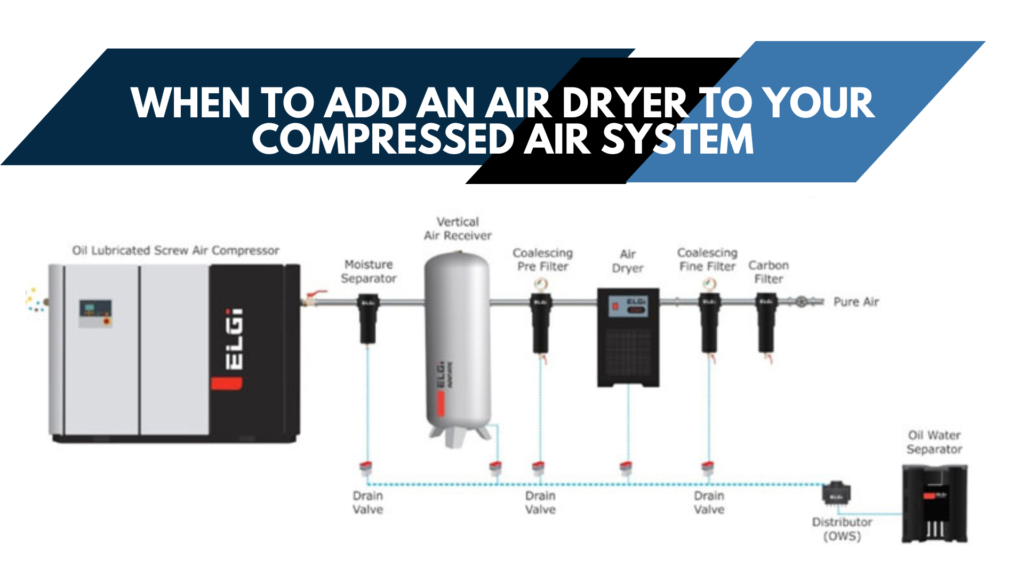
3. Air Dryer – It’s natural for compressors to create lots of vapour while it is operating. This stagnant moisture can damage compressors and their parts. Especially in the case of metal or machinery, the presence of moisture leads to mould growth. This is not an ideal condition for any application, particularly in hospitality or healthcare. Blocked air pipes, stuck air cylinders, and rusted transmitters can also lead to increased maintenance and repair costs. 

Air dryers can help eliminate moisture before they reach the tip of the tool. Air dryers such as desiccant dryers use silica gel, activated alumina, or molecular sieves to de-vapourise air. You can choose from the desiccant and refrigerated dryers for your compressor systems. 

Getting the Right Parts

Your compressor system is heavily dependent on tools and accessories. Hence, the right tools are critical for compressors to function efficiently. Even if you are using a good air compressor, you may not get the desired performance if the quality of the parts is sub-par.

VEMC is a pioneer in the field of electromechanical engineering products, allied equipment, and services. You can order ELGi air compressors, air filters for compressors, and other accessories by calling us on +91 98199 07445. At VEMC, our technicians can guide you about the right parts, routine maintenance, and repairs, to help you get the most out of your compressor systems.

Solar Power: An End Date to Your Energy Bill

Most of us are used to paying our energy bills as per our electricity usages. The bills come in monthly, we pay them, and wait for the next one the following month. That’s how the cycle continues. If you analyse your energy bills over the years, you’ll observe a trend that indicates increased expenditure. But most of us don’t give much thought to it since we don’t have an alternative.

Solar Panel ROI: Calculate How Much Your Solar Savings Will Be

What if you could find an alternative that could help you beat the rising energy costs? Imagine having a lifelong subscription to clean energy and renewable energy independently. Solar power installation can help in achieving this successfully. 

Understanding your current energy model

Presently, we are dependent for our energy needs and whenever we need to consume power, we have to pay for it. This infinite cycle exists for the ones who haven’t made the shiftto solar power yet. 

The issue with this model is that your source of energy is dependent on you paying your bills indefinitely. However, the price of electricity hasn’t remained the same. For example, duringthe period 2009-2020, the cost of state electricity has doubled—from INR 3.4 per kwh to INR 6.15 per kwh.

Add to this the present state of climate change where the summers are getting hotter. This will inevitably lead to significant increase inenergy needs. On a global scale, the demand for energy will rise, leading tofurthersurge in the price of fossil fuels. 

Hence, as long as you’re tied to the present model, your energy costs are likely to go up exponentially. 

So, what’s the alternative?

Thankfully, there’s an alternative to this — switching to solar power. The shift can give youmore control overyour monthly energy payouts. A solar power consultant, like VEMC, can help design a system that perfectly fits your budget and needs. With the right guidance and the right model, solar power can be easily accessible foryou. This will be an investment that would offervalue in the long-term and will be sustainable too. 

Once you move to the new system, your current usage will be mapped and any additional usage will be accounted for. Once these are done, you won’t have to pay a monthly bill anymore. You would simply pay for the usage once the sun sets down and you can waive that off to by investing in a solar battery. 

VEMC is a well-established solar EPC company in Mumbai and a pioneer in the field of electromechanical engineering products, allied equipment, and services. VEMCO Solar is a market leader in solar solutions — be it solar panel installation, procurement, commissioning, net metering, or electrical connections. If you are looking for solar panel installation in Mumbai or solar O&M, please reach out to us at 8976951701 / marketing@vemc.co.in, and we will be happy to provide you with customized support and services.

Debunking myths about compressed air systems

A lot misperceptions continue to prevail around the functioning of air compressor systems. Whether it is about their safety or the tasks that can or cannot be accomplished with them, myths around their use galore!

In this blog we debunk 7 of these major myths.

Myth #1: Compressed air can be used for cleaning dust and dirt from work spaces.

There is a fundamental difference between your domestic vacuum cleaner and an air compressor. The former sucks in air while the latter pushes compressed air with great pressure and speed. Quite clearly therefore, using compressed air for cleaning an office space will only result in dispersing the dust or waste particles wider across the floor, rather than being sucked in and vanishing into the compressor system.

A pneumatic tool operated using air compressors could in fact accelerate the debris particles and shoot them into people’s eyes causing severe injuries. Besides the particles could also land in vents, outlets and machinery causing blockage or damage.

Myth #2: To make the best of part–load performance, the most optimal solution is a variable–speed drive.

While it may make for a great sales pitch, air compressors cannot really be adjusted to suit different operations simply by changing their speed.Variable-speed air compressors are not really helpful across a wide range of applications.

Myth #3: Oil carryover is accelerated in variable speed drives.

In reality, speed drive has no impact on the rate of oil carryover. It is only aided by two factors, that is, heat and low pressure. In fact, lowering the air flow makes things more efficient by reducing the speed in the separator.

Myth #4: Flow controllers are unnecessary on air compressors with variable–speed drives.

Flow controllers enable most systems to offer their best possible performance simply by providing greater stability and pressure consistency. Flow controllers can even be beneficial in systems with VSD’s as they can help optimise their performance.

Myth #5: Synthetic air compressor fluids are all identical.

None of the synthetic air compressors are made of a hydrocarbon base. However, that’s where their commonality ends. These fluids otherwise vary drastically in terms of how they impact the performance of the compressors. Air compressor fluids are usually made of the PAO and PAG base stocks and each could have a unique effect on an air compressor system.

Myth #6: Aftermarket replacement parts are just as good as original parts sold by the manufacturer.

Original manufacturers design replacement parts keeping in mind the nuances of design and performance of your system. On the other hand, buying generic parts from an aftermarket manufacturer could impact efficiency, longevity and safety of the system. It is highly recommended to buy replacement parts from the original manufacturer only.

Myth #7: Compressed air is generally impure.

As opposed to common perception, compressed air is highly clean. In case there are any impurities, these exist due to poor maintenance, dirt in the ambient air or dirty system tubes and tanks.

VEMC is an ISO 9001:2015 certified company with more than 72 years of industry experience. We provide best-in-class solutions and customized support and are the authorised dealers of Elgi air compressors. Contact us at +919819907445 and allow us to help you determine the right air compressor for your needs.

Renewable Energy vs. Nonrenewable Energy – The Key Differences

One of the most widely discussed topics today on news media and social media is climate change, and how we ought to reduce our impact on the environment. We mostly hear experts advocate the use of renewable over non-renewable energy which release less or no emissions. In this blog, let’s try to understand the main differences between renewable and non-renewable energy sources.

What are renewable and non-renewable sources of energy?

A renewable source of energy is available to us infinitely. It replenishes itself naturally without any human intervention. This energy comes from natural sources such as sun, wind, water and organic matter.

On the other hand, non-renewable sources of energy are available in limited amounts. Once consumed, these cannot get replenished at all, or get replenished over a very long geological timeframe, in effect making them unavailable for repeated human use. Most of these are fossils such as coal, petroleum and natural gas.

Difference between renewable and non-renewable energy

  • Non-renewable energy sources such as fossil fuels are created over millions of years under the surface of the earth or the ocean bed. But our rate of consuming this energy source is so fast that we could run out of them within a generation or two. Renewable energy comes from those sources of energy which cannot be exhausted even after repeated human use.
  • Non-renewable energy has a negative impact on the environment. Burning fossils leads to emission of carbon-dioxide resulting in the rise of global temperatures and subsequent environmental issues. Renewable energy is easy on the environment as it does not release any harmful gases or substances. On the contrary, by shifting towards renewable energy like wind, solar and tidal, and reducing the reliance on non-renewable fossils, we can slow down climate change and make a decisive move towards sustainable development.
  • Renewable energy has a high upfront cost. This is because the technology used in generating renewable energy like solar and geothermal power is still in its incipient form. With increase in research and development, and manufacturing of equipment in greater volumes in the future, the costs are expected to come down. On the other hand, non-renewable energy sources are comparatively inexpensive in terms of the upfront costs.
  • Infrastructure for renewable energy like solar or wind is not easily accessible especially in developing countries like India. These technologies usually require vast open areas like fields or building terraces to generate useful amount of energy. Such vast spaces and enormous number of panels may not be very economical for developing nations. On the other hand, non-renewable energy is lower on infrastructure costs or area requirements, and can therefore be utilised throughout the world with equity.

As a leading solar EPC company in Mumbai, VEMC has unmatched expertise in the field of electromechanical engineering products, allied equipment, and services. Whether it is solar panel installation, procurement, commissioning, net metering, or electrical connections, we are the leaders in solar solutions. For installation and support, reach out to us at 022 43436655 or mail us at marketing@vemc.co.in. We’ll be glad to offer you our customized support and services.

Keep Your Fire Pumps Ready for Action with Regular Inspection and Testing

Fire pumps come into use in the most dire of situations, that is, when a building or apartment is on fire. They form a highly critical component of your sprinkler systems. As soon as pressure drops on activation of sprinklers, fire fighting pumps are required to maintain the pressure and keep the water flowing. Building owners expect fire pumps to spring into action as soon as fire is detected so that minimum possible damage is incurred. This can only be ensured with regular checks and inspections.

Weekly Inspection & Testing Requirements

A weekly inspection and testing regime is must for both diesel and electrical fire pumps. In case of electrical pumps, this must also include the visual inspection of the pump house and the electrical system powering your pump.

With regard to the pump house, the main thing you need to look for is the temperature. The minimum temperature for both electrical and diesel pumps (with engine heaters) has to be 40 degree F. For diesel pumps without an engine heater, it has to be at least 70 degree F. Use an engine jacket water heater if you are unable to maintain the temperature. Other things to check while inspecting the pump house is whether there is any water pooling on the floor, and whether all the ventilating louvres are functional.

Inspection and testing requirements for the pump and its electrical system

As per the NFPA 25 standard, one of the most important tests for fire pumps is the weekly no-flow or “churn” test. Electric pumps must be run in a no-flow condition for a minimum of 10 minutes and diesel pumps for 30 minutes. In this test, the flow should not exceed 140% of the rated pressure. In case the risk analysis of a pump requires, this test can also be conducted more or less frequently than a week.

Apart from the churn test, some additional weekly tests to be conducted are listed below:

For electrical fire pumps:

  • Ensure the pump suction, discharge and bypass valves are fully open.
  • Look for any signs of leaks in the piping.
  • Check pressure to make sure the suction line pressure is within the acceptable range.
  • Make sure the water inside the suction reservoir is at the proper level.
  • Check if the wet pit suction screens are in place and unobstructed.
  • Make sure the water-flow test valves and hose connection valves are closed.
  • Ensure that the coupling guard is in place.

For diesel fire pumps:

  • Refill the tank if it is lower than two-thirds full.
  • Make sure the controller selector switch is in auto position.
  • Make sure the valve in the fuel supply lines from tank to driver filter or pump system is locked in open position.
  • Ensure all the alarm pilot lights are off.
  • Check if the water-jacket heater is functional.

VEMC is an authorised Kirloskar fire fighting pump dealer and also offers AMC services for pumps. With our thorough experience and unmatched expertise, we resolve diverse issues related to motors, engines and pumps. Feel free to give us a call on 022 43436655 or email us at marketing@vemc.co.in.

Have you got the right remote monitoring system for your pumps?

Having a remote monitoring system for your pumps enables you to keep tabs on various parameters that impact their performance and longevity. These factors include temperature, pressure, power fluctuations, etc. These are also important when it comes to preventive maintenance of the pump. A sudden spurt or drop in a metric may indicate some issue with the pump that warrants your attention. 

An incredible remote monitoring system that can effectively perform all these functions for you is Kirlosmart. Let’s find out what it is and how it makes your life simpler!

What is Kirlosmart?

Kirlosmart is an IoT-based product that helps you monitor the various parameters of your pump remotely, thus turning your conventional pump into a smart pump. These parameters include flow, pressure, vibration, voltage, current, energy consumption etc. Any erratic reading of these metrics may suggest a technical snag or sub-optimal performance of the pump. 

Why go for Kirlosmart?

Apart from the core benefit stated above, Kirlosmart helps convert ordinary pumps into IoT pumps by providing certain additional and allied benefits.

  • Apart from monitoring and analysing faults, it also provides suggestions for tentative actions to be taken if or when these faults arise.
  • It also send SMS or e-mails to the owner with all the relevant data on daily basis. This is crucial to analyse the performance of the pump over a longer time horizon.
  • By monitoring data continuously, it also bolsters your efforts towards predictive and preventive maintenance.

What makes kirlosmart an intelligent RMS?

Kirlosmart represents state-of-the-art technological innovation. It combines the benefits of robust pumping performance and the excellence of Information Technology. All in all, Kirlosmart is the most intelligent remote monitoring system you can come across.

  • It enables you to monitor your pump performance from anywhere.
  • It is the only product that has in-built ethernet and GPRS facility.
  • It allows you to monitor the performance of your pump live on your smartphone.
  • It gives timely information about wear and tear of spare parts, and notifies which ones are due for replacement.
  • The product also includes an in-built field sensor and a web portal.

How does it provide benefits to the customer?

The above given features are a clear evidence of the cutting-edge technology that Kirlosmart represents. The product was a big hit among customers during the pandemic when they could only monitor their pumps locked up from their apartments. 

But even in the post-pandemic world, Kirlosmart is proving immense convenience to customers who cannot afford to physically check in on their pump health every now and then, whether due to hectic work schedules or travelling away for work. 

By acting as an early warning system for imminent defects, it enables the customer to keep an authorised technician in loop for changes in spare parts or other maintenance work, thus reducing any prolonged downtime.

Kirlosmart is an absolute necessity for modern pumps. VEMC, an ISO 9001:2015 company is an authorised Kirloskar dealer that can help you find the best match based on your pumping needs. Feel free to call us on 022 43436655 or email us at marketing@vemc.co.in.

What is pump cavitation? How to get rid of it

What is pump cavitation?

Cavitation is one of the most common issues in centrifugal pumps. Often this surfaces as strange noise, vibration and reduced performance of the pump. Prevention of cavitation is necessary as this may otherwise impact the lifespan of the pump. But before talking about the ways to prevent it, let’s understand what cavitation really is.

What is cavitation?

Cavitation is simply the accumulation of bubbles around the pump impeller. Bubbles are formed in liquids of any viscosity and when these burst inside the pump, high energy shock waves are created inside the pump. This is analogous to the ripples created in a pond when you throw a stone into it. However, with the enormous number of bubbles exploding inside the liquid, cavitation can cause serious erosion of pump components over time.

How does pump cavitation occur?

When the pressure quickly drops below the vapour pressure, bubbles or voids are formed inside the liquid. When the same bubbles experience high pressure, they collapse and create small shockwaves in the process. These shockwaves create tiny holes in the pump components over a period of time. This is called “pitting”.

How to prevent pump cavitation

1. You can prevent pump cavitation most effectively by increasing the pressure upstream from the pump’s impeller. This pressure is called Net Positive Suction Head (NPSH). NPSH can be increased in the following ways:

  • By increasing the water level of the upstream reservoir
  • By adding an inducer to the pump inlet
  • By reducing the flow losses upstream
  • By operating the pump at lower flow rates

2. Even the smallest amount of air going into the pump can cause cavitation. Check and make sure all the joints and connections are sealed perfectly well. Check all the O-rings and any other mechanical seals regularly. Cavitation can also be caused by the bubbles created by a foaming liquid. In such a case, run the pump slower and remove all the contents periodically, including air.

3. Use a booster pump to reduce the pressure on your primary pump. Increase the liquid level around the suction area and if possible, reduce the temperature of the pump, liquid or other components.

Types of cavitation

Let’s try to understand two of the most common types of cavitation, that is, suction cavitation and discharge cavitation.

1. Suction cavitation

Also known as classical cavitation, this happens when the pump is under low pressure or high vacuum conditions. Pressure is dropped instantly when the liquid being pumped enters the eye of a centrifugal pump. Bubbles or cavities are formed near the eye of the impeller which gradually move to areas of higher pressure.

2. Discharge cavitation

This happens when a pump discharge pressure is extremely high or the flow is restricted and cannot leave the pump. This results in majority of the pump fluid getting circulated within the pump. The bursting of bubbles creates intense shockwaves, resulting in premature wear and tear of the impeller.

VEMC is a Kirloskar authorised dealer and deals in swimming pool pumps, submersible sewage pumps, vertical turbine pumps etc. We also offer AMC services for pumps and resolve technical issues. Avail our services by giving us a call on 022 43436655 or email us at marketing@vemc.co.in.

Why powering your industry with solar energy will be the best investment decision you can make?

As we reduce our reliance on fossil fuels and other conventional sources of energy, solar energy is emerging as a leading renewable source. India being a tropical country has enormous potential to tap solar energy. According to the Ministry of New and Renewable Energy, India receives a total of 5000 trillion kwH per year and most parts receive 4-7 kwH per square meter per day.

This can contribute significantly to most sectors of our economy, and a diverse range of industries can benefit from it.

Here are 9 reasons why solar energy can be your best ever investment decision.

1. Reduced electricity bills

You can reduce or completely remove your dependence on the power grid by switching to solar. This can be all the more beneficial in the wake of fluctuating power tariffs and will entail healthy savings for your business. 

2. Renewable energy

Solar being a renewable source of energy, your business will be doing its bit to remove the pressure from non-renewable conventional sources of energy like coal and petroleum. 

3. Increased value of energy-efficiency

The efficiency of solar panels at present is about 15-20% but it can go significantly higher upto 42% in some cases. Overall, with the improvement in the material of the PV panels, and greater research and development, solar energy is bound to become more efficient every passing year.

4. Reduced Carbon emissions

By reducing your reliance on fossils, solar allows you to become an eco-friendly business. This is becoming increasingly crucial not just for the planet but for your own company as well. It will enable you to save on some critical carbon tax going forward and also meet your CSR goals effectively.

5. Easier monitoring of your ROI

After investing in a solar power system, you would want to ensure it is working optimally and getting you healthy returns. Monitoring the output of your solar panels is very easy. A number of companies are already providing services to analyse data related to your solar energy supply and also point out any discrepancies or slack in performance. 

6. Low maintenance costs

Solar panels are by and large a one-time investment. These are hassle-free installations made from durable materials with a life-span of around 25 years and very low maintenance costs.

7. Self-consumption of electricity

The electricity generated by solar panels is utilised on site which keeps the transmission losses at a bare minimum, and reduces or excludes the dependence on the utility grid.

8. Company image

As consumers are becoming increasingly conscious about climate change, they are preferring brands known for having the least impact on the environment. Switching to solar will be an evidence of your commitment towards reducing emissions, making you a favourite among eco-conscious consumers.

9. Stay ahead of the game

Lastly, survival of businesses depends upon how quickly they are able to adapt to changing times and reinvent themselves. By phasing the conventional energy out, and adopting the energy of the future, you can stay ahead in your industry and beyond!

VEMC is a leading solar EPC company in Mumbai and has unmatched technical expertise in the field of solar O&M. For installation and support, call at 022 43436655 or mail us at marketing@vemc.co.in

Success Story : The Supply & Commissioning of Horizontal Split Case Pumps & Valves at BARC

A case study on how we powered the New Mandala water pump house at Bhabha Atomic Research Center (BARC) Anushakti Nagar, Mumbai with our domestic pumpsets including foot valves and accessories.

In 2020, VEMC won the tender to supply equipment and construct a pump house at BARC located in a suburban Mumbai locality called New Mandala, Anushakti Nagar. The purpose of this pump house was to transfer fresh water to the campus at a faster rate. It was a project worth over Rs. 11 lakh and was carried out between July and November 2020. The scope for VEMC was supplying Horizontal Split Case (HSC) pumpsets, valves, foundations, suction and delivery pipeline.

Carrying out the project successfully required tackling each of the administrative, technical and logistical challenges effectively. We started off by taking the requisite permissions from BARC officials and submitting all the relevant documents like medical certificates for fitness and ID proofs of the personnel. Soon after this we got all the construction material supplied to the site to begin the construction on time. Finally, the pump foundation was constructed as per the established BARC guidelines. At each and every step, the progress and quality of the work was inspected by the BARC officials. At our own end, we made sure that each installation was tested minutely for all the functions to leave no room for any technical issues later.

However, the project offered its fair share of formidable hurdles and roadblocks. For instance, the space available for the construction of the pump house was inadequate. We initially decided to overcome this problem by skipping the foundation work altogether which would have enabled us to lay the suction and delivery pipeline. But then we thought against this alternative and instead decided to puncture the wall for laying suction and delivery pipeline. Although the BARC officials were unwilling to proceed with this alternative, we eventually persuaded them and were able to execute it successfully. Apart from this, the foot valve had to be installed at a depth of around 18 feet below the surface which turned out to be rather challenging for the technicians. We also had to carry out core cutting of the water tank for successful installation of the suction line.

Nearly all of these issues required specialised knowledge and skill to handle. Hence we did not shy away from hiring the services of skilled experts to meet these formidable challenges, even at the cost of some extra funds. To ensure the safety of our staff and technicians throughout the project, they were provided with hand gloves and safety shoes for every task.

The project was not just a commercial undertaking for the team but also a great learning experience. The key takeaway was right planning followed by careful execution. Planning tools like bar charts came in handy and helped execute the project smoothly. Thanks to this pump house project, the BARC has realised some substantial benefits, most important of which is saving time and effort that was earlier dedicated to storing water in the tanks.

For more information on any of our other products, feel free to contact us on +91 98199 07445. We will do our best to introduce the right solution based on your requirements. As one of the leading valve dealers of the country, VEMC provides unmatched piping and supply service to its clients. VEMC is ISO 9001:2015 certified and a pioneer in the field of electromechanical engineering products, allied equipment, and services.

5 Benefits of Regularly Changing Compressed Air Filter Elements

The enormous amount of focused energy that compressed air is able to produce is used for a wide-ranging set of activities. These include drilling, combustion, metalwork, filtration, chemical processing and moulding. While performing these operations, plenty of dust and particulate matter could get stuck in the compressor. In the short run, this impacts the performance of the compressor, while over the longer horizon, it could even affect its longevity due to wear and tear, or over-exertion. Air filters are therefore necessary to maintain the health and performance of your compressor.

Why air filter elements must be changed regularly

A compressed air filter typically has a coalescing filter, a dry particulate matter element or both. The former is used to pull and cohere water droplets or oil from the air while the latter helps trap dry particulates and microbes. Both use removable filter element. This is because in a typical industrial setup, these filters are under serious strains due to pressure and temperature fluctuations, corrosive chemicals, varying air speeds, extreme humidity etc. These require a change at regular intervals.

Let’s understand in detail the 5 benefits that arise from regular replacement of air filter elements:

1. Safety

By regularly changing your air filter, you’re committing yourself to particulate-free air on the factory floor. This will protect your employees from exposure to dust particles and microbes, where air compressors are being used for air conditioning. Besides this will also prevent accidents from unwanted overheating or system malfunction.

2. Cost control

By replacing the air filters regularly, you are reducing the risks of sudden breakdown and also the costs associated with it, such as downtime and expensive repairs. A saturated air compressor which doesn’t have a fresh air filter has to work harder causing more wear and tear, and also consuming more energy.

3. Efficiency

By enabling easy flow of air through your compressor, fresh air filter elements are highly useful in ensuring greater efficiency and productivity in your facility. The adsorption dryer beds for instance can work with maximum efficiency when new filters are used.

4. Boosting longevity

Filters are generally manufactured using borosilicate glass. If air filters are not replaced regularly, this glass can develop tiny holes causing accelerated contaminant flow. Overall, the regular replacement of air filters can help in ensuring longevity of the compressor system as it helps avoid the mechanical wear and tear, damages and corrosive glitches.

5. Reassurance

Having regularly replaced air filters can give you and your employees a sense of reassurance that the environment of the factory floor is safe, and the air is healthy to breathe. There are also lesser chances of breakdown and downtime, which could be a cause of serious business loss.

VEMC is ISO 9001:2015 certified and a pioneer in the field of electromechanical engineering products, allied equipment, and services. With more than 72 years of industry experience, we provide best-in-class solutions and customized support in this field. We are the authorised dealers of Elgi air compressors. Contact us at +919819907445 and we would be happy to help you determine the right air compressor for your needs.

Piston Vs. Rotary Screw Air Compressors: Which One to Choose?

Air compressors have diverse applications for a wide range of businesses. Two of the most popular and widely used compressors are piston and rotary screw compressors.

Piston, also known as reciprocating compressors, find maximum use in the automotive service industry such as gas stations, tire stores, and general service shops, due to their price and availability. However, rotary screw compressors can be a suitable alternative as they offer better performance and require less space.

In this blog, we will understand the various points of difference between the two to help you choose the right one for your business.

Duty Cycle and Flow

Duty cycle is the time (calculated in percentage) a compressor can operate for, without getting overheated or causing wear. The allowable duty cycle for most piston compressors is 60-70%. Most piston compressors are oversized to allow space for the compressor to shut down and cool off due to the high temperatures. This may cause capacity problems during peak operating hours.

Modern rotary screw compressors, on the other hand, have in-built aftercoolers with huge surface area and robust fans to bring down the air temperature leaving the compressor.

Oil Carry-over

When pistons, cylinders, valves, and rings experience wear and tear, the quantity of air goes down. This causes more lubricating oil to seep through the piping into the usable parts. This is known as carry-over.

Piston compressors usually pass more oil than rotary screw compressors. Rotary screw compressors experience lesser oil seepage in comparison because the rotors don’t come in contact with each other and hence, don’t wear. Moreover, the compressor fluid also acts as non-wearing sealant that’s captured, filtered, cooled, and recirculated.

Energy Efficiency

For service industries that use compressors as large as 30 hp, energy efficiency becomes an essential factor to save electricity costs.

Piston compressors usually deliver 3-4 cfm per hp whereas rotary compressors deliver 4-5 cfm per hp. This shows that rotary compressors deliver more air per unit of input energy.

Maintenance

The maintenance of piston compressors is more expensive than screw compressors because the frequency of maintenance and the number of spares is significantly higher for piston compressors. However, the advantage is that any semi-skilled technician or worker will be able to perform the maintenance service.

Noise Levels and Vibration

Traditional piston compressors produce a lot of noise and vibration. As a result, they are mostly placed in separate rooms or outside. However, the immediate ecosystem directly affects a compressor. For example, a hot and humid room will increase the compressor temperature, reduce its shelf life and make it difficult to remove moisture and oil from compressed air.

Rotary compressors cause lesser noise and vibration. They also don’t need to be kept in separate rooms or sealed to the floor, offering more flexibility with their location i.e., well-ventilated areas.

For assistance with deciding on the air compressor that suits your needs the best, please contact us on +919819907445. We would be delighted to help you find the best product or service based on your exact requirements. As one of the leading ELGi air compressor dealers, VEMC provides a comprehensive array of seamless products and services to its clients. A pioneer in electromechanical engineering products, allied equipment, and services in the field, we are also ISO 9001:2015 certified.

How significant is it to evaluate the right financial model for solar power system?

Making the shift to solar power can be beneficial for your business, especially, cost-saving in the long run. However, before you can go green, there are a lot of technicalities to take care of.

When you’re considering shifting to solar power, you’ll find two models in the market: the capital expenditure (CAPEX) model and the operating expenditure (OPEX) model.

In this blog, we will be discussing the two models in detail to help you reach an informed decision.

The CAPEX Model

In this type of financial model, the client approaches VEMC to install a solar pump system on the premises owned by the client. After the commission of the system, the ownership gets transferred to the client and VEMC’s scope ends. Hence, in this type of model, the client pays for the installation of the plant, and the ownership too rests with the client.

Some of the advantages of this model are:

  • The client gets to have complete ownership of the plant and its operation
  • Based on the capacity of the solar plant, the client can save sizeable margins on electricity
  • The client can earn several subsidies and taxes from government bodies, for example, the central finance assistantship (CFA)
  • The client can be partially immune to rising utility electricity prices
  • Industrial and commercial clients can get accelerated depreciation benefits as well

The OPEX Model

In the OPEX model, the investor invests in the project and the client only pays for the power he consumes. The amount of consumption is agreed upon in a contract known as the Power Purchase Agreement (PPA).

What is PPA financing?

The Power Purchase Agreement (PPA) covers the contractual terms of the solar plant and the individual roles of the parties involved. There are usually three parties involved in such a contract – the investor, the installer, and the end client. VEMC is usually the installer for most of the clients. The investor invests in the solar plant and the client buys all or part of the power they want to consume at a rate that can be fixed or changed with time. VEMC installs the plant as per the investor and client’s approval and takes ownership of the plant’s annual maintenance. The client can terminate the agreement after payment of a certain amount or buy the plant directly from the investor.

Choosing the right financial model for your solar investment will depend on your budget and purpose. If you have the resources to take all the responsibility for the installation and maintenance of the plant, CAPEX will be a good choice. But if you don’t have dedicated personnel to look after the systems, OPEX can be a good option for you.

VEMC is a well-established solar EPC company in Mumbai and a pioneer in the field of electromechanical engineering products, allied equipment, and services. VEMCO Solar is a market leader in solar solutions — be it solar panel installation, procurement, commissioning, net metering, or electrical connections. If you are looking for solar panel installation in Mumbai or solar O&M, please reach out to us at +91 98199 07445, and we will be happy to provide you with customized support and services.

Buying a Swimming Pool Pump? Here’s what you need to know.

A swimming pool pump passes the pool water through the pool filter and sometimes, a pool heater. A pump is effective when it passes the water through the filter once every 12 hours, also known as a turnover. The effectiveness is measured through the size of the pool and the turnover rate. It’s calculated by the gallons per minute (GPM) of water it passes.

What is a swimming pool pump?

It’s a common part of swimming pools that allows you to pump water through a filter, circulate it, and keep it clean. It’s an important component that ensures the pool water is cool and safe to bathe in.

Do I need a swimming pool pump?

Traditionally, pools were cleaned manually with skewers. While this helps remove large particles such as leaves, it’s not as effective for cleaning fine debris such as dust, sand, or dirt.

A swimming pool pump is ideal for cleaning the debris at the bottom of the pump to render the pool water dirt-free and ideal to swim in.

What are the key parts of a swimming pool pump?

A basic swimming pool pump has five different components. They are:

  • Water inlet – This allows the pool water to enter the pump. The diameter of the inlet directly impacts the flow rate of the pump.
  • Water outlet – The water exits the pump from this area. Again, the diameter of the outlet dictates the flow rate of the pump.
  • Filter – This is an important component since it captures the debris before the water re-enters the pool. They are also known as sand filters or strainer baskets and are built from high-quality, erosion-resistant plastic.
  • Impeller – This spinning component propels the water out of the pump. It sucks the water into the impeller face and expels the water through the side.
  • Motor – The motor is the force that runs the impeller, draws water into the pump and again out of it.

How does a swimming pool pump work?

At the heart of a good swimming pool is an effective pump. It circulates the water, disperses the treatment chemicals, and prevents the water from stagnating. It achieves this by pulling the water through an inlet, passing it through the filter, and then pumping it back out into the pool.

Why choose Kirloskar KPP swimming pool pump?

This is a high-performing pump that works silently.

It can be used for water circulation and filtration in various systems such as:

  • Hot springs
  • Swimming pools including suction sweeping
  • Spas
  • Water treatment systems
  • Landscape fountains
  • Light industries

Some of the features are:

  • Built-in thermal overload protection
  • Pre-filter basket
  • Quiet operation
  • Self-priming
  • Lightweight and compact design
  • Mechanical seal
  • Dynamically balanced rotating parts

For more information on swimming pool pumps, motors, and other equipment, feel free to contact us at +91 98199 07445. We would be glad to assist you in finding the best match for you based on your requirements. VEMC is an Kirloskar authorised dealer of pool pumps and provides end-to-end project management services to its clients. We are ISO 9001:2015 certified and a pioneer in the field of electromechanical engineering products, allied equipment, and services. For inquiries, contact us at marketing@vemc.co.in.

Bird droppings and nesting on solar panels causes loss of efficiency by 2%. Ways to avoid it.

Solar panels are an effective and environment-friendly choice for your commercial spaces, to cut down on harmful pollution. It not only helps the planet, but also enables energy efficiency in a sustainable way. However, since the panels are located outdoors, they may attract various outside elements such as birds. Many people are unsure about whether solar panels hurt birds or vice versa.

In this blog, we discuss in detail about the relation between birds and solar panels.

Solar panels and birds

It’s common knowledge that birds may find a good nesting ground in your solar panels and may soil your gutters and panels. What should you do about it? And how should you save the birds as well as your solar panels? Let’s learn more.

Do solar panels benefit birds?

This may come as a surprise but solar panels benefit birds. Currently, some of the primary sources of electricity are oil, coal, and natural gas. They cause carbon pollution in the air and form a layer in the atmosphere that traps heat. Apart from various issues around global warming, it also leads to birds having to find alternate homes. Hence, solar panels are beneficial to birds as they provide them and their young ones with warmth and shelter.

Do solar panels attract birds?

Yes, just like windows, solar panels have reflective surfaces, and such surfaces usually attract birds.

Do solar panels kill birds?

Solar panels don’t kill birds directly. The reflective surfaces of solar panels often resemble water when birds are flying above. The appearance of moving water makes them dive, which eventually hurts them and sometimes, kills them.

Do birds harm solar panels?

Solar panels usually have space between the panels and the roof that allow wiring and ventilation. The shade in these spaces is ideal for birds to take shelter.

Birds usually build nests here as well as leave droppings, broken eggs, etc., under the space available. When these accumulate, they reduce the airflow needed to prevent solar panels from overheating. They can also flow into the gutter, leading to blockages and foul odour. It can also collect on top or under the panels and it’s best to get them cleaned as soon as possible.

Damages from small critters

Critters such as squirrels also enjoy nesting under solar panels and may cause harm by chewing on exposed wires. This could lead to solar panels running inefficiently.

Another serious concern is that nesting materials such as leaves, debris, and chewed wires may also lead to fire hazards.

How to protect your solar panels from birds?

There are several options to look at:

  • Wire Mesh – Building a wire mesh along the edges of the solar panel can help stop birds from nesting under the system. This can also prevent the accumulation of debris.
  • Roof Spikes – They don’t necessarily hurt birds but make it difficult for them to nest.
  • Plastic Predators – Decoys are a great way to ward off birds since they can’t differentiate between artificial and real birds. Like scarecrows, an owl with a swivel head can be very effective in scaring birds away.

Importance of Solar O&M

These various factors can affect the output of your solar panels. Proper operation and maintenance can enhance the lifespan of these systems. The frequency and degree of maintenance of solar systems depend on the installation type, system configuration and location of the setup. You can choose from various types of services such as performance monitoring, preventive maintenance, and corrective maintenance.

VEMC, one of the top solar companies in Mumbai, provides solar panel installation in Mumbai. VEMC provides solar O&M services as well. For more information on our products and help selecting the right ones for you, contact us at +91 98199 07445. With over 72 years of industry experience, VEMC is ISO 9001:2015 certified and a pioneer in the field of electromechanical engineering products, allied equipment, and services.

A Short Guide to Moisture Control in Air Compressor Systems

It’s not uncommon for moisture and condensation to accumulate in your compressed air systems. Hence, you need a solution that can help prevent excess condensation in your compressor, especially if you’re in an industry that demands 100% moisture-free condensed air.

Why does your air compressor contain moisture?

Moisture is a natural by-product of the compression process. It just extracts the moisture that already exists in the ambient air.

Some of the common causes of moisture build-up in compressors are:

  • Equipment damage – When the internal parts of compressors wear out, it leads to moisture build-up. This causes the machine to lose its power to extract air as well as heat up, leading to more moisture build-up.
  • Environmental factors – Humid conditions also cause the machine to take in more moisture leading to more condensation.
  • Pressure on the compressor – When your compressor is strained beyond capacity, it gets heated up further more. This is especially the case with piston compressors, which heat up more when used for longer periods of time.

Why is excess moisture harmful?

Excess moisture hampers the workings of your air compressor. Some of the consequences of excess moisture are:

  • Rust and corrosion – Build-up of water in your compressors can lead to rust in and corrosion of the machine and pipes.
  • Damage to pneumatic controls – The machines that rely on pneumatic controls suffer from severe damage when there is moisture build-up inside them. That can result in rust and scale build-up.
  • Rapid wear and tear of production equipment – Moisture can cause the lubrication inside compressors to wash away. This causes metal components to wear away faster.
  • Damaged circuits and in-line filters – In-line filters help clean particles and oil from your compressor. Moisture increases pressure in the machine and reduces the filter’s efficiency.
  • Contamination – Moisture can damage end products, valves, and motors. It can easily contaminate solvents, lubricants, and food products.

How to eliminate excess moisture from your compressor?

Some of the solutions you can try out to remove moisture build-up from your compressors are:

  • Install an air dryer – An air dryer works in tandem with an air compressor to remove moisture. There are four common types of air dryers: refrigerated dryers, desiccant dryers, membrane dryers, and deliquescent dryers.
  • Get a piping system – Piping systems are one of the most cost-efficient systems. In these setups, the metal pipes absorb heat to bring down the air temperature, and can be a good solution for office buildings.

VEMC is ISO 9001:2015 certified and a pioneer in the field of electromechanical engineering products, allied equipment, and services. With more than 72 years of industry experience, we provide best-in-class solutions and customized support in this field. We also provide a number of ELGi air compressors. Contact us at +919819907445 and we would be happy to help you determine the right air compressor for your needs.