
VEMC-Blogs

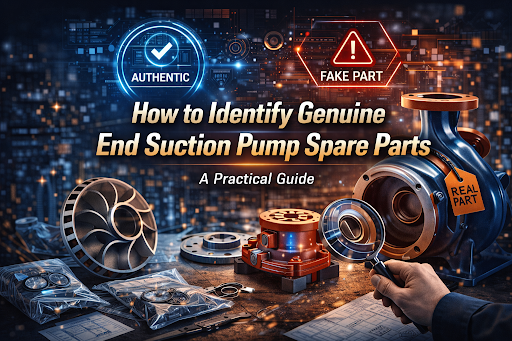
How to Identify Genuine End Suction Pump Spare Parts: A Practical Guide

Identify Genuine End Suction Pump Spare Parts

Introduction

In industrial pumping systems, the reliability of your equipment depends not just on the pump, but also on the quality of its spare parts. Using substandard or counterfeit components can lead to frequent breakdowns, reduced efficiency, and increased maintenance costs.

When sourcing end suction pump spares, it is essential to ensure authenticity to maintain performance, safety, and long-term durability.

Why Choosing Genuine Spare Parts Matters

Genuine spare parts are specifically designed to match the original pump’s specifications, ensuring:

  • Proper fit and compatibility 
  • Optimal efficiency and performance 
  • Longer service life 
  • Reduced risk of unexpected failures 

On the other hand, non-genuine parts may compromise system reliability and increase lifecycle costs.

Key Components in End Suction Pumps

Understanding the main components helps in identifying genuine parts:

  • Impeller 
  • Shaft 
  • Mechanical seal 
  • Bearings 
  • Wear rings 
  • Casing 

Each component plays a critical role in maintaining pump efficiency and performance.

How to Identify Genuine End Suction Pump Spares

1. Check Manufacturer Branding & Markings

Genuine end suction pump spares will have:

  • Clear brand markings 
  • Part numbers 
  • Manufacturer logos 

Avoid parts with missing or unclear identification.

2. Verify Material Quality

Authentic parts are made from specified materials such as:

  • Cast iron 
  • Stainless steel 
  • Bronze 

Poor-quality or lightweight materials are often a red flag.

3. Inspect Packaging

Original spare parts typically come in:

  • Proper branded packaging 
  • Sealed boxes with labels 
  • Documentation or certificates 

Damaged or unbranded packaging may indicate counterfeit products.

4. Ensure Dimensional Accuracy

Genuine parts are manufactured to precise tolerances. Any mismatch in size, fitting, or alignment can affect performance.

5. Purchase from Authorized Sources

Always source end suction pump spares from:

  • Authorized dealers 
  • OEM-approved suppliers 
  • Trusted service providers 

This ensures authenticity and warranty support.

6. Check Certifications & Documentation

Look for:

  • Quality certifications 
  • Test reports 
  • Compliance with industry standards 

7. Compare Performance & Finish

Genuine parts typically have:

  • Smooth finishing 
  • Proper machining 
  • Consistent quality 

Rough edges or poor finishing may indicate inferior manufacturing.

Risks of Using Non-Genuine Spare Parts

Using counterfeit or low-quality spares can lead to:

  • Reduced pump efficiency 
  • Increased energy consumption 
  • Frequent failures and downtime 
  • Damage to other pump components 
  • Higher maintenance and replacement costs 

Best Practices for Spare Parts Management

  • Maintain a record of original part specifications 
  • Follow preventive maintenance schedules 
  • Replace parts proactively rather than reactively 
  • Work with trusted suppliers for consistent quality 

Frequently Asked Questions (FAQs)

1. How can I verify if a spare part is genuine?

Check for manufacturer markings, packaging, certifications, and purchase only from authorized suppliers.

2. Are genuine spare parts more expensive?

While they may have a higher upfront cost, they offer better durability and lower long-term costs.

3. Can non-genuine parts damage my pump?

Yes, they can cause improper fit, increased wear, and even failure of critical components.

4. How often should pump spares be replaced?

Replacement depends on operating conditions, but regular inspection helps identify wear early.

5. Why is dimensional accuracy important in pump spares?

Incorrect dimensions can lead to:

  • Misalignment 
  • Reduced efficiency 
  • Mechanical damage 

6. What are the most commonly replaced pump parts?

  • Mechanical seals 
  • Bearings 
  • Impellers 
  • Wear rings 

7. Where should I buy end suction pump spares?

From authorized dealers or trusted suppliers to ensure quality, compatibility, and warranty.

Ensuring the authenticity of end suction pump spares is crucial for maintaining system efficiency, reliability, and longevity. By following proper identification practices and sourcing from trusted suppliers, businesses can avoid costly downtime and ensure smooth operations.

Investing in genuine spare parts is not just a maintenance decision, it’s a long-term performance strategy.

Quick Tip

Always source end suction pump spares from authorized and reliable suppliers to ensure performance and peace of mind.

Quality spare parts are not an expense, they’re an investment in efficiency, reliability, and long-term savings.

Need help sourcing genuine pump spares? Let’s connect and ensure you get the right parts for your system.
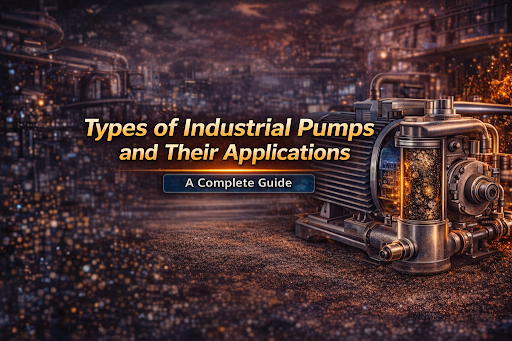
Types of Industrial Pumps and Their Applications: A Complete Guide

Industrial Pumps and Their Applications

Introduction

Industrial pumps play a critical role in moving fluids efficiently across a wide range of applications—from water supply and HVAC systems to chemical processing and power generation.

With multiple pump types available, selecting the right one can significantly impact efficiency, reliability, and operating costs. This is why businesses often rely on experienced industrial pump suppliers for proper selection, sizing, and application support.

What Are Industrial Pumps?

Industrial pumps are mechanical devices used to transfer liquids, slurries, or gases from one location to another by increasing pressure or flow.

They are designed to handle:

  • Clean water 
  • Chemicals 
  • Oils and fuels 
  • Slurries and wastewater 

Main Types of Industrial Pumps

Industrial pumps are broadly classified into two main categories:

1. Centrifugal Pumps

These are the most commonly used pumps in industrial applications. They operate using centrifugal force generated by a rotating impeller.

Common Types:

  • End suction pumps 
  • Horizontal split casing pumps 
  • Vertical inline pumps 
  • Multistage pumps 

Applications:

  • Water supply and distribution 
  • HVAC systems 
  • Irrigation 
  • Fire fighting systems 

Advantages:

✔ Simple design
✔ Low maintenance
✔ Suitable for high flow applications

2. Positive Displacement Pumps

These pumps move fluid by trapping a fixed amount and forcing it through the discharge.

Common Types:

  • Reciprocating pumps 
  • Gear pumps 
  • Screw pumps 
  • Diaphragm pumps 

Applications:

  • Oil and gas 
  • Chemical dosing 
  • Food and beverage processing 
  • High-viscosity fluids 

Advantages:

✔ Accurate flow control
✔ Suitable for high-pressure applications
✔ Handles viscous fluids effectively

Specialized Industrial Pump Types

1. Submersible Pumps

Used for pumping liquids from below ground level.

Applications:

  • Sewage systems 
  • Borewells 
  • Drainage 

2. Diaphragm Pumps

Ideal for handling corrosive or hazardous fluids.

Applications:

  • Chemical industries 
  • Pharmaceutical processes 

3. Gear Pumps

Designed for high-viscosity fluids like oils and lubricants.

Applications:

  • Oil transfer 
  • Fuel handling 

4. Multistage Pumps

Used where high pressure is required.

Applications:

  • Boiler feed 
  • High-rise building water supply 

Key Industrial Applications of Pumps

1. Water & Wastewater Management

  • Treatment plants 
  • Distribution systems 

2. HVAC Systems

  • Chilled water circulation 
  • Cooling towers 

3. Oil & Gas Industry

  • Fuel transfer 
  • Pipeline transport 

4. Chemical & Process Industries

  • Handling corrosive fluids 
  • Dosing applications 

5. Power Plants

  • Cooling water systems 
  • Boiler feed operations 

How to Choose the Right Industrial Pump

Selecting the right pump depends on:

  • Flow rate and pressure requirements 
  • Type of fluid (viscosity, temperature, corrosiveness) 
  • Operating conditions 
  • Energy efficiency 
  • Maintenance requirements 

Working with reliable industrial pump suppliers ensures:

  • Correct pump selection 
  • Long-term efficiency 
  • Reduced operational risks 

Frequently Asked Questions (FAQs)

1. What is the most commonly used industrial pump?

Centrifugal pumps are the most widely used due to their simplicity and suitability for high-flow applications.

2. How do I choose between centrifugal and positive displacement pumps?

  • Use centrifugal pumps for high flow, low viscosity fluids 
  • Use positive displacement pumps for high pressure or viscous fluids 

3. What factors affect pump efficiency?

  • Pump design 
  • Operating conditions 
  • Fluid characteristics 
  • Maintenance practices 

4. Why is proper pump selection important?

Incorrect selection can lead to:

  • Energy losses 
  • Frequent breakdowns 
  • Reduced system performance 

5. What is the lifespan of an industrial pump?

With proper maintenance, industrial pumps can last 10–20 years or more depending on usage.

6. Do industrial pumps require regular maintenance?

Yes. Routine maintenance ensures:

  • Efficient performance 
  • Reduced downtime 
  • Longer equipment life 

7. How can industrial pump suppliers help?

Experienced industrial pump suppliers provide:

  • Technical consultation 
  • Pump sizing and selection 
  • Installation support 
  • After-sales service 

Industrial pumps are the backbone of fluid handling systems across industries. Understanding the different types and their applications helps businesses make informed decisions that improve efficiency and reduce costs.

Partnering with trusted industrial pump suppliers ensures you get the right solution tailored to your operational needs, delivering reliability, performance, and long-term value.

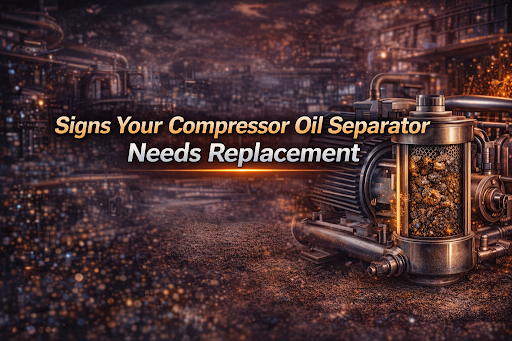
Signs Your Compressor Oil Separator Needs Replacement: A Complete Guide

Compressor Oil Separator Needs Replacement

In compressed air systems, maintaining air quality and system efficiency is critical. One of the most important yet often overlooked components is the oil separator. It plays a key role in separating oil from compressed air, ensuring clean output and protecting downstream equipment.

Over time, however, oil separators degrade, leading to performance issues, higher energy consumption, and potential system failures. Recognizing the early warning signs can help prevent costly downtime.

What Is a Compressor Oil Separator?

A compressor oil separator is a component used in oil-injected air compressors to remove oil from compressed air before it is discharged from the system.

Its main functions include:

  • Separating oil from compressed air 
  • Returning oil back to the compressor for reuse 
  • Ensuring clean, oil-free air output 
  • Maintaining system efficiency 

Why Is Timely Replacement Important?

A worn-out oil separator can lead to:

  • Increased oil carryover 
  • Reduced air quality 
  • Higher energy consumption 
  • Damage to downstream equipment 
  • Increased maintenance costs 

Replacing it at the right time ensures optimal performance and longer compressor life.

Key Signs Your Oil Separator Needs Replacement

1. Increased Oil Carryover

If you notice oil in the compressed air lines or at the outlet, it’s a clear sign the separator is no longer functioning effectively.

2. High Pressure Drop

A clogged separator creates resistance, leading to:

  • Increased pressure drop across the separator 
  • Reduced system efficiency 
  • Higher power consumption 

3. Frequent Filter Clogging

If downstream filters are clogging faster than usual, excess oil may be passing through due to separator failure.

4. Increased Energy Consumption

When the separator becomes inefficient, the compressor works harder—resulting in higher electricity usage.

5. Oil Leakage or Excess Consumption

A failing separator may cause:

  • Higher oil consumption 
  • Visible oil leaks in the system 

6. Poor Air Quality

Contaminated compressed air can impact:

  • Product quality (in manufacturing) 
  • Equipment performance 
  • End-use applications 

7. Unusual Noise or System Stress

Restricted airflow due to a clogged separator can cause the compressor to operate under stress, sometimes resulting in abnormal noise.

What Causes Oil Separator Failure?

Common reasons include:

  • Normal wear and tear 
  • Poor maintenance practices 
  • Operating beyond recommended pressure limits 
  • Use of low-quality oil or filters 
  • High operating temperatures 

Best Practices to Extend Oil Separator Life

  • Follow recommended maintenance schedules 
  • Use high-quality compressor oil 
  • Monitor pressure drop regularly 
  • Replace filters on time 
  • Ensure proper operating conditions 

Frequently Asked Questions (FAQs)

1. How often should an oil separator be replaced?

Typically, oil separators should be replaced every 3,000 to 6,000 operating hours, depending on usage and operating conditions.

2. What happens if I don’t replace a faulty oil separator?

Ignoring replacement can lead to:

  • Increased energy costs 
  • Damage to compressor components 
  • Contaminated air supply 
  • System breakdown 

3. How do I check if my oil separator is clogged?

Monitor the pressure drop across the separator. A significant increase indicates clogging.

4. Can I clean and reuse an oil separator?

No, oil separators are typically not reusable and should be replaced once clogged or worn out.

5. Does oil quality affect separator life?

Yes. Poor-quality oil can lead to faster clogging and reduced separator efficiency.

6. Is oil carryover always due to separator failure?

Not always. It can also be caused by:

  • Overfilling oil 
  • Faulty scavenge lines 
  • Incorrect operating conditions 

7. What are the cost implications of delayed replacement?

Delaying replacement can increase:

  • Energy bills 
  • Maintenance costs 
  • Risk of equipment failure 

The oil separator is a small but critical component in ensuring the efficiency and reliability of your compressed air system. Identifying early warning signs and replacing them on time can save significant costs and prevent operational disruptions.

A proactive maintenance approach ensures:
✔ Clean compressed air
✔ Energy efficiency
✔ Extended compressor life

Noticing any of these warning signs? Consult our experts to assess your system and ensure optimal compressor performance.

Email: marketing@vemc.co.in

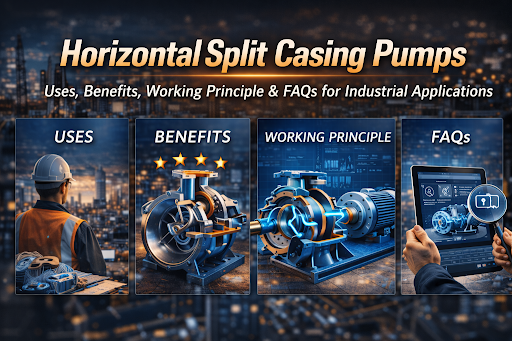
Horizontal Split Casing Pumps: Uses, Benefits, Working Principle & FAQs for Industrial Applications

Horizontal Split Casing Pumps

In high demand industrial environments, pumping systems must deliver consistent performance, high efficiency, and minimal breakdown. This is where horizontal split casing pumps play a critical role.

Known for their robust construction and ability to handle large flow rates with stable operation, these pumps are widely used across industries such as water supply, HVAC, fire protection, and power generation.

For businesses actively searching for horizontal split casing pumps Mumbai, understanding their design, working, and advantages is essential for making the right investment.

What Are Horizontal Split Casing Pumps?

Horizontal split casing pumps are centrifugal pumps featuring a casing that is split horizontally along the shaft centreline. This allows easy access to internal components like the impeller, shaft, and bearings without disturbing the piping system.

Core Components:

  • Double suction impeller 
  • Pump shaft 
  • Bearings & seals 
  • Split casing (upper & lower halves) 

Working Principle

These pumps operate on the centrifugal force principle:

  • Fluid enters the pump through the suction nozzle 
  • The double suction impeller draws water from both sides 
  • Centrifugal force increases fluid velocity 
  • The volute casing converts velocity into pressure 
  • High-pressure fluid exits through the discharge nozzle 

This design ensures hydraulic balance, reducing axial thrust and improving efficiency.

Key Industrial Applications

1. Municipal & Industrial Water Supply

  • Bulk water transfer 
  • Distribution networks 
  • Water treatment plants 

2. HVAC Systems

  • Chilled water circulation 
  • Cooling towers 
  • District cooling systems 

3. Fire Fighting Systems

  • Hydrant systems 
  • Sprinkler systems 
  • High-capacity emergency water supply 

4. Power Plants

  • Cooling water circulation 
  • Boiler feed auxiliary support 

5. Industrial & Process Applications

  • Refineries 
  • Chemical plants 
  • Manufacturing units 

Key Benefits of Horizontal Split Casing Pumps

1. High Efficiency & Energy Savings

The double suction impeller reduces losses and improves efficiency, making these pumps ideal for continuous-duty applications.

2. Easy Maintenance

The top casing can be removed without disturbing the motor or piping, leading to quick inspection and reduced downtime.

3. Long Operational Life

Balanced hydraulic forces reduce wear on bearings and seals, enhancing durability.

4. High Flow Capability

Perfect for applications requiring large volumes of water at moderate heads.

5. Low Vibration & Noise

Ensures stable and smooth operation, even under heavy-duty conditions.

Why Industries Prefer Horizontal Split Casing Pumps in Mumbai

Mumbai’s industrial landscape demands uninterrupted operations and reliable infrastructure. Businesses looking for horizontal split casing pumps in Mumbai benefit from:

  • Proven performance in demanding environments 
  • Availability of skilled service support 
  • Faster spare parts accessibility 
  • Custom-engineered solutions for varied industries 

Selection Criteria: How to Choose the Right Pump

Before selecting a pump, evaluate:

  • Flow rate (m³/hr) 
  • Head (meters) 
  • Type of fluid (clean, corrosive, temperature) 
  • Efficiency requirements 
  • Installation space & alignment 
  • Maintenance accessibility 

Frequently Asked Questions (FAQs)

1. What is the difference between single suction and double suction pumps?

Single suction pumps draw fluid from one side of the impeller, while double suction pumps draw from both sides, offering:

  • Higher flow capacity 
  • Better hydraulic balance 
  • Reduced axial thrust 

2. Why are horizontal split casing pumps preferred for fire fighting systems?

Because they offer:

  • High reliability 
  • Large flow rates 
  • Easy maintenance during emergencies 
  • Compliance with fire safety standards 

3. Are horizontal split casing pumps energy efficient?

Yes. Their hydraulically balanced design and optimized impeller reduce energy losses, making them highly efficient for long-duration operations.

4. What maintenance is required?

Routine maintenance includes:

  • Bearing lubrication 
  • Seal inspection 
  • Alignment checks 
  • Periodic performance monitoring 

5. Can these pumps handle dirty or chemical fluids?

They are primarily designed for clean or slightly contaminated liquids, but with proper material selection, they can handle certain chemicals.

6. What is the typical lifespan of these pumps?

With proper maintenance, horizontal split casing pumps can operate efficiently for 15–25 years or more.

7. How do I select the right horizontal split casing pumps in Mumbai?

Work with a trusted supplier who offers:

  • Application engineering support 
  • Proper pump sizing 
  • After-sales service 
  • Genuine spare parts availability 

Horizontal split casing pumps are a cornerstone of industrial fluid handling systems, offering unmatched efficiency, reliability, and ease of maintenance.

For industries exploring horizontal split casing pumps Mumbai, investing in the right solution ensures:

  • Operational efficiency
  • Reduced downtime
  • Long-term cost savings

Need help selecting the right pump for your HVAC or water system? Connect with our experts for the right solution.

Email: marketing@vempl.co.in

Solar Plant Design Impact on ROI

Solar Plant Design Impact

When a solar plant delivers less energy than projected, the problem typically starts at the design stage, not with the equipment or weather. While many businesses focus on module quality and inverter brands, the real difference between a profitable solar installation and a disappointing one often lies in design decisions made months before commissioning. Understanding how design choices affect your returns helps ensure your solar investment performs as expected.

Tilt Angle, Orientation, and Shading: The Foundation of Energy Yield

Module orientation and tilt angle determine how much sunlight your panels capture throughout the year. A deviation of just 10-15 degrees from the optimal angle can reduce annual energy generation by 5-8%. In regions like Mumbai, the ideal tilt is typically between 18-20 degrees, but many installations simply follow the roof slope without proper analysis.

Shading is equally critical. Even partial shading on a few modules can create significant mismatch losses across entire strings. Parapet walls, nearby structures, or rooftop equipment that seem minor during site visits can cast shadows during peak generation hours. A thorough shading analysis considering seasonal sun paths protects your energy yield and prevents localised hotspots that accelerate module degradation.

Module and Inverter Selection: Matching Technology to Application

Choosing the right modules goes beyond wattage ratings. Temperature coefficients, degradation rates, and warranty terms directly affect long-term performance. Modules with lower temperature coefficients maintain better efficiency in hot climates, protecting your returns over 25 years.

Inverter selection requires matching capacity, MPPT (Maximum Power Point Tracking) ranges and efficiency curves to your specific plant design. Oversized inverters waste capital while undersized units cause clipping losses during peak generation. The DC-to-AC ratio must be optimised through simulation based on your site’s irradiance profile, not generic rules of thumb.

Understanding PR and CUF: Measuring Design Quality

Performance Ratio (PR) and Capacity Utilisation Factor (CUF) are the metrics that separate well-designed plants from average ones.

PR measures how much of the theoretically available solar energy your plant converts into usable electricity. A well-designed plant typically achieves 75-82% PR, accounting for real-world losses like soiling, temperature, inverter efficiency, and cable losses. Poor design choices in cable sizing, string configuration or cooling can drop PR by 10-15 percentage points, directly reducing your returns.

CUF indicates how much energy your plant generates compared to its rated capacity over a year. While CUF depends partly on location, design factors like orientation, shading management and inverter sizing significantly influence it. Higher CUF means more units generated per kilowatt installed, directly improving your payback period.

The Direct Link Between Design Quality and ROI

Every percentage point of energy yield lost due to design flaws translates into reduced revenue over the plant’s lifetime. On a 100 kW installation, a 10% yield loss can mean lakhs in lost income over 25 years.

Quality design from a reliable solar EPC company ensures your plant meets projected generation targets from day one. Proper cable sizing, earthing design, string configuration and monitoring integration might seem like engineering details, but they determine whether your solar investment delivers expected returns or becomes a source of ongoing disappointment.

Professional solar energy consulting services evaluate these design elements upfront, reducing uncertainty and protecting your investment through engineering discipline rather than optimistic assumptions.

A high-performing solar plant is the outcome of careful design, not just quality hardware. As a trusted solar EPC company in Mumbai, VEMC combines rigorous engineering, quality components and practical operations considerations to maximise performance ratio and ROI. 

To discuss your project, contact us on +91 8976951701, +91 9819907445, 022 43117133 or email marketing@vemc.co.in.

Frequently Asked Questions

1. What is a good Performance Ratio for a solar plant?

 A well-designed solar plant typically achieves 75-82% PR, accounting for real-world losses like temperature, soiling, and inverter efficiency.

2. How does shading affect solar panel performance?

 Even partial shading on a few modules can create significant mismatch losses across entire strings, reducing overall energy generation and causing localised hotspots.

3. What is the ideal tilt angle for solar panels in Mumbai?

 The optimal tilt angle in Mumbai is typically between 18-20 degrees to maximise annual solar energy capture.

4. Why is inverter sizing critical for ROI?

 Oversized inverters waste capital while undersized units cause clipping losses during peak generation, both directly reducing your returns.

5. How long does it take to recover investment in a commercial solar plant?

 With proper design and execution, commercial solar plants typically achieve payback in 4-6 years, depending on tariff rates and energy consumption patterns.

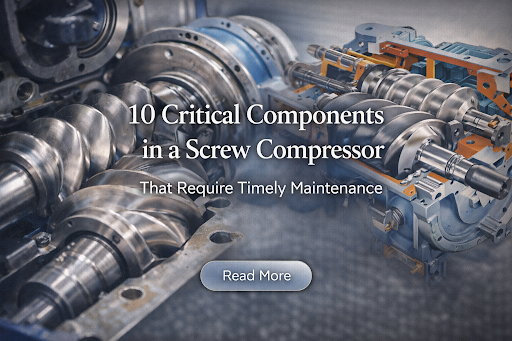
10 Critical Components in a Screw Compressor that Require Timely Maintenance

Critical Components in a Screw Compressor

A rotary screw compressor runs for thousands of hours in demanding industrial environments and is expected to deliver stable, clean compressed air. But it only performs that way when its key components are serviced on schedule. Skipping or delaying maintenance is one of the most common reasons plants face unexpected downtime and inflated repair bills.

Here are ten components that demand your attention. 

Air Filter

The air filter mainly protects a compressor against dust and particulates. A clogged filter increases the pressure differential at the inlet, forcing the machine to work harder and draw more energy. Inspect at every 500-hour service interval and replace as required, more frequently in dusty or polluted environments.

Oil Filter

The oil filter keeps the lubricant clean and protects the air-end from contaminants. Most manufacturers recommend replacement at every 2,000-hour service interval, though this may vary depending on operating conditions and the type of oil in use.

Air-Oil Separator

The separator removes oil from the compressed air before it reaches processing. Its service life is measured in operating hours and tracked by pressure drops. If the pressure differential exceeds 0.5 to 0.7 bar, it may require replacement. Under standard conditions, expect a service within 4,000 hours.

Compressor Oil

Oil degrades over time through heat, moisture, and contamination. Standard mineral oils typically require changing every 2,000 hours, while synthetic or extended-life oils may last up to 8,000 hours. Exceeding these intervals or using incorrect oil types accelerates wear significantly and can void your warranty.

Air-end Lubrication and Condition Monitoring

The air-end is the heart of a screw compressor. Monitoring oil condition, operating temperature, and vibration regularly helps catch early signs of wear before they become costly failures. Oil analysis every 1,000 hours is a sound practice in continuous-operation environments.

Minimum Pressure Valve (MPV)

The MPV maintains a minimum system pressure to ensure adequate lubrication during start-up and prevents air-end backflow. A stuck or worn MPV can cause pressure instability and oil carryover into the distribution network. Include an inspection in every 4,000-hour service.

Thermostatic Valve

This valve regulates oil temperature by controlling flow through the oil cooler. A faulty thermostatic valve leads to overheating or overcooling, both harmful to the air-end and oil life. 

Oil Cooler and Air Cooler

Blocked coolers cause compressor shutdowns triggered by high-temperature alarms. Both the oil cooler and aftercooler should be cleaned externally every 2,000 hours and inspected internally every 4,000 hours. 

Belt Tension and Coupling Alignment

Belt-driven compressors require periodic tension checks to prevent slippage and excess bearing load. Direct-drive units need coupling alignment verification. Either way, check them both at every 500-hour service to keep vibration in check and avoid premature wear on bearings and seals.

Electrical Connections and Safety Valve

Loose terminals cause heat build-up and motor failures. The safety (pressure relief) valve must be tested to confirm it opens at the correct rated pressure. Both should be part of every 2,000-hour service routine, yet they are frequently overlooked.

Stick to Hour-Based Preventive Maintenance

The most effective way to manage all the above is through a structured, hour-based PM schedule, typically at 500, 2,000, 4,000, and 8,000 hours. Each interval addresses specific checks and replacements suited to that stage of the compressor’s operating life. This approach reduces unplanned downtime, controls spare part costs, and extends equipment life considerably.

As trusted air compressor dealers in Mumbai, VEMC supports industries with genuine spares, expert servicing, and ELGi-authorised maintenance schedules.
Whether you need a routine service or a comprehensive audit, our team is ready to help. Contact your reliable air compressor dealer at +91 8976951701, +91 9819907445, 022 43117133, or email marketing@vemc.co.in.

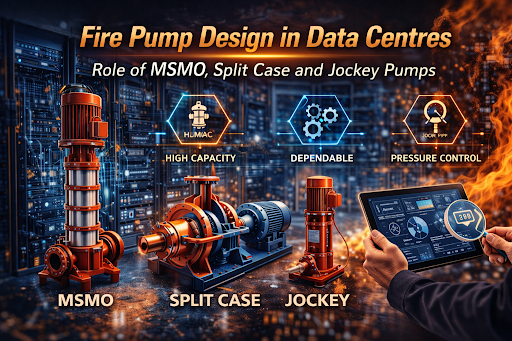
Fire Pump Design in Data Centres: Role of MSMO, Split Case and Jockey Pumps

Fire Pump Design in Data Centres

Data centres house mission-critical infrastructure worth crores, operating 24×7 with zero tolerance for downtime. A fire in such a facility is not just a safety concern but a business continuity crisis. This is why fire pump design for data centres demands precision, redundancy, and reliability far beyond standard building requirements. As a trusted Kirloskar fire pump dealer, we have supported numerous data centre projects where getting the fire protection system right from the design stage was non-negotiable.

Accurate Flow and Head Calculation: The Foundation

Fire pump selection starts with calculating exact flow and head requirements based on facility layout, building height, sprinkler density, and hydrant coverage. Data centres typically require higher flow rates due to dense server racks, raised floors, and concentrated electrical equipment. Designers must account for friction losses across long horizontal pipe runs, elevation changes, and pressure drop through sprinkler systems and valves. 

Underestimating these parameters leads to inadequate coverage during emergencies, while oversizing wastes energy and capital. Detailed hydraulic modelling ensures the system delivers required flow and pressure at the remotest sprinkler head.

Understanding MSMO, Split Case, and Jockey Pumps

Data centre fire protection systems typically use three pump types working in coordination:

MSMO (Multi-Stage Multi-Outlet) pumps deliver high pressure through multiple impeller stages, making them suitable for tall data centres requiring a significant head. Their compact vertical design and ability to maintain steady pressure across varying flow conditions make them reliable for space-constrained critical applications.

Split case pumps are horizontal designs with the casing split along the centreline for easier maintenance access. They offer simpler servicing, higher flow capacity, and excellent efficiency at moderate to high heads. For large data centres with extensive sprinkler networks across multiple floors, split case pumps provide the volume and reliability needed.

Jockey pumps are small-capacity pumps that maintain system pressure continuously and compensate for minor leaks. Running at lower power, they prevent main fire pumps from starting unnecessarily, reducing wear on primary equipment. Typically sized at 3-5% of main pump capacity, they keep the system pressurised at required levels.

Redundancy and Reliability in Critical Systems

Data centres cannot afford single points of failure. Standards mandate redundancy through a main electric pump and standby diesel pump of equal capacity, both capable of achieving rated performance independently. Automatic transfer switches, dual power feeds, and backup batteries ensure pumps activate even during complete power outages. Working with a Kirloskar pump authorised dealer ensures pump coordination, firefighting control panels, and safety interlocks are configured correctly for seamless automatic failover.

Pressure Maintenance and System Stability

Stable pressure is critical in data centres. Fluctuating pressure can trigger false alarms, cause unintended sprinkler activation, further damaging equipment, or fail to deliver adequate flow during actual fire events. Jockey pumps maintain baseline pressure under normal conditions, while main pumps ramp up automatically during demand events. Proper pressure switch calibration, control panel programming, and regular testing ensure all pumps work in harmony. Suction conditions must be verified to avoid cavitation, which degrades pump performance and reliability.

Getting fire pump design right protects lives, critical assets, and business continuity. As an experienced Kirloskar fire pump dealer with deep expertise in critical infrastructure, VEMC supports data centre developments with compliant, reliable fire protection solutions. Contact us at +91 8976951701, +91 9819907445, 022 43117133 or email marketing@vemc.co.in for expert guidance.

Frequently Asked Questions

1. What is the purpose of a jockey pump?

It keeps the fire line pressurised and prevents unnecessary main pump starts.

2. Why are flow and head calculations important?

It ensures the pump can deliver the right pressure to every protected area.

3. Where are MSMO pumps used?

They are useful in multi-level buildings with more than one pressure zone.

4. Why choose a split case pump?

It handles high flow well and is easier to maintain.

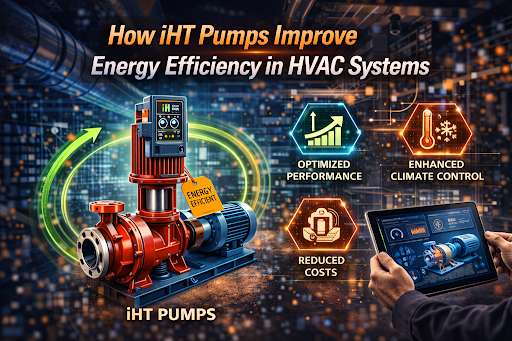
How iHT Pumps Improve Energy Efficiency in HVAC Systems

iHT Pumps Improve Energy Efficiency in HVAC Systems

How iHT Pumps Improve Energy Efficiency in HVAC Systems

HVAC (Heating, Ventilation, and Air Conditioning) systems account for nearly 40% of energy consumption in commercial buildings. Pumps circulating chilled or hot water through these systems play a critical role in overall efficiency. However, many installations rely on pumps that run inefficiently, consuming far more power than necessary. This is where iHT (intelligent Hydro Technology) pumps make a difference, delivering energy savings through smarter design and operation.

Understanding BEP and Its Impact on Energy Consumption

Every pump has a Best Efficiency Point (BEP), which is the specific flow and head combination where it operates most efficiently. At BEP, the pump delivers maximum output with minimum energy input and mechanical stress. Operating away from BEP increases power consumption, generates heat and accelerates wear on components like bearings and seals. 

In HVAC applications where pumps run continuously, even small deviations from BEP translate into significant annual energy waste. iHT pumps are designed to operate closer to BEP across varying load conditions, ensuring optimal performance and reduced electricity bills.

Matching Pump Curve to System Curve

A common mistake in HVAC design is selecting pumps without considering the system curve, which represents the relationship between flow rate and the pressure required to overcome friction losses in pipes, valves, and coils. When the pump curve does not match the system curve properly, the pump either overworks or underperforms. Oversized pumps waste energy by generating excess pressure that must be throttled using valves. Undersized pumps struggle to meet demand, causing comfort issues and equipment strain. iHT pumps address this through precise curve matching, ensuring the pump operates efficiently at the actual system operating point rather than at a theoretical maximum.

Variable Flow and VFD Integration

HVAC systems rarely operate at full load throughout the day. Cooling and heating demands fluctuate based on occupancy, weather, and time of use. Traditional fixed-speed pumps cannot adapt to these changes, running at full speed even when partial flow is adequate. This is where Variable Frequency Drives (VFDs) integrated with iHT pumps deliver substantial savings. 

VFDs adjust motor speed in response to real-time demand, reducing power consumption dramatically. Since pump power is proportional to the cube of speed, even a 20% reduction in speed can cut energy use by nearly 50%. iHT pumps with built-in VFD compatibility provide seamless variable flow operation, maintaining system pressure while consuming only the energy required for actual load conditions.

The Cost of Wrong Pump Selection

Selecting the wrong pump for an HVAC application creates long-term inefficiencies that extend beyond energy waste. Oversized pumps lead to short cycling, excessive vibration, and premature failure of mechanical seals. Undersized pumps cause temperature control issues, reduced comfort and higher maintenance costs due to continuous high-load operation. 

Incorrect pump selection also affects the entire system, causing valve wear, noise, and unstable pressure control. Consulting experienced industrial water pumps in Mumbai specialists ensure that pumps are sized correctly from the start, avoiding costly corrections later. VEMC, a trusted name among water pump dealers, offers expert guidance in selecting and integrating iHT pump solutions tailored to your HVAC requirements. 

Contact us at +91 8976951701, +91 9819907445, 022 43117133, or email marketing@vemc.co.in to explore energy-efficient pumping solutions for your facility.

Frequently Asked Questions

1. What is BEP and why does it matter for HVAC pumps?

BEP (Best Efficiency Point) is where a pump delivers maximum output with minimum energy use and mechanical stress.

2. How much energy can VFDs save on HVAC pumping systems?

VFDs can reduce energy consumption by up to 50% in variable-load applications by adjusting motor speed to match demand.

3. What happens if my HVAC pump is oversized?

Oversized pumps waste energy, cause excessive vibration and lead to premature seal failure and higher maintenance costs.

4. Can iHT pumps work with existing HVAC systems?

Yes, iHT pumps integrate easily into existing systems during upgrades or retrofits with proper sizing and curve matching.

5. How do I know if my pump is operating efficiently?

High energy bills, frequent maintenance, unstable pressure, noise or inconsistent temperature control indicate inefficient operation.

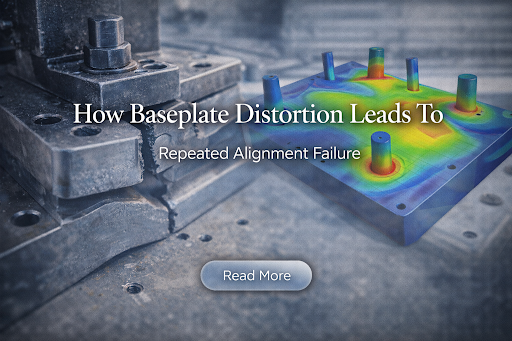
How Baseplate Distortion Leads to Repeated Alignment Failure

Baseplate Distortion Leads

When a pump keeps going out of alignment despite repeated corrections, the reason could be a distorted or misaligned baseplate. Many maintenance teams focus on the shaft and coupling, not realising that the very foundation holding the pump and motor in place has already shifted. Experts like VEMC understand this aspect clearly and how baseplate distortion develops can save time, money and effort in repairs.

The Structural Role of the Baseplate

The baseplate is the structural anchor for both the pump and the motor. It keeps both units fixed at the correct height, angle, and position so that their shaft centrelines remain precisely aligned. When the baseplate performs as intended, alignment holds. When it does not, no amount of shimming or adjustment will offer a lasting fix.

What is Baseplate Distortion?

Baseplate distortion refers to any warping, twisting, or bending that takes the baseplate out of its original flat, level plane. This can be subtle and often invisible to the naked eye, yet severe enough to cause permanent misalignment. Common causes include:

  • Poor grouting
  • Inadequate foundation support
  • Bent baseplate structure due to over-tightened anchor bolts
  • Residual welding stresses from fabrication
  • Pipe strain from poorly supported pipework connected to the pump
  • Thermal expansion due to high-temperature systems

Soft Foot vs. Structural Distortion

Soft footing occurs when one or more equipment feet do not sit flat on the baseplate, creating uneven loading. Structural distortion, by contrast, is a change in the baseplate geometry itself. Correctly identifying the root cause before attempting any corrections matters because both conditions can mirror each other during alignment checks. 

How Distortion Causes Repeated Misalignment

Once a baseplate distorts, the shaft centrelines of the pump and motor shift relative to each other. This introduces angular misalignment, where the shafts meet at an angle, and parallel misalignment, where the shafts run offset. Even when alignment is corrected during a shutdown, distortion causes it to drift back out of tolerance once the equipment returns to operating temperature and load. This pattern of repeated alignment failure after every correction is a reliable sign that the baseplate itself needs attention.

Impact on Pump Components

A misaligned pump does more than just wear faster. Baseplate-driven misalignment causes concentrated loading on bearings, accelerated seal wear and leakage, fatigue on shafts and couplings, increased vibration levels, and higher energy consumption. Over time, these effects compound into costly unplanned downtime and shortened equipment life.

Field Detection Methods

There are three methods to identify baseplate distortion in the field:

  • Laser alignment tools help reveal consistent drift patterns after repeated corrections.
  • Soft foot checks using dial gauges identify uneven contact between the feet and the baseplate surface.
  • Vibration analysis picks up characteristic frequencies associated with misalignment, helping identify mechanical symptoms and their root causes.

Preventive Practices and Long-Term Reliability

Getting the baseplate right at the installation stage is the most effective strategy. This means using proper grouting techniques, following controlled bolt torque procedures, specifying stress-relieved baseplates, and designing rigid foundations with adequate load distribution.

Routine inspections and alignment recheck after thermal cycling further protect long-term stability. The lifecycle cost benefit is significant: fewer breakdowns, lower maintenance expenditure and predictable equipment performance.

As trusted industrial pump suppliers in Mumbai and an authorised Kirloskar APOEM, VEMC offers expert guidance on pump installation, alignment verification, and preventive maintenance.

Contact us at +91 8976951701, +91 9819907445, 022 43117133, or email marketing@vemc.co.in.

The Evolution of Solar Panels: How Technology Made Solar Power More Efficient and Affordable

The Evolution of Solar Panels

Solar energy has become one of the most reliable and sustainable sources of power worldwide. Over the past few decades, continuous innovation in photovoltaic (PV) technology has significantly improved the efficiency and affordability of solar panels. Today, businesses and homeowners increasingly rely on solar energy, supported by experienced solar EPC companies in India.

Early Development of Photovoltaic Technology

The origins of solar power date back to the mid-20th century. Initially, solar panels were primarily used in space applications, especially for satellites because they could generate electricity without fuel. However, solar cells were extremely expensive back then, limiting their use to specialised applications.

Transition from Space to Commercial Use

As technology progressed and production methods improved, solar energy gradually moved from space applications to commercial use. Reduced costs and increasing environmental awareness encouraged businesses and governments to explore solar power as a viable energy option.

Evolution of Solar Cell Technologies

Early commercial solar panels mainly used monocrystalline and polycrystalline silicon cells. While effective, these technologies were less efficient than modern designs. Over time, advanced solar technologies have been introduced to maximise power generation. Innovations such as PERC (Passivated Emitter and Rear Cell), bifacial modules, TOPCon (Tunnel Oxide Passivated Contact), and HJT (Heterojunction Technology) have dramatically improved energy conversion. 

Improvements in Efficiency

Solar module efficiency has increased significantly over the years. Earlier solar panels typically delivered efficiencies of around 10–12%, whereas modern modules now commonly exceed 20%. This means more electricity can be generated from the same rooftop or land area.

Reduced Manufacturing Costs

A major reason for the rapid growth of solar energy is the reduction in manufacturing costs. Large-scale production, automation, and global supply chains have lowered the cost of solar panels dramatically. This has made solar installations more affordable and encouraged the growth of solar EPC companies in India.

Advancements in Inverters and System Components

Solar technology has also improved beyond the panels themselves. Modern inverter technologies and enhanced balance-of-system (BOS) components, including mounting structures, wiring, and monitoring systems, have improved the overall efficiency and reliability of solar power systems. 

Declining Cost of Solar Energy

The combination of technological innovation and large-scale deployment has significantly reduced the Levelized Cost of Energy (LCOE) for solar power. Today, solar energy is often cheaper than conventional electricity, making it an attractive long-term investment for businesses and industries.

Future of Solar Technology

Solar technology continues to evolve with innovations such as smart solar modules, advanced monitoring systems, and higher-efficiency cell technologies. These developments will further improve performance, reliability, and integration with energy storage and smart grids.

About VEMC

VEMC is a trusted solar EPC company in Mumbai offering comprehensive solutions for commercial and industrial clients. As one of the leading solar EPC companies in India with ISO 9001:2015 certification and CRISIL MSE-1 ratings, VEMC provides installation and maintenance services to help businesses transition to sustainable solar energy setups. Reach out to us on +91 8976951701, +91 9819907445, 022 43117133 or email marketing@vemc.co.in to learn more about our end-to-end solar services.

UL/FM Approval Explained: Certification Requirements for Fire Pumps & Fire Protection Systems

UL-FM Approval Explained

In fire safety and industrial equipment selection, you may often see specifications like “UL/FM approved” or “UL/FM listed” especially for pumps, valves, controllers, and other fire protection products. But what exactly does this mean, why does it matter, and how does it impact compliance, safety, and performance of your fire protection systems?

1. What Does UL/FM Approval Mean?

UL stands for Underwriters Laboratories, a globally recognized third party safety certification organization. When a product is UL Listed, it has been tested and evaluated against stringent safety and performance standards for that application. 

FM refers to FM Approvals, part of FM Global (Factory Mutual) a major industrial insurer and technical testing body. FM certification focuses on loss prevention and operational reliability under real world conditions, beyond just safety. 

When a product carries both UL and FM approvals (commonly noted as UL/FM approved or UL Listed/FM Approved), it means the product has passed coordinated testing protocols from both institutions, combining safety integrity with proven performance reliability. 

2. What UL/FM Approval Applies to

The most common use of UL/FM approvals in industrial contexts is for fire protection equipment, including but not limited to:

  • Fire pumps (electric, diesel or jockey)
  • Fire pump controllers
  • Valves, hydrants, hose systems
  • Fire suppression system components
  • Structural elements tested to NFPA standards

These products undergo rigorous testing procedures defined by UL standards (like UL 448 for fire pumps) and FM test protocols (e.g., FM 1319). 

3. Why UL/FM Approval Matters

Assurance of Safety & Performance

UL certification confirms that a product meets internationally recognized performance and safety criteria. FM approval adds another layer of assurance by evaluating performance under simulated real world emergency conditions including rough use and stress scenarios. 

Compliance with Codes & Standards

Many fire protection codes, including the National Fire Protection Association (NFPA) standards, require equipment to be UL Listed or FM Approved or preferably both for design compliance in high risk installations. 

Preferred by Authorities & Insurers

Regulatory bodies, insurance companies, and project engineers often insist on UL/FM certified equipment for commercial buildings, high rise structures, oil & gas facilities, manufacturing plants, warehouses, airports, and hospitals. 

Lower Risk and Operational Reliability

FM approved equipment is tested for durability and loss prevention, which can contribute to better uptime, fewer failures in emergencies, and in some cases lower insurance premiums due to reduced risk. 

4. Difference Between UL and FM Approvals

AspectUL (Underwriters Laboratories)FM (Factory Mutual)
Primary FocusSafety and standardized performanceReal-world reliability and loss prevention
TestingControlled lab-based performance testingSimulation of operational conditions and failures
Insurance ImpactOptional but desiredHighly preferred by insurers
Industry UsageWidely accepted globallyStrong acceptance in commercial/industrial fire systems

When equipment carries both certifications, it offers dual assurance a stronger indication of quality and reliability than either certification alone. 

5. Common Questions About UL/FM Approval

  • Is UL/FM approval mandatory?

It depends on local fire safety codes, insurance requirements, and project specifications. In many critical and commercial applications, it is required or strongly recommended. 

  • Does UL/FM certification cover all fire-safety components?

No. UL/FM certification is product specific. Each product must be certified individually for the application it’s used in. 

  • What standards do UL/FM use for fire pumps?

For fire pumps, UL uses standards like UL 448, and FM has standards like FM 1319 and related performance requirements referenced with NFPA 20. 

6. UL/FM Approval in Fire Pump Systems – Essential Takeaways

  • Fire pumps that are UL/FM approved are tested for both safety (UL) and loss-prevention operational reliability (FM). 
  • These certifications make pumps suitable for commercial, industrial, and high risk installations
  • Products that are not UL/FM certified may meet basic standards but lack the confidence and acceptance required by many codes and insurers. 

Conclusion

UL/FM approval is more than just a label it’s a symbol of internationally recognized safety, performance, and reliability for fire protection equipment. Whether you are specifying fire pumps, controllers, valves, or hydrant systems, choosing UL/FM-certified components ensures compliance with global standards, meets code and insurance expectations, and significantly improves fire safety outcomes.

Understanding Air Compressor Discharge Pressure: Meaning, Impact & Ideal Settings

Air Compressor Discharge Pressure

If you own or operate an air compressor, understanding its operating parameters is critical for performance and efficiency. One of the most important yet often misunderstood parameters is discharge pressure.

As one of the leading air compressor dealers in Mumbai, VEMC explains everything you need to know about discharge pressure, from its definition and influencing factors to its impact on energy consumption and system productivity.

What is Air Compressor Discharge Pressure?

Discharge pressure refers to the air pressure measured at the outlet (discharge flange) of the compressor, the point where compressed air exits the machine and enters the distribution system.

It is typically expressed in:

  • PSI (Pounds per Square Inch)
  • Bar
  • kPa

Maintaining the correct discharge pressure is essential because it directly affects:

  • Air delivery performance
  • Energy consumption
  • Equipment reliability
  • Operating temperature
  • System lifespan

Operating at pressure levels higher than required does not improve productivity proportionately but it certainly increases operating cost.

Why is Discharge Pressure Important?

  • Energy Efficiency

Compressed air is one of the most expensive utilities in an industrial setup. A widely accepted rule of thumb states:

For every 2 PSI increase in discharge pressure, energy consumption increases by approximately 1%.

Even small pressure adjustments can significantly impact electricity bills over time.

  • Thermal Stress & Equipment Wear

Higher discharge pressure results in:

  • Increased compression temperature
  • Valve metal fatigue
  • Thermal stress on lubricants
  • Seal and gasket deterioration

    This can lead to:
  • Reduced service life
  • Frequent breakdowns
  • Increased maintenance costs
  • System Leakage Risk

Higher pressure increases leakage rates in pipelines and fittings. Since leak flow is proportional to pressure, over-pressurizing the system leads to:

  • Wasted compressed air
  • Lower effective air delivery
  • Reduced system efficiency

Key Factors Affecting Discharge Pressure

Discharge pressure is not constant; it varies depending on operating and environmental conditions. Major influencing factors include:

Cooling Efficiency

  • Size and speed of condenser/cooling fan
  • Condition of cooler/heat exchanger
  • Oil cooling effectiveness (in oil-injected screw compressors)

Poor cooling increases discharge temperature and pressure fluctuations.

Suction Conditions

  • Suction temperature
  • Suction pressure
  • Ambient temperature

Higher inlet temperature reduces air density and affects compression performance.

Mechanical Parameters

  • Rotational speed (RPM) in screw compressors
  • Condition of rotors and valves
  • Discharge line size and restrictions

Electrical Supply

  • Voltage stability
  • Frequency variations

Voltage fluctuations can alter motor speed, indirectly affecting discharge pressure.

Relationship Between Discharge Pressure & Air Flow

The behavior of compressed air can be explained using Boyle’s Law:

This indicates that pressure and volume are inversely proportional (at constant temperature). As discharge pressure increases, volumetric flow reduces unless additional energy input compensates for it.

In simple terms:

  • Higher pressure = Higher power consumption
  • Higher pressure ≠ Proportionate productivity gain

Optimal Discharge Pressure Settings for Different Applications

There is no universal setting. The ideal discharge pressure depends entirely on the application.

ApplicationTypical Pressure Range
General Industrial Use100 – 200 PSI
Domestic/Workshop Use90 – 150 PSI
Pneumatic Tools (Nail Guns)90 – 100 PSI
Sandblasting120 – 150 PSI
Spray Painting120 – 150 PSI

Best Practice:

Set the compressor discharge pressure only slightly above the highest required point-of-use pressure typically 5–10 PSI higher to compensate for line losses.

What Happens If Discharge Pressure is Too High?

  • Increased energy bills
  • Frequent air leaks
  • Excessive heat generation
  • Shortened compressor life
  • Higher maintenance frequency

What Happens If Discharge Pressure is Too Low?

  • Inadequate tool performance
  • Production slowdowns
  • Inconsistent process quality
  • Air starvation in pneumatic systems

How to Maintain Optimal Discharge Pressure

  • Conduct regular leak audits
  • Maintain coolers and filters
  • Monitor voltage stability
  • Use pressure regulators at point-of-use
  • Install VFD-based compressors for variable demand
  • Perform periodic system performance audits

Final Thoughts

Discharge pressure may seem like a simple parameter, but it has a profound impact on:

  • Energy efficiency
  • Equipment life
  • Maintenance costs
  • Production stability

Operating your air compressor at the correct discharge pressure ensures maximum productivity without unnecessary power consumption.

If you need guidance on selecting, optimizing, or servicing air compressors, our technical team at VEMC is here to help.

Call us at: +91 9987099448
Email: marketing@vemc.co.in

VEMC — Your trusted air compressor partner in Mumbai.

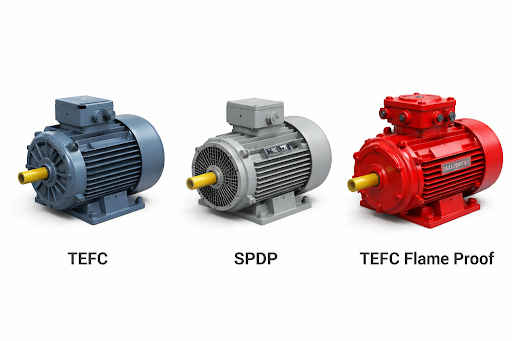
TEFC, SPDP & Flame Proof Motors: Choosing the Right Motor for Kirloskar Pump Applications

TEFC, SPDP & Flame Proof Motors

Electric motors and pumps work as a single system. While a pump determines hydraulic performance, the motor defines reliability, safety, and operating efficiency. Selecting the right motor enclosure is especially critical when integrating motors with Kirloskar pumps, which are widely used across water supply, industry, infrastructure, and hazardous process applications.

This article compares TEFC, SPDP, and TEFC Flame Proof motors and explains how each can be effectively coupled with Kirloskar pumps for optimal performance.

Understanding Motor Enclosures – Why They Matter

Motor enclosures protect internal components from the surrounding environment and influence:

  • Cooling efficiency
  • Operational safety
  • Service life
  • Suitability for application conditions

When paired with high quality Kirloskar pumps, the right motor enclosure ensures stable flow, reduced downtime, and long term system reliability.

Comparison of TEFC, SPDP & TEFC Flame Proof Motors

ParameterTEFC MotorSPDP MotorTEFC Flame Proof Motor
Full FormTotally Enclosed Fan CooledSemi Protected Drip ProofTotally Enclosed Fan Cooled – Flame Proof
Cooling MethodExternal fan over ribbed bodyNatural air circulationExternal fan with pressure resistant enclosure
Ingress Protection (Typical)IP55 / IP56IP21 / IP23IP55 / IP65
Operating EnvironmentDusty, humid, outdoorClean, dry indoor areasHazardous, explosive atmospheres
Safety LevelHighModerateVery high (explosion containment)
MaintenanceLowLow–moderateLow but certified maintenance required
Cost FactorMediumLowHigh
Typical ApplicationsPumps, compressors, conveyorsFans, machine toolsRefineries, chemical plants, mines

Integrating Motors with Kirloskar Pumps

Kirloskar pumps are designed for robust performance, standardised mounting, and compatibility with IEC motors, making integration straightforward across all three motor types.

1. TEFC Motors with Kirloskar Pumps

Ideal Pump Applications

  • End suction pumps
  • Monoblock pumps
  • Split case pumps
  • Vertical turbine pumps
  • Process pumps

Why TEFC + Kirloskar Pumps Work Well

  • TEFC motors offer excellent protection against dust and moisture, matching Kirloskar pumps used in industrial, municipal, and infrastructure projects.
  • Ribbed housing ensures effective heat dissipation during continuous pump operation.
  • Suitable for outdoor installations such as water supply schemes, cooling water circulation, and fire fighting systems.

Typical Use Cases

  • Water treatment plants
  • HVAC circulation systems
  • Industrial process water transfer
  • Irrigation pumping stations

Value Delivered:
Long service life, minimal breakdowns, and consistent hydraulic output.

2. SPDP Motors with Kirloskar Pumps

Ideal Pump Applications

  • Indoor centrifugal pumps
  • Utility water pumps
  • Light duty process pumps

Why SPDP + Kirloskar Pumps Are Used

  • SPDP motors are cost effective and efficient in clean indoor environments.
  • Kirloskar pumps with stable baseplate alignment work well with SPDP motors in controlled conditions.
  • Lower enclosure cost reduces overall project CAPEX.

Limitations to Consider

  • Not suitable for dusty, wet, or outdoor locations.
  • Requires proper ventilation and clean surroundings.

Typical Use Cases

  • Pump rooms inside buildings
  • Educational institutions
  • Commercial complexes
  • Machine tool cooling systems

Value Delivered:
Lower initial cost with reliable performance in clean environments.

3. TEFC Flame Proof Motors with Kirloskar Pumps

Ideal Pump Applications

  • Chemical process pumps
  • Hydrocarbon transfer pumps
  • Solvent handling pumps
  • Effluent and hazardous fluid pumps

Why Flame Proof Motors Are Critical

  • These motors are designed to contain internal explosions, preventing ignition of surrounding flammable gases.
  • When coupled with Kirloskar process and API pumps, they ensure regulatory compliance and operational safety.

Certifications & Compliance

  • PESO / CMRI / ATEX (as applicable)
  • Essential for installations in Zone 1 & Zone 2 hazardous areas.

Typical Use Cases

  • Refineries
  • Chemical manufacturing units
  • Oil & gas terminals
  • Pharmaceutical plants

Value Delivered:
Maximum safety, statutory compliance, and risk mitigation.

Key Integration Considerations with Kirloskar Pumps

When selecting a motor for Kirloskar pumps, ensure:

  • Power rating (kW/HP) matches pump duty point
  • Speed (RPM) aligns with hydraulic design
  • Frame size & shaft dimensions comply with IEC standards
  • Duty class (S1 continuous) is suitable for pump operation
  • Environmental conditions match motor enclosure rating

Kirloskar pumps are designed to accommodate these standards, enabling smooth coupling via flexible or rigid couplings with minimal alignment issues.

Conclusion: Selecting the Right Motor Pump Combination

Application ConditionRecommended Motor Type
Clean, indoor environmentSPDP
Industrial / outdoor useTEFC
Hazardous & explosive areasTEFC Flame Proof

Pairing the right motor enclosure with Kirloskar pumps ensures:

  • Higher system efficiency
  • Reduced maintenance cost
  • Improved safety
  • Longer equipment life

About VEMC

Vijay Engineering & Machinery Company (VEMC) is an authorized channel partner of Kirloskar Brothers Limited, offering end to end support in pump selection, motor integration, installation guidance, and after sales service.

Need help selecting the right motor for your Kirloskar pump?

Our technical team is ready to assist.

Why ELGi Demand=Match Is a Game Changer for Industrial Screw Air Compressors

Industrial Screw Air Compressors

As industries demand smarter, more energy efficient compressed air solutions, rotary screw air compressors remain the backbone of industrial compressed air systems. However, traditional fixed speed compressors often struggle to adapt to real time air demand fluctuations on the shop floor. ELGi Equipments Limited’s latest innovation, the Demand=Match System, addresses this very challenge, offering significant energy savings and enhanced operational performance for screw compressor installations. As an authorized ELGi channel partner (VEMC), we dive deep into why this technology matters and how it can benefit your business.

Understanding Screw Air Compressors & Their Importance

Before exploring Demand=Match, it is important to understand why screw air compressors are widely preferred:

  • Continuous compressed air delivery: Unlike reciprocating compressors, rotary screw air compressors provide uninterrupted airflow ideal for industrial use. 
  • High energy efficiency and reliability: Screw compressors are designed for continuous operation with fewer mechanical stresses and low maintenance requirements. 
  • Low noise and vibration: They operate quietly compared to conventional compressors, creating safer and more comfortable working environments. 

As demand for compressed air varies across production cycles, ensuring an efficient match between compressor delivery and actual plant demand becomes critical this is where ELGi’s Demand=Match technology transforms performance.

What is the ELGi Demand=Match System?

ELGi’s Demand=Match System is an intelligent airflow control solution that enhances fixed speed screw compressors by automatically adjusting air delivery to match real time demand on the plant floor. 

Traditionally, fixed speed compressors operate at a constant output. However, in real industrial environments, air demand fluctuates minute by minute, leading to frequent cycling, energy waste, and inconsistent pressure. Demand=Match smartly recirculates airflow inside the compressor to ensure delivery always equals demand, eliminating inefficiencies. 

Key Technical Benefits of Demand=Match

1. Significant Energy Savings

With Demand=Match, screw compressors can deliver up to 17% energy savings in typical operating scenarios where demand varies. 

This is similar to the benefits seen with Variable Frequency Drives (VFDs), but delivered through intelligent airflow control without investing in expensive VFD systems. 

2. Reduced Mechanical Wear & Better Reliability

Frequent start stop cycles and pressure spikes cause mechanical stress and premature component failure. The Demand=Match system reduces these cycles, resulting in:

  • Lower bearing and air end stresses
  • Longer service life
  • Increased uptime

This improves overall reliability of your compressor system. 

3. Stable System Pressure & Operational Consistency

Demand=Match continuously monitors system pressure and adjusts airflow dynamically, resulting in stable pressure delivery even under fluctuating load conditions

4. Lower Total Cost of Ownership (TCO)

Demand=Match is a capital light upgrade that delivers performance close to VFD systems without the typical costs. It optimises energy use and reduces operating costs, positively impacting your bottom line. 

5. Sustainability and Reduced Carbon Footprint

Energy savings directly translate to lower power consumption and reduced CO₂ emissions, a critical factor for industries pursuing sustainability and eco efficiency goals. 

Where Demand=Match Makes a Difference

This innovation isn’t just theoretical; it has widespread applicability across industries where screw air compressors are critical to operations:

✔ Textiles, apparel and fabric production
✔ Automotive manufacturing and assembly lines
✔ Food & beverage processing
✔ Paper and pulp applications
✔ Small and large machining workshops

In every case, compressed air serves as key utility powering pneumatic tools, process controls, packaging lines, instrumentation, and more. Matching compressor output to demand improves efficiency and reduces operational variability. 

Why VEMC Recommends ELGi Demand=Match Screw Compressors

As an authorized channel partner of ELGi Equipments LimitedVEMC brings technical expertise in selecting, installing, and supporting screw compressor solutions tailored to your plant requirements. Our deep understanding of compressed air systems ensures:

  • The right screw air compressor model selection for your operations
  • Professional installation and commissioning
  • Ongoing support with genuine ELGi parts and service plans

Whether you are upgrading existing compressor setups or specifying new systems, Demand=Match delivers measurable results in energy efficiency, reliability, and operational control helping you stay competitive in today’s industrial landscape.

With industrial operations increasingly driven by efficiency and sustainability goals, ELGi’s Demand=Match system represents a significant step forward in compressor technology. By delivering just in time compressed air, reducing waste, and enhancing system stability, Demand=Match helps industries unlock the full potential of their screw compressor installations.

Looking to optimize your compressed air system?

Contact VEMC today to discuss how ELGi Demand=Match technology can improve your energy efficiency, reduce operating costs, and provide robust performance across all your critical applications.

How Industrial Solar Power Plants Deliver Faster ROI Through Smart Design

Industrial Solar Power Plants Deliver Faster ROI

Solar energy is emerging as a top choice for industries seeking to reduce energy costs and carbon footprints. However, the return on investment (ROI) from the industrial solar power plant depends heavily on the design and system planning. Hence, with the right approach, businesses can achieve faster ROI. In the article below, we will explore how smart designs can make this happen. Let’s start. 

Key Factors Influencing ROI in Industrial Solar Projects 

The ROI of an industrial solar power system depends on factors such as energy production, system size, and operational efficiency. Thus, a well-designed system that meets the facility’s energy needs while minimising costs and losses will deliver faster returns.  

Importance of Load Profile Analysis before System Design 

The first step in designing a solar power system is understanding the facility’s energy usage. This is done through load profile analysis, which helps in determining how much energy the facility needs at different times. By aligning the solar system with the building’s energy demand, companies can avoid over- or underestimating system size. Thus, you should find a solar EPC company in Mumbai that focuses on this critical analysis to create efficient systems.  

Role of Capacity Optimisation in Maximising Energy Offset 

Optimising system capacity is the key to ensuring maximizing energy offset. This means generating sufficient solar energy to meet the facility’s energy needs without overloading the system. Hence, correctly sizing the solar installation so that the investment provides the best energy saving with a quicker ROI.  

Impact of Tilt Angle, Orientation, and Shadow Analysis 

The placement of solar panels has a big impact on energy generation. The tilt angle, orientation, and shadow analysis all affect the amount of sunlight the panels receive throughout the day. By positioning panels optimally, solar EPC companies in Mumbai can significantly increase energy production, thereby improving ROI. 

Integration with Existing Electrical Infrastructure 

For a solar system to be effective, it is essential to ensure it integrates seamlessly with the existing electrical infrastructure. Hence, this integration ensures solar power can be used immediately or stored, further maximising energy savings and ROI.  

Importance of PR Ratio in Solar Plant Performance 

The Performance Ratio (PR) is a key metric for evaluating solar system performance. A higher PR ratio indicates better efficiency. By carefully selecting equipment and maintaining the system, solar EPC services can help ensure a high PR ratio, enabling businesses to get the most out of their investment. 

Maximising Your Solar Investment with Smart Design 

Henceforth, smart design is key to achieving faster ROI from industrial solar power plants. By focusing on load profile analysis, capacity optimisation, minimising losses, and efficient integration, companies can achieve significant energy savings. As a trusted solar EPC company in India, VEMC offers solar EPC services that help businesses maximize their solar investments. 

For expert support, contact VEMC. 

Contact Us: 

Call+91 8976951701 | +91 98199 07445 | 022 43436655 | 022 43117133,

Emailmarketing@vemc.co.in 

Common Pump Failures Caused by Non-Authorised Assembly and How APOEM Prevents Them

Common Pump Failures Caused

Have you ever wondered why some pumps last for years while others fail within months? The answer often lies in how they’re assembled. Proper pump assembly following APOEM (Authorised Pump Original Equipment Manufacturer) standards can make all the difference between reliable performance and costly breakdowns. As a trusted Kirloskar dealer in Mumbai, VEMC has seen firsthand how choosing the right assembly partner impacts your pump’s lifespan and efficiency.

What Sets Authorised Assembly Apart? 

APOEM assembly adheres to strict manufacturer protocols using precision-engineered components. On the other hand, unauthorised builds often rely on generic components and guesswork. Authorised assembly by certified Kirloskar pump distributors ensures every component meets exact specifications, tolerances are maintained, and original parts are used. Non-authorised assemblers typically lack access to genuine components, proper training, and quality control measures. Hence, it leads to compromised pump performance from day one. 

Common Assembly Mistakes in Unauthorised Builds 

Unauthorised pump assembly frequently suffers from critical errors:

  • Improper shaft alignment is causing vibration and bearing damage.
  • Incorrect impeller positioning reduces efficiency by up to 30%.
  • Poor seal installation leading to leakage and contamination.
  • Inadequate torque application on fasteners causes loosening or stress fractures.
  • Mixing incompatible materials accelerates corrosion.

Hence, these mistakes stem from insufficient technical knowledge and the absence of manufacturer-approved procedures that qualified Kirloskar pump dealers in Mumbai follow rigorously. 

Typical Pump Failures Due to Improper Assembly 

Assembly errors can cause excessive vibration, seal leakage, overheating, and premature bearing damage. These failures reduce uptime and increase maintenance costs. Many users approaching Kirloskar pump dealers near me report repeated breakdowns traced back to non-authorised assembly. A certified Kirloskar dealer in Mumbai ensures that pumps are reliable for operation from day one.

The Critical Role of Tolerances and Balancing

Precision matters enormously in pump assembly. Shaft runout tolerances as small as 0.05mm can have a drastic impact. Improper dynamic balancing causes vibration, noise, and structural fatigue. Incorrect clearances between rotating and stationary parts lead to rubbing, overheating, and efficiency losses of 15-25%. Only authorised Kirloskar pump distributors possess the specialised equipment and expertise to maintain these critical tolerances.

Impact on Efficiency, Reliability and Service Life 

Improper assembly reduces hydraulic efficiency, increases energy consumption, and shortens service life. Frequent shutdowns and higher operating costs follow. Pumps assembled correctly by an authorised Kirloskar dealer in Mumbai deliver stable performance and predictable maintenance intervals. Working with a trusted Kirloskar pump distributor ensures long-term reliability instead of short-term savings. 

How APOEM Prevents These Issues 

APOEM standards enforce systematic inspection, documented processes, and skilled workmanship. Pumps assembled through authorised Kirloskar pump dealers Mumbai maintain design efficiency, warranty protection, and operational reliability. Customers seeking Kirloskar pump dealers near me can reduce downtime and lower total ownership costs by following APOEM guidelines. 

Your APOEM Assembly Partner 

VEMC is committed to delivering dependable pump solutions through APOEM-authorised assembly and engineering expertise. As a reliable Kirloskar pump distributor, VEMC helps maximise pump performance and service life.  

Connect with experienced Kirloskar pump dealers in Mumbai. 

You can reach them at +91 8976951701 | +91 98199 07445 | 022 43436655 | 022 43117133, or email marketing@vemc.co.in

How Food and Beverage Plants Can Benefit from Demand=Match for Stable Air Quality and Cost Savings

Food and Beverage Plants

In the food and beverage (F&B) industry, compressed air is used across packaging, pneumatic control systems, and product processing. Maintaining stable compressed air is essential to meet the regulations and ensure product integrity. However, managing compressed air systems can be a challenge in environments where air demand fluctuates. Demand=Match technology offers a solution, providing F&B plants with stable air quality, energy savings, and cost reduction. Here’s how it works and why it’s beneficial for the industry.

Role of Compressed Air in Food and Beverage Manufacturing Processes

Compressed air is used in multiple applications, including packaging, cleaning, mixing, and controlling machinery. This compressed air must be free of contaminants and delivered at the correct pressure.  

Importance of Pressure Stability and Air Quality in F&B Applications

Pressure stability and air quality are critical to ensuring product safety and meeting quality standards in the F&B industry. Fluctuating pressure can lead to inefficient operations, contamination risks, or even product spoilage. Moreover, poor-quality air could introduce particles or moisture into the system, compromising product integrity.

Challenges with Conventional Fixed-Speed Compressors in Variable-Demand Environments

Fixed-speed compressors often struggle in environments with fluctuating air demand. These compressors are designed to operate at a constant speed, regardless of actual usage. In scenarios where demand is variable, fixed-speed compressors can cause inefficiencies. 

Working Principle of Demand=Match Technology

Demand=Match technology is designed to address these challenges by adjusting the compressor’s output to match actual air demand. Unlike fixed-speed compressors, Demand=Match systems continuously monitor air usage and adjust the output accordingly. 

Demand-Based Air Delivery and Internal Air Recirculation Concept

The key feature of Demand=Match is its ability to deliver air based on real-time demand. The system uses internal air recirculation to optimize the air delivery rate and pressure stability. This means the system adjusts the air supply based on actual demands.  

Impact on System Pressure Stability

With Demand=Match, pressure stability improves significantly. The system adjusts in real time to maintain the required air pressure even during periods of fluctuating demand. This stable pressure enhances operational efficiency, reduces the likelihood of errors, and ensures consistent air quality. 

Energy Savings Compared to Traditional Fixed-Speed Compressors

By matching the air supply to actual demand, the system eliminates the wasteful energy use associated with fixed-speed compressors. The compressor runs only when needed, reducing energy consumption and resulting in substantial savings on electricity bills.

Reduction in Compressor Cycling and Wear

Frequent cycling of compressors in fixed-speed systems can lead to premature wear. Demand=Match technology significantly reduces compressor cycling by ensuring that the compressor operates at an optimal speed. 

Cost Savings through Reduced Power Consumption and Maintenance

The combined energy savings and reduced wear lead to significant cost savings for F&B plants. This translates into better profitability and a more sustainable operation for plants.

Suitability for Hygiene-Sensitive Applications

Demand=Match technology is particularly suitable for hygiene-sensitive applications in the F&B industry, such as beverage bottling, dairy processing, and packaging of perishable goods. With improved pressure stability, minimal contamination risk, and optimal energy efficiency, this technology is well-suited for environments that require hygiene and safety standards.

The Demand=Match technology offers F&B plants a favourable solution for managing compressed air needs efficiently. As trusted air compressor dealers in MumbaiVEMC offers a range of air compressor solutions to optimise energy use in industrial applications. 

Contact us today at +91 8976951701 | +91 98199 07445 | 022 43117133 or email marketing@vemc.co.in to optimize your air compressor systems for improved efficiency and cost savings.

Working principle of Kirloskar’s Hydro Pneumatic (HYPN) System: Real-Time Demand Control, Smart Pump Configurations And Remote Monitoring Explained

Kirloskar's Hydro Pneumatic (HYPN) System

When it comes to ensuring a steady water supply, particularly in large buildings and commercial setups, maintaining a consistent pressure is crucial. That’s where Kirloskar’s Hydro Pneumatic System for water supply plays an important role.  

It is designed to provide consistent water pressure while saving energy. Let’s dive into how this system works and how it benefits your water supply needs.  

What is a Hydro Pneumatic Pressure (HYPN) Boosting System? 

Hydro Pneumatic system combines water and air to maintain stable pressure in pipelines, even under fluctuating demand. This is particularly useful for buildings with varying water usage. Whether it’s a residential building or a hospital, HYPN systems help maintain pressure stability and ensure smooth water flow at every point. 

Challenges with Conventional Fixed-Speed Pumps 

Conventional fixed-speed pumps run at the same speed all the time, it doesn’t matter how much water is being used. Eventually, this leads to wasted energy and higher operating costs. Additionally, the system cannot adapt to changes in water demand, leading to pressure fluctuations and inefficient operations. 

How Kirloskar HYPN Systems Solve These Issues 

Kirloskar’s Hydro Pneumatic System for water supply, on the other hand, takes a smarter approach. It uses variable-speed pumps that adjust to water demand in real time. Additionally, this system includes pressure sensors that continuously monitor water pressure and communicate with Variable Frequency Drives (VFDs) to control pump speed. It ensures that the system uses only the energy required to meet demand, reducing waste and improving efficiency. 

Smart Pump Configurations  

The HYPN system offers several smart pump configurations that enhance system reliability and efficiency. These include: 

Lead-Lag Sequencing: One pump serves as the primary unit, with the others acting as backups. This ensures that the system always has a reliable pump in operation. 

Multi-Pump Sequencing: Pumps are used in rotation, spreading the load evenly to reduce wear and tear on any one pump. 

Redundancy: If one pump fails, others take over without interrupting the water supply, ensuring continuous operation. 

Pressure Vessels for System Stability 

Pressure vessels are integral to Kirloskar’s Hydro Pneumatic System for water supply. These vessels store pressurised water, which acts as buffers to prevent sudden pressure drops. Hence, this helps maintain system stability, especially during high-demand periods or during transitions between pumps. 

Energy Optimisation and Cost Savings 

By controlling when pumps start and stop, the HYPN system optimises energy use, ensuring pumps operate only when necessary. Hence, this reduces electricity consumption, lowers overall costs, and extends equipment lifespan.  

Remote Monitoring and Fault Diagnostics 

The HYPN system allows for remote monitoring and fault diagnostics. Operators can track performance and identify issues from anywhere, reducing downtime and maintenance costs. 

Conclusion 

Kirloskar’s Hydro Pneumatic System for water supply provides an efficient, reliable solution for water supply systems, particularly in large buildings and industrial facilities. Therefore, by adjusting to real-time demand, using smart pump configurations, and optimising energy usage, it ensures a stable water supply while reducing costs. 

For expert support and more information on Kirloskar’s Hydro Pneumatic System, contact VEMC

Contact Us: 

Call+91 8976951701 | +91 98199 07445 | 022 43436655 | 022 43117133

Emailmarketing@vemc.co.in