
VEMC-Blogs

Understanding The Cost of Compressed Air

Compressed air is an indispensable part of most industries. Without it, entire sectors of production would be defunct! It is so essential that it is referred to as the ‘fourth utility,’ after electricity, water, and gas. However, there is a significant cost attached to it. In fact, about 10% of the electricity consumed industrially goes to generating and using compressed air.

Keeping industrial units supplied with compressed air costs a substantial amount of money. So, it would be prudent for businesses to focus on the consumption of energy, which makes up the majority of the cost of generating compressed air. Energy consumption costs are much higher than the initial cost of air compressors or their maintenance. A whopping 80% of the total cost of the compressed air system will be from the electricity it uses up. Because this is such a huge percentage, determining the cost of compressed air becomes important in order to minimize waste heat and electricity bills.

To identify the ways that you can save such costs, take a look at your business’s requirements of compressed air as well as the components of your compressed air system, along with all the associated costs. When you do this, make sure to account not just for your business’s current system, but also for the one you envision to be in place in the future. Plan for the longer-term demands rather than just the current ones.

Here’s an overview of the components in a compressed air system that you need to look at:

Air compressors

Aim to have an energy-efficient air compressor rather than one that just carries a lower price tag. As mentioned earlier, the initial cost is just a small fraction of the total cost.

Dryers and filters

Compressed air has contaminants that, depending on the application at hand, need to be filtered. There is an additional cost and equipment to this process, so be mindful of that.

Drains

Drains remove the collected condensate of the compressed air system as required.

Piping

A good piping system is crucial for smooth movement of the air and eliminates air restrictions, leakages, and pressure drops.

Ventilation

Ventilation is key to cutting down heat circulation to subsequently reduce energy consumption.

Air leakage

It is of paramount importance to detect and fix any air leaks because these can have a heavy cost otherwise. Monitor your air compressor constantly to prevent this from occurring.

Central controller

In systems that consist of more than one air compressor, a central controller may play a big part. It can decrease the average pressure band (a pressure reduction by one bar reduces energy usage by 7%), regulate the compressor speed, and control compressor capacity.

A streamlined air compressor system strategy can help you reduce your operational costs significantly, so plan ahead and reap the benefits!

VEMC is ISO 9001:2015 certified and is a pioneer in the field of electromechanical engineering products, allied equipment, and services. We are a well-established industry leader and authorized Elgi air compressor dealers. Contact us on +919819907445 and we would be happy to help you determine the right air compressor for your needs.

Solar Success Story: Installing a Rooftop Solar PV System for Abhijeet Dies & Tools

VEMC recently completed the installation of a 182.49kWp solar rooftop system at Abhijeet Dies & Tools Pvt Ltd. in Naigaon East, Bapane, Maharashtra. We designed this solar rooftop photovoltaic (SRTPV) system using the space available on the terrace at the client’s site with a module by Jinko and inverters by Polycab.

Execution

The application of the installation was in machinery and light loads. The project commenced in November 2021 and was completed in January 2022, well within the targeted time, but for a slight delay in net meter installation due to a hold up by Maharashtra State Electricity Distribution Company Limited.

Superior safety protocols

We executed the installation smoothly and took extra precautions to maintain the highest levels of operational safety. We ensured that every team member working on the site used the required personal protective equipment (PPE) including safety helmet, safety harness, and safety belt. We were also careful not to use mobile phones and other electric devices that could distract us during the process. Additionally, we used the crane or forklift to unload the modules and checked that a qualified person operated it. We kept the speed limit below 10km per hour.

Training and instructions

We designated an adequately sized team to lift the modules manually up the stairs so that they were easy to handle. We also gave our team rigorous training and proper instruction during the installation which they followed diligently. This way, we were able to avoid damage to any of the modules. The entire process was supervised by a team of qualified engineers.

Routing the AC cable

When the AC cable was routed, the tray was secured from any wear and tear. Once the tray was clear of any damage, it was carefully positioned to keep it moisture free.

Earthing

During the process of earthing, the speed of the boring machine was always maintained at below 10 km per hour. Our team strictly adhered to materials like cotton, PVC, and leather gloves while fixing electrodes, handling the backfilling compound, and connecting the electrical panel. Welding goggles, face shields, and aprons was also used during the welding of the system.

How we overcame challenges

Effective time management, cost management, quality control, team management, procurement management and communication skills were the key ingredients in the successful execution and completion of the project.

Learnings

This project gave us deep insights into the smooth operation of a DG-PV system as well as a DG sync configuration.

Key benefits post installation

We were able to reduce the client’s monthly electricity bill by INR 1.5lakh to INR 2 lakh after the installation of the solar rooftop photovoltaic (SRTPV) system.

VEMC is a well-established solar power plant company in India. With over 72 years of industry experience, VEMCO Solar was able to complete the project for Abhijeet Dies & Tools Pvt. Ltd. successfully. VEMCO Solar is a market leader in solar solutions — be it solar plant erection, procurement, commissioning, net metering, or electrical connections. If you have any requirements in this space, please feel free to contact us at +91 98199 07445. We would be happy to help you out.

A Guide To Select The Best Water Pump For Industrial Use In India

We need water for a variety of essential purposes — whether it is to cook, wash, clean, or perform industrial functions. This water comes to us from the source through a pump. When you are buying a water pump, there are a number of factors to consider before identifying the right kind for your application. Before we look at what these different factors are, watch this video to get an idea about how to select a water pump:

https://www.youtube.com/watch?v=9i_c-LBEXkw&ab_channel=VijayEngineeringandMachineryCompany

Flow rate

Given in cubic metres per hour (m3/h) or litres per minute (l/min), the flow rate of the pump measures its efficiency, that is, how much water it can pump out within a certain period of time. For industrial applications, this flow rate should ideally be on the higher side, of at least 2000 litres per minute. Another reason that the flow rate is so important is that it determines the daily energy consumption as well as the durability of the pump. The lower the flow rate, the higher the energy consumed due to more prolonged usage.

Discharge head

The total height of the discharge pipe which is known as the discharge head, as well as the height from where the water is pumped, are further aspects to consider when choosing the water pump. If you need to pump the water from a significant height, make sure that you choose a higher discharge head. Additionally, the suction head capacity will determine the depth of the water being pumped.

Inlet

The size of the inlet facilitates the correct flow of the water. Too small an inlet will create friction and a subsequent loss on the pump system. So, be careful that you choose a good-sized inlet for optimal water flow and pump performance.

Water quality

It is necessary to keep in mind that different water pumps and motors, such as trash pumps and dewatering pumps, are built to work with different kinds of water. Trash pumps transfer dirty water quickly while the latter kind moves clean water between locations. When you choose a water pump for your needs, it must fit the specific purpose you require it for and should not be used inappropriately.

Pump quality

Just as the quality of the water that goes into the pump must be suitable, you must also consider the quality of the pump itself. For the maximum efficiency and compatibility, select a pump from a reputed brand and do not compromise on its quality and design. A good quality pump will last much longer, cost much less to maintain, and will consume less energy in the long run. Kirloskar is a trusted name in the industry and would be a safe bet.

For more information on industrial pumps, motors, and other equipment, contact VEMC at +91-9819907445. As one of the authorized Kirloskar pump dealers in western India, we would be glad to assist you in finding the best match for you based on your requirements. We are ISO 9001:2015 certified and a pioneer in the field of electromechanical engineering products, allied equipment, and services.

Here’s How You Can Understand Centrifugal Pump And Motor Torque-Speed Curves

A centrifugal pump is powered by a motor that has to produce adequate torque to start off the pump and take it up to the best speed. Without enough torque, the motor might not be able to start the pump at all or only have it function at a lower speed.

To determine the motor that is most appropriate for a pump, we use what is called the pump’s torque-speed curve. We can make this by vertically mapping the percentage of full load torque (FLT) against the percentage of horizontally mapped full load speed (FLS).

The torque-speed curve is common in all centrifugal pumps because though the pump torque changes with its squared speed, when the full load speed (FLS) is at zero percent or at rest, the full load torque (FLT) will never simultaneously be at zero percent. The motor must overcome static friction and inertia in order to start a rotating pump. This brings us to the question of how much full load torque is needed to do this. The answer — about 20% of full load torque. As the speed of the pump increases, the torque that is needed slowly decreases. (At 15% full load speed, about 5 to 10% full load torque is needed.)

Horsepower (HP) is a combination of speed denoted by RPM, and torque. The horsepower of a motor is a basic measure of its abilities. The torque of a motor is calculated with the following formula:

T = (5,250 x HP) / N

(T = Torque, and N = RPM)

When you need to select a new motor for your pump, there are three important values you need to look at. These are:

  • Torque at zero flow
  • Torque at rated flow
  • Torque at maximum flow

Additionally, you will need to consider the inertia value of the pump at the motor shaft. The higher this is, the more time the motor will take to start off the pump and get it to the full load speed. This is important because the longer this is, the more heat is generated. The size of the motor must be suited to handle the inertia of the pump. Otherwise, the motor’s windings may get damaged.

In the case of the motor driving the pump directly, the inertia values of the pump-motor combination and the pump itself will remain constant no matter the speed of the pump. However, if both a gearbox and motor drive the pump, the inertia values will be affected greatly.

To choose the right kind of motor for your centrifugal pump, the above factors are important to keep in mind.

VEMC is an authorized Kirloskar dealer that supplies a range of industrial water pumps in Mumbai for various applications. We offer a diverse range of pumping solutions, including water pumps and process pumps. For more information on our products and help with selecting the most suitable ones for you, please contact us on +91 98199 07445. We would be happy to provide customized support. VEMC is ISO 9001:2015 certified and a pioneer in the field of electromechanical engineering products, allied equipment, and services.

How Can You Mitigate a Mechanical Shaft Seal Leakage?

Why does leakage occur in a centrifugal pump? To understand this, we must first understand how a centrifugal pump basically works. As fluid goes through its impeller eye and up the impeller vanes, it starts with low pressure and velocity. As it flows into the volute and gets ready to exit, both the pressure and velocity increase. As the fluid flows out through the discharge, the pressure is high but the velocity gets reduced. The flow then goes out of the pump, which makes the pump exert pressure and raise the energy of the fluid.

When a component of the pump such as static joints and hydraulic malfunction, the whole system might break down. However, a majority of pump failures happen due to the mechanical seal of the pump malfunctioning.

A mechanical seal controls the leakage between a liquid and a rotating shaft. To do this, essentially all seals have to leak in order to maintain a film of fluid over the whole face of the mechanical seal. The leakage from the atmospheric side is quite less. But the leakage between the mechanical seal shafts and sleeves can cause significant issues. Often, the reason these happen is because of the fretting of the O-ring seal on the shaft. You will notice substances dripping from behind the seal close to the drive collar. Polishing the fretted part can provide a temporary fix, but it will not give you a solution. Here are some options you can choose in the short and long term:

Short term solutions

Replacing the shaft could be a practical option given that the maintenance cost is low and you would not have to overhaul the entire pump system.

When repairing or replacing the shaft is proving to be difficult, you can opt for a modified seal but you may have to plan in advance.

You can try relocating the O-ring of the seal sleeve with the help of a local technician. When you get to the bottom of the issue, you can check where the damage on the shaft is and shift the O-ring accordingly. If you still require a new sleeve, the cost will be only a little bit higher.

Long-term solutions

Upgrade the shaft to a higher quality material.

Consult a pump technician and coat the shaft below the seal sleeve with a substance like tungsten carbide. How much of the shaft you may need to coat will depend on the damage. Avoid the area around the drive collar set screws. Make sure to enlist professional support for this.

VEMC, one of the authorized Kirloskar pump dealers in India, supplies industrial water pumps in Mumbai for different industrial applications. We offer a diverse range of pumping solutions including water pumps. For more information on our products and help selecting the right ones for you, please reach out to us on +91 98199 07445. VEMC is ISO 9001:2015 certified and a pioneer in the field of electromechanical engineering products, allied equipment, and services.
Solar Panels And EV Stations: How Solar-Powered EV Charging Stations Are Becoming the Prevalent Alternative

Solar Panels And EV Stations

What is an EV charging station?

Electric vehicles (EVs) powered by renewable energy are steadily emerging as the sustainable alternative to fuel-powered vehicles. With more and more electric vehicles on the road, there also comes the need to be able to charge them.

From where do EV stations source their energy?

EVs are charged in a charging station, which is also referred to as an electric vehicle supply equipment (EVSE) or an EV charger. An EVSE is a device that provides the electrical power to charge all kinds of electric vehicles. Now, although the source of power for EVs may be clean, the same might not be true for that of charging stations! In fact, natural gas is the most common source of power for charging stations. It is very affordable and widely available. However, all electricity is not necessarily generated by only fossil fuels. Charging stations are connected to the ‘grid’ or power supply, so although the EV produces zero emissions, the energy it draws from charging stations usually is not. But, even charging stations have can take the route of using clean, renewable energy.

How are EV stations and solar panels connected?

One of the most sustainable solutions to powering EV charging stations is through solar energy. Solar-powered stations for electric vehicles are one of the best ways to cut down on depending on fossil fuels.

To switch to solar for your charging station, you first need to determine the number of solar panels you would require to set up. For this, first consider how much you drive on average. For example, if you drive 300 km in one month, that would be about 10 km per day. Now, take a look at the energy requirement in kilowatt per hour (kWh) of your electric vehicle. Then, estimate how much direct sunlight you receive in your area. This will give you an idea of how much solar energy you would need, and how many solar panels you would need to set up to generate enough of it.

What is the future of solar-powered EV charging stations?

With the effects of global warming becoming an alarming concern, solar-powered EVs and charging stations are fast being hailed as the better alternative. A recent report found solar rooftop photovoltaic energy from solar panels to be an economic and feasible solution for EV charging, while also offering a cleaner source of energy.

Solar rooftop photovoltaic systems provide a plethora of benefits in EV charging. Thanks to their modular design, they can be installed easily. They are also a cost-efficient solution compared to charging from the grid. They minimize carbon emissions and also soften the blow from surging demands of EV charging power on the grid. A net metering solution can solve the issue of a disparity between solar energy generation and consumption.

VEMCO Solar, a solar energy company in Mumbai, provides end-to-end solutions. With over 72 years of industry expertise, we offer specialized support in this space. VEMC is ISO 9001:2015 certified and a pioneer in the field of electromechanical engineering products, allied equipment, and services. Please feel free to contact us on +91 98199 07445, and we will be happy to assist you with your solar power requirements.

Here’s What You Need to Know About ISO Classes for Compressed Air Quality

What You Need to Know About ISO Classes for Compressed Air Quality

We’ve heard the term “ISO standards” quite frequently. But what exactly are they, and why are they so important? Let’s take a look at the concept. The International Standards Organisation (ISO) is a non-governmental body made up of a network of institutes from 159 different countries. ISO is the world’s largest developer and publisher of international standards and is accepted universally.

Compressed air is an indispensable utility that is used widely across different industries. But, compressed air is not all of uniform quality. Some uses, such as pharmaceutical production and food handling, call for impeccable quality and cleanliness of the air. In other cases, the primary objective may be to ensure the lifetime and reliability of industrial tools that are powered by air. The ISO standards play a key role in determining the level of air purity required for your particular application. Meeting ISO standards is also important in maintaining and protecting the quality of your production. In some cases, not complying with them can lead to heavy penalties or even your production facility being shut down!

The ISO 8573 air quality standards and ISO 12500 compressed air filter standards help lay a sound foundation for selecting the right air treatment products. ISO8573 is the compressed air quality standard and comprises nine separate parts — part 1 for quality requirements of the compressed air, and parts 2 to 9 for the methods of testing for a range of contaminants.

Compressed air contains contaminants like moisture and pollutants, and must be filtered according to the application’s requirements. Usually, the purer the air must be, the more costly it is to produce. This is why it is crucial to choose the right levels of air purity in order to reduce costs and benefit the environment.

The ISO 8573-1:2010 is a useful tool that makes the task of choosing the right air purity for your application that much easier. It ranks the acceptable levels of different types of contaminants as classes.

The ISO 8573-1:2010 standard is divided into three groups of contaminants—solid particles, water (including liquid and vapor), and oil. Each of these categories is further classified into ten different purity classes — eight for particulates, ten for water, and five for oil. The lower the assigned number to a category, the higher the air purity requirement for it. For example, class 5 would require far less air purity than class 1.

Now that you know how to match the ISO class to the compressed air quality required, how will you select a filter? The answer is simple — just find the particular ISO class on the filter. Once you identify the ISO class for your particular task, planning the equipment you would need becomes much easier.

VEMC provides a variety of Elgi air compressors. For more help with understanding ISO classes for compressed air quality, contact us on +919819907445 and we would be happy to assist you. VEMC is ISO 9001:2015 certified and is a pioneer in the field of electromechanical engineering products, allied equipment, and services.

What does it mean if your pump is self-priming?

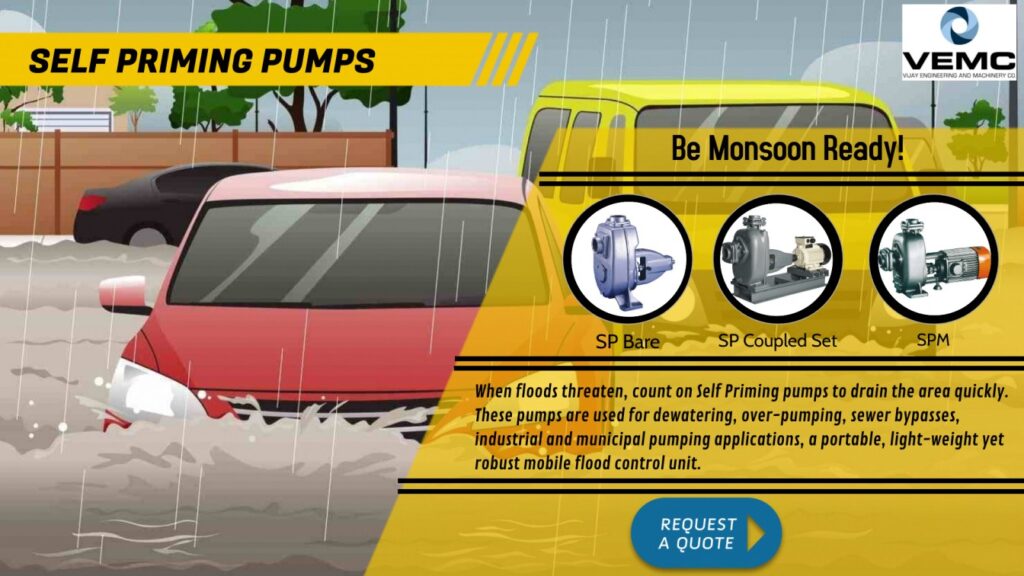
In several applications that require liquid to be pumped, the pump must be kept above the level of liquid. This lets air into the line, which can often create issues like overheating and pump failure. To avoid this from happening, a self-priming pump is used to empty out the air before moving the fluids. 

A self-priming pump is like other centrifugal pumps but is built with an outer casing that contains the fluid being pumped. The rotation of the impeller in this casing creates an area with low pressure at the impeller’s eye. This causes the fluid, along with the air, to get pushed up into the pump through the line of suction. Through its motion, the self-priming pump causes the air to separate from the fluid and get released from the casing. When all of the air has escaped, the pump allows the fluid to flow. Thus, a self-priming pump essentially removes any air pockets from the fluid to ensure smooth delivery by the pump. 

The main difference between a self-priming pump and a regular centrifugal pump is that there is no need to physically prime the former type, as its extra in-built mechanism is designed to do just that.

Practical uses

A self-priming pump can be used for anything that requires a standard centrifugal pump. This can include pumping water, sewage waste or other industrial applications. 

It is important to choose the right kind of pump for the task at hand, as well as the correct sized pump that matches the flow and head. Then, a net positive suction head (NPSH) calculation must be conducted to make sure there is adequate atmospheric pressure to sustain the required flow. Lastly, the speed of the pump must be high enough to be able to prime itself. The size of its line of suction too must be selected carefully.

Advantages of a self-priming pump

Because self-priming pumps are installed above the fluid source, the infrastructure needed to set them up is relatively less. They are easy to access due to their ground-level location. Maintenance and repair too, are simpler to conduct on a self-priming pump than on a regular centrifugal pump.

Self-priming pumps can handle a variety of liquids as well as slurries and suspended solids. They are also ideal for frequent pumping operations, as the steps involving pump priming at the start are eliminated. As well, they use less power and time to run than other centrifugal pumps. Self-priming pumps are also safer to operate, as hoists or cranes are not required for their use.

Limitations of a self-priming pump

Self-priming pumps have a limited suction lift. There are limitations in the NPSH and fluid temperature and can cause a loss of friction in the line of suction.

For more information on industrial pumps, motors, and other equipment, contact VEMC on +91 98199 07445. We would be glad to provide customized support for your requirements. We are well-established industrial water pumps dealers in Mumbai who deliver end-to-end project management services to our clients. VEMC is ISO 9001:2015 certified and a pioneer in the field of electromechanical engineering products, allied equipment, and services. 
Solar Photovoltaic (PV) Modules – Forecasting Price Levels in India for 2022

The price of photovoltaic (PV) modules saw a substantial dip from 2010 to 2020 – of about 70 to 80%, thanks to the growth of PV modules and solar power technology both in India and the world. Witnessing a steady average growth of about 25% each year, India had installed more than 40 GW worth of solar energy by December 2020. Interestingly, 55 to 65% of the total cost of the solar project is on PV module solar panels. PV modules are the single most important component of a solar power plant, and through these years, there was a dramatic improvement in their technology. As a result, PV modules became more efficient (measured by the proportion of solar irradiation converted to solar energy), and had better output capacity. 

Trends in 2020

Many expected these downward trends in the industry to continue in the coming years. Several developers even bid for projects under government tenders based on the premise that the price of PV modules would keep declining. On the contrary, the opposite happened. PV module price rose by 7 to 10% over the second half of 2020! From US$0.21/Wp in 2020, it increased till US$0.33/Wp in 2021. This led to industry watchers questioning whether this was a result of changes brought on by the pandemic, or a more permanent tendency that would stay.

Reasons for the Deviation in PV Module Prices in 2020

To set the context, let’s look at some key facts in the solar power industry. For one, China controls over 80% of the world’s solar supply chain, particularly in important areas of raw materials like glass and polysilicon. With this in mind, let’s examine the factors leading up to the subsequent rise in PV module prices:

  • The sudden breakout of the COVID-19 pandemic shifted a major part of the demand from the first half to the second half of 2020.
  • There was a shortage in the supply of polysilicon owing to an accident at GCL- Poly Energy Holdings Limited, a large supplier in Hong Kong, and the outbreak of a new virus in China’s Xinjiang province, another significant supply market. This resulted in over a whopping 50% increase in prices.
  • The transition of technology and slowed down ramp-up capacity further led to a shortage of glass.
  • The price of other essential commodities like aluminium and silver were also driven up.
  • Cost of transportation went up thanks to restricted movement of ships and containers during the pandemic.
  • The US Dollar fell in value against the Chinese Yuan.

Predicting PV Module Prices in FY22

The above chain of events contributed to the surge in PV module prices, and it remains uncertain when the situation will reverse. Issues like the supply shortage of raw materials might get resolved soon, but only if we assume that the pandemic will end shortly. Trends in commodity prices will also influence module prices and have a more long-term impact.

Technology Advancement in the Solar Power Industry

New technologies like bi-facial and 500+ Wp modules are emerging rapidly and will be likely to become mainstream over the next few months. As well, governments are expected to incentivize local manufacturing both globally and in India. These might result in a return to the previous trend of decreasing PV module prices. However, if governments decide to impose trade barriers like duties, prices may increase again. 

Although short-term factors make PV module prices somewhat unpredictable, these are overridden by the more long-term implications of solar power as the most sustainable option of energy. In the long run, PV module prices are likely to diminish to support the mainstream implementation of solar energy.

VEMC is a pioneer in electromechanical engineering products, allied equipment and services and is ISO 9001:2015 certified. With decades of industry experience, VEMCO Solar is a market leader in solar energy consulting services. Contact us at +91 98199 07445 for any requirements in the space.

Process Pumps: A Must-Have for Handling Industrial Fluids

What is a process pump?

A process pump transports liquids and semi-liquids from one place to another. It is an essential tool for several industrial applications which involve moving water, slurries, mud, chemicals, or oil.

Parts in a process pump

Although there are a few different kinds of process pumps, most of them are made up of the same main components. These include the primary mover which powers the process pump which can be a motor or an engine, a V-belt or direct coupled drive to help slow it down, and a gearbox. 

Types of process pumps by Kirloskar Brothers Limited (KBL):

  • AT

The Kirloskar Air Cooled Thermic Fluid AT series of process pumps come with a back pull-out design. This allows easy removal of the rotating unit of the pump for inspection and repairs without disturbing the suction and delivery pipe connections.

  • ROMAK

Kirloskar’s Romak (RM) process pumps are used for handling various types of chemical liquids and make for leak-free transportation. They are manufactured to close tolerance and are of rigid construction. The Romak pump is a magnetic drive pump.

  • GK(P)

Kirloskar GK(P) pumps are used for handling different types of liquid chemicals. These are also manufactured to close tolerance and with rigid construction. The complete range of GK(P) process pumps is covered by four driving units, thereby reducing inventory and achieving interchangeability.

  • i-CM

Kirloskar i-CM process pumps are mainly used for chemical and process handling applications, which are free from suspended solids particles. i-CM process pumps are ideal for pumping corrosive and noxious fluids.

  • i-CP

Kirloskar i-CP pumps are horizontal, radially split, single-stage, centrifugal end-suction volute with top centerline delivery. The impeller is of an enclosed type. The bearing housing is fitted with a support foot. The pump shaft is supported by pre-lubricated anti-friction sealed bearings as a standard scope of supply. i-CP pumps come without any mechanical seal or gland packing arrangement and yet ensure zero leakage from the stuffing box. This feature is achieved by the innovative design of the shaft sleeve, expeller, and fluid arrester.

How can you choose the right process pump for your purposes?

Some factors you should consider when selecting the size and kind of a process pump are the type of fluid to be moved, its temperature, specific gravity, and viscosity. You also need to take into account your specific pressure and flow requirements for the task, as well as the type, diameter, and length of the piping.

VEMC is an authorized process pump dealer that supplies a range of different Kirloskar process pumps in Mumbai for various industrial uses. We offer a diverse range of pumping solutions, including water pumps and process pumps. For more information on our products and help with selecting the most suitable ones for you, please contact us on +91 98199 07445. We would be happy to provide customized support. VEMC is ISO 9001:2015 certified and a pioneer in the field of electromechanical engineering products, allied equipment, and services.
KirloSmart — A Revolution in the Pump Industry

KirloSmart is an intelligent remote monitoring solution that, enabled by the Internet of Things (IoT), allows you to manage and control your pumps without being physically present at the site of operations. Designed by Kirloskar Brothers Limited (KBL), a forerunner in innovative technology, KirloSmart has been in-built with advanced analytics and spare management modules to monitor pump health in real-time. It keeps you informed of your pump’s condition and sends you alerts in the event of any issues with its functioning. 

KirloSmart has revolutionized the industry of pumps. A unique product that is the first of its kind, it served as a boon to industries during the COVID-19 pandemic when the lockdown brought physical operations to a halt and made visiting the site regularly very difficult. KirloSmart’s user-friendly technology continues to help streamline pump operations and bring about increased efficiency with its convenient nature. It is accessed from across devices like mobile phones and tablets, and even flags a potentially grave situation before it escalates.

You can leverage KirloSmart by implementing smart pumps in your facility. An automated system to monitor pump conditions would optimize energy efficiency, minimize downtime, and reduce labour requirements.

The KirloSmart software is capable of monitoring an extensive number of parameters remotely. These include pressure, flow, power, voltage, current, frequency, pump and motor bearing temperature, pump and motor bearing vibrations, motor winding temperature, and pump running hours.

Using KirloSmart to monitor your pumps provides a host of advantages. Here are some of them:

Convenience: The ability to monitor the pumps from anywhere allows you to be flexible with regard to your own location.

Predictive maintenance: KirloSmart offers predictive maintenance of your pumps. This means that any issues can be fixed before they exacerbate, which costs far less than conducting repairs on existing damages.

Minimized operational costs: With KirloSmart, both repair and labor costs are slashed, which leads to a reduction in your operating costs.

Minimal downtime: Since the pump health conditions are being monitored constantly, it becomes easier to cut down the number of times that an unplanned breakdown occurs at the facility. 

Improved plant and process efficiency: The site becomes easier to manage and maintain, and workflows are made even more efficient with the use of IoT pumps. 

Optimized safety: Remotely monitoring the pumps facilitates safer, more reliable processes.

Longer lifespan of equipment: With KirloSmart technology, all the equipment that you use in your plant will benefit from increased shelf life through reduced wear and tear. 

Improved equipment efficiency: All the equipment used in the process will become even more efficient through automation.

All in all, KirloSmart is the smart solution for the most effective remote management of your pumps.

For more information on industrial pumps, motors, and other equipment, feel free to contact us on +91 98199 07445. We would be glad to assist you in finding the best match for you based on your requirements. VEMC is a leading industrial pump supplier in Mumbai that provides end-to-end project management services to its clients. VEMC is ISO 9001:2015 certified and a pioneer in the field of electromechanical engineering products, allied equipment, and services.
India’s Solar Energy Market in the Past, Present and Future

The Past 10 Years – An Overview

India has proved to be a major player in the solar energy industry. In the past decade alone, it has seen an exponential increase in its capacity for solar power. By the end of 2020, the nation had installed a collective base of over 40 GW of solar power, with an annual growth of about 25%. Global factors like reduced cost of PV modules, rising demand and production, and a united commitment to slash carbon emissions also contributed to the growth of India’s renewable energy sector.

Most importantly, regulatory guidelines like duty-free import of Chinese PV modules, minimal duty on quality components from across the world, and the removal of subsidies on commercial and industrial business further led to the opening up of the renewable energy sector. Investment into the green energy industry increased.

Challenges in Solar Energy Today

India’s target of 175 GW Renewable Energy by 2022, (100 GW solar power, out of which 40 GW is powered by rooftop solar) was originally an ambitious but achievable target. Today, our installed rooftop solar capacity is only between 5 and 6 GW.

India had originally set a target to achieve 100 GW in solar energy by 2022, out of which 40 GW was to be powered by rooftop solar. However, its rooftop solar capacity stands at only 5 to 6 GW.

The COVID-19 pandemic caused disruptions in the supply chain, and while these are likely to be resolved in the near future, it fuels uncertainty in the present-day scenario.

India’s commitment to the Paris Pledge by 2030 takes a 3-pronged approach: 

  • 33 to 35% reduction in emissions intensity of the GDP
  • 40% of installed electricity capacity to be renewable energy or nuclear
  • 2,000 to 3,000 MtCO2e of an additional cumulative carbon sink

According to a 2018 report released by the World Health Organisation, a staggering 9 out of 10 most polluted cities in the world are in India! By 2021, the country was found to be the most polluted region in the world. This makes national objectives like transitioning to clean energy, electric mobility and improved energy efficiency not merely idealistic goals, but absolutely necessary measures that must be taken.

What’s Next

India is one of the most rapidly growing economies in the world, and its demand for energy aptly reflects this. Going forward, policies need to include practices that minimize climate risk and improve classification standards to help investors, financial institutions and investors gauge market potential and system-wide risks better.

Some measures that can be implemented to promote the growth of the renewable energy sector include:

  • Removal of cap on net metering
  • The freedom to choose between net or gross metering
  • Standardized long-term open access norms across states 
  • A unified renewable energy policy across the country
  • Minimal time taken for approvals related to connectivity, and net metering

Moreover, technological advancements in the sector like floating solar and solar-wind hybrids are likely to propel the industry further.

VEMC is a well-established solar energy company with solar power consultants in Mumbai. It is ISO 9001:2015 certified and a pioneer in the field of electromechanical engineering products, allied equipment, and services. Please contact us on +91 98199 07445 for inquiries and we will be happy to assist you.
The Importance of Reading a Centrifugal Pump Curve

A centrifugal pump is used to transport fluids by converting rotational kinetic energy into hydrodynamic energy. It finds common applications across the food and beverage, dairy, and pharmaceutical processing industries. Reading a pump performance curve is important when choosing the pump that best fits your requirements.

A pump performance curve predicts the performance of a pump in terms of its flow and pressure head and being able to read it is imperative to a pump’s performance in the long term. Also, when selecting a centrifugal pump for a new application, you need to consider its composite curve so that its performance matches the one that is most suitable for the system. Generally, a composite curve consists of pump performance and horsepower curves, as well as the required NPSH (Net Positive Suction Head).

A centrifugal pump passes energy onto the fluid and possesses certain flow and head qualities. The pump needs to overcome a necessary level of pressure, and this is what determines where the performance point should be on the curve, and how much flow will be produced. The value of the pressure is inversely proportional to that of the flow. As pressure increases, flow decreases. This shifts the performance point to the left of the pump curve. Conversely, as pressure decreases, flow increases, and the point shifts to the right of the pump curve.

As a rule of thumb, when analyzing a pump curve for a new requirement, it is best to stay as close to the BEP (Best Efficiency Point) as possible. This is the operating point on the performance curve that shows the highest efficiency point for the pump’s impeller diameter. 

There are 8 main pieces of information that you will need to be able to identify on a centrifugal pump curve. They are as follows:

1. Title Box

This contains the pump model, size, speed, and other characteristics of the pump. 

2. Flow

The horizontal axis of the pump curve indicates the flow, so identify the amount needed from the pump.

3. Head

The vertical axis on the pump stands for the head. 

4. Impeller Trim

In some cases, performance points cannot be met with the maximum impeller size alone. This is why centrifugal pumps accommodate trimmed impellers. On the pump curve, the impeller diameters are to the left and the performance for each trim is represented as a bold line across it.

5. Horsepower

The horsepower is displayed as a dotted line across the pump curve.

6. NPSHR

Net Positive Suction Head Required (NPSHR) is the minimum amount of pressure on the suction side of the pump to overcome losses in pump entrance. (This is not to be confused with Net Positive Suction Head Available or NPSHA.)

7. Efficiency

On the pump curve, the efficiency is the ratio of energy delivered by the pump to the energy supplied to the pump. The higher the efficiency, the less energy required to operate for a specific performance point. Pump efficiency numbers of 60-80% are normal.

8. Minimum Flow

A centrifugal pump needs a minimum flow moving through the pump to dissipate the heat that is generated. On the left side of the curve, the minimum flow is indicated by a vertical bold line. Operating to the left of the minimum flow line is detrimental to the shelf life of the pump and is not advisable.

For more information on industrial pumps, motors, and other equipment, contact us on +919819907445. As leading industrial water pumps dealers in Mumbai, we would be happy to assist you in finding the best match based on your requirements. VEMC is ISO 9001:2015 certified and a pioneer in the field of electromechanical engineering products, allied equipment, and services.

Five Mistakes Not to Make When Choosing an Industrial Air Compressor

Choosing an industrial air compressor for a specific application is an important task. It is a seminal step, and although it can be complex, it is crucial to get right for smooth operations. Here are five mistakes that are necessary to refrain from making when selecting an air compressor:

Choosing the wrong compressor technology

There are several different compressor technologies in the market including centrifugal, screw, piston, and scroll compressors, and making the right choice best can be confusing. Here’s a guide to help you select the one that fits your requirements best.

  • Piston compressors are ideal to operate in a relatively smaller space where the daily hours of running are low and duty cycles are shorter. If you are looking for a compressor in these conditions that comes with an affordable initial cost, this may be the right compressor for you.
  • Screw air compressors are highly energy-efficient, make less noise, and are easier to maintain. If your tasks are going to need long duty cycles, and the number of hours of running each day will be higher, these can be suitable for you.
  • Scroll air compressors make minimal noise and maintain a fully oil-free environment. They are appropriate for use in places like hospitals and universities.

Picking the wrong compressor size

Selecting the right size for the compressor is crucial for efficient operations. It helps to know the exact measures of operating pressure and the flow of volume in the air compressor for your processes. This will then help you determine the correct size that you need the air compressor to be.

Ignoring your air quality requirements

The application of the air compressor may have a standard air quality requirement. For example, in pharmaceuticals, you may need the air quality to be completely oil-free, while in other industries, the rules may not be as stringent, such as in manufacturing. You can consult an air compressor expert for help with identifying yours.

Not considering the lifecycle costs of the compressor

When choosing an air compressor, bear in mind that a majority of its lifecycle costs are due to energy consumption. This is why it is important to choose a machine that is energy efficient for use in the longer term. Don’t make the mistake of underestimating the total lifecycle cost of the air compressor.

Going with the wrong service provider

Choosing the right compressed air service provider is as important as choosing the right air compressor machine. Make sure to go with a reputed provider that not only supplies OEM parts but also offers quality maintenance and emergency support.

Follow the above tips and avoid costly mistakes when selecting an air compressor!

VEMC is ISO 9001:2015 certified and is a pioneer in the field of electromechanical engineering products, allied equipment, and services. We are a well-established industry leader and an authorized compressor dealer in Mumbai. Contact us on +919819907445 and we would be happy to help you determine the right air compressor for your needs.

How To Achieve Efficiency, Performance, And Quality Compressed Air Strategy

Compressed air is a common source of energy that is used across several industries, including manufacturing. Compressed air can also prove to be quite expensive, often consuming more energy than most equipment in a manufacturing plant. The good news is that compressed air systems can be greatly improved in efficiency, performance, and quality with the right strategy. 

There are three main components of the air compression system that influences performance, efficiency and quality. Let’s take a look at them.

Composition of the air intake

Clean air intake by the system allows the compressed air to move smoothly through it. Contaminated air is impure, so a build-up of it over time leads to wear and tear, and makes the storage capacity suffer.

Temperature of the air intake

The cooler the air, the less energy is required to compress it. The temperature of the intake air determines its density.

Humidity

Moisture can harm the air compression system if it collects inside because it causes the parts to rust. It can also catalyse wear and tear, and leaks while reducing the storage capacity. Making sure the air is dry will more likely prevent such damage to the system.

You can also optimize the design of the air compression system to increase its efficiency. There are three ways to do this:

Cooldown intake air

Since the energy required to compress cool air is less than that for warmer air, you can move the system into a shaded area to lower the temperature of the intake air.

Straighten the path

Sharp bends or narrow delivery lines can increase friction and the number of pressure drops in the system. Implement a straighter path into the system to get higher pressure, thus reducing the overall amount of energy required to compress the air.

Use several small compressors

Larger air compressors consume more energy per unit while working with only a partial load, thus making it inefficient. Try using multiple smaller air compressors with sequencing controls so that you can shut down portions of the system just by turning off some of the compressors.

Other practices that help your air compressor perform at optimal efficiency are:

Maintaining the compressor

Regularly check the air compressor system for any leaks, premature wear and tear, and the build-up of contaminants. Ensure that procedures are in place and train employees to operate the system properly.

Changing filters

Filters make sure that only the cleanest air reaches users. However, these filters may get clogged up with dirt, grease, dust, and other contaminants. Clean them often so that the system does not consume more energy to function due to a pressure drop as a result of clogged filters. You can also deploy longer-life and low pressure drop filters of a size suited to the maximum flow rate.The above practices will go a long way in achieving efficiency, performance, and quality of your air compressor system. VEMC offers a number of ELGi air compressors. Contact us on +919819907445 and we would be happy to help you determine the right air compressor for your needs. VEMC is ISO 9001:2015 certified and is a pioneer in the field of electromechanical engineering products, allied equipment, and services

The Role Of Temperature In Pump Selection

When choosing a pump for your industrial or commercial applications, there are several factors that you need to consider. The role of temperature is a major one, how hot or cold the fluid in the system is, the levels of heat generated by the pump and other equipment, and the particular range required for the operation, being key. So why is the role of temperature so integral to the pump selection process? In this blog, we will outline the ways in which temperature can have an effect on your pump and operations. These are as follows:

Corrosion to construction parts

The temperature of the pump can cause corrosion to the parts or construction materials if you plan to be pumping specific kinds of chemicals. Keep in mind that the hotter the liquid, the more corrosive effect it can have. Thus, it is crucial to check the compatibility of different chemicals and the temperature at which you are going to be pumping.

The pump’s components

With an increase in the temperature, heat gets transferred from gland packing to the bearing through the shaft. This takes a toll on the bearing by shortening its life and possibly even seizing it if the pump’s gland is saturated. This must be avoided at all costs for the pump to be function at peak efficiency.

Viscosity of liquids

Fluids that are affected by temperature can see a change in viscosity during the pumping process. For instance, some become runny when heated, thus influencing how they will be pumped. This is why it is important to understand how temperature can change the viscosity of your product in order to select the right pump.

Expansion of parts

Metal parts can expand at varying rates at high temperatures. So it is essential to finalize the materials of construction while you are choosing the pump itself.

Maintaining the temperature

In certain cases, you may need to maintain a specific temperature or a range of temperatures depending on the application. You can achieve this by preserving the conditions of the flow or use a heating jacket which permits you to maintain higher temperatures. Conversely, you can implement proper insulation in the system to maintain a lower temperature.

Even if you have a suction for the pump that is flooded, it is important to note that you will still have to take the vapour pressure of the liquid, as well as the temperature into consideration in order to ensure that your pump contains the right Net Positive Suction Head Available (NPSHa).For more information on industrial pumps, motors, and other equipment, feel free to reach VEMC on +91-9819907445. As one of the authorized Kirloskar pump dealers in the country, we would be glad to assist you in finding the best match for you based on your requirements. We are ISO 9001:2015 certified and a pioneer in the field of electromechanical engineering products, allied equipment, and services.

Why Go For KirloSmart?

Internet of Things (IoT) is transforming all sectors of the economy. IoT-based smart devices can keep track of parameters by being perpetually connected through the internet. Kirloskar Brothers Limited has the distinction of bringing IoT into pumping. With IoT coming into the picture, pumping has become convenient, sophisticated, and highly efficient. Let’s take a look at why KirloSmart is a peek into the future of pumping and why you should go for it.

KirloSmart is a glowing symbol of KBL’s commitment to engineering excellence. However, with KirloSmart the excellence rests in the sophisticated software this time rather than their hardware technology. The software that comes in the form of a mobile app as well as a web-based portal can be used to keep track of the pumping parameters such as flow, pressure, voltage, frequency, vibrations etc. The smart sensors present in the pump transmit continuous signals whose readings can be accessed through the web portal or the app remotely on your laptop, tab, mobile phone etc.

A very important feature of KirloSmart is its ability to send alerts in case of a breakdown or malfunction. It can send alerts through SMS, email or mobile push notifications. This comes in handy, especially in large facilities, where keeping track of every pump can be a daunting task. Once KirloSmart is in place, you can simply avoid the hassles of regular inspections, physical monitoring and instead redirect the effort towards more critical tasks. Another important aspect is the ability to predict malfunction based on past data trends. This is an incredible feature that can avoid breakdown maintenance costs and halting operations on one hand while enhancing plant safety and reliability on the other. Once you receive an alert about an increased risk of a breakdown, you can assign a technician well in time, thus avoiding the crisis altogether. KirloSmart can significantly contribute to enhancing the operational efficiency as well as the lifespan of your pumps.

KirloSmart has outdone the conventional SCADA (Supervisory Control and Data Acquisition) system. This is because SCADA demands the around-the-clock presence of well-trained and dedicated personnel, which is not required in the case of KirloSmart.

KirloSmart has also turned out to be quite helpful during the Covid-19 pandemic. The pumps can be monitored remotely without having to go for physical inspections. This is a feature that customers will continue to benefit from, even in the post-pandemic world. KirloSmart guarantees customer convenience and once again reiterates KBL’s customer-centric business philosophy.

For further information on industrial pumps, motors and other equipment, feel free to contact us on +919819907445. KBL is a pioneer in remote pump monitoring technology and we would be happy to assist you in finding the best match based on your requirements. VEMC is an authorized Kirloskar dealer. It is ISO 9001:2015 certified and a pioneer in the field of electromechanical engineering products, allied equipment, and services.
Top 5 Ways To Minimise Your Compressed Air Costs

Air compression if not done with proper checks, maintenance, and energy audits could turn out to be a fairly costly affair. To control costs of air compression effectively, you must follow a checklist of critical factors. While most of these factors fall under your regular maintenance procedures, some require your special attention. In this blog, we take you through the most important measures meant to control costs while you compress air at your facility.

  • Avoid unnecessary running: The biggest overhead cost associated with air compressors is the energy cost. There is one simple trick that you can use to tackle this upfront: turn it off! Air compressors at most facilities are used during the business hours and yet these are often found running until late evening. This wastes precious hours of electricity and adds to your energy bills.
  • Look for leakages: Leakages in the piping can cause loss of air pressure although the energy expended on compressing the air might remain the same. This means that you are using the same amount of energy but getting lesser work done. It is extremely important to look for leakages due to corrosion, pipe breakage, sludge, and dust particles in the piping regularly. Keeping the piping clean reduces the likelihood of leakages caused by corrosion.
  • Use the right pressure levels: Using the compressor at pressure levels beyond your requirement can cause wastage of energy. One reason for turning up the pressure could be compensating for the loss of pressure due to leakages, clogged filters, and other piping problems.
  • Use proper piping infrastructure: Using the right piping infrastructure that determines the direction and pattern of flow of compressed air is essential. A variety of factors play a role in this regard. Getting the compressed air to the focal point through a short pipe can optimise pressure and reduce energy use. Similarly, reducing the diameter of the pipe can help increase air pressure, work on the focal point effectively, and reduce energy consumption significantly.
  • Recover heat: The heat generated as part of the compression process can be used for a number of productive purposes. These include warming the rooms or producing hot water in washrooms. This could indirectly reduce the energy that would otherwise be consumed by geysers and radiators, especially in colder regions.
  • Ensure proper maintenance: By and large, proper maintenance helps reduce operational costs in more ways than one. In fact, preventive maintenance is less expensive than breakdown maintenance which could result in halting of operations and loss of business.

These insights can help keep a check on the energy, operations, and maintenance costs of compressing air at your facility. 

For further assistance on air compressors, feel free to contact us on +919819907445. We would be glad to assist you in finding the best match based on your requirements. As one of the leading ELGi air compressor dealers, VEMC provides end-to-end services to its clients. VEMC is ISO 9001:2015 certified and is a pioneer in the field of electromechanical engineering products, allied equipment, and services.