
VEMC-Blogs

7 Things to keep in mind for the smooth operation of your solar power system

Effective operation and maintenance (O&M) of your solar power system is important to ensure peak efficiency and improve the longevity of the system. Here are 7 things to keep in mind for the smooth operation of your system:

  1. General checks: These have to do with the overall physical protection of the system and include the following checks:
  • There is adequate drainage and no roof clogging or water pooling
  • There is no ground erosion at the base of the ground mount system
  • No corrosion in the racking system
  • Electrical enclosures are accessible to authorized personnel only
  • No loose hanging wires in the array
  • There are no signs of animal infestation (especially mice) near the system
  • There is no debris in the inverter pad area or elsewhere

           Specific checks comprise the component-wise measures that are essential for preventive maintenance.

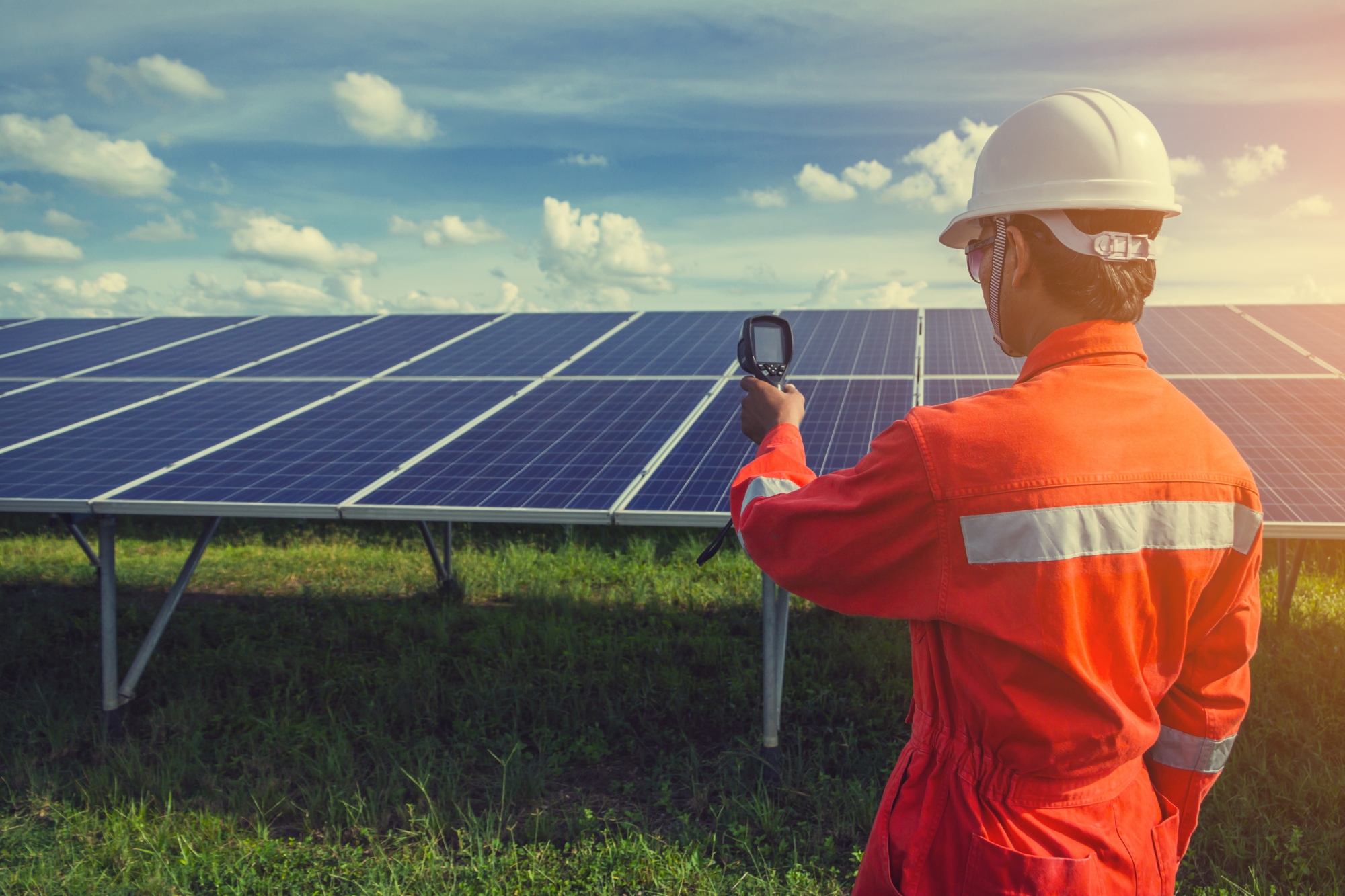
  1. Modules: Cleaning of modules must be done fortnightly. The water used for cleaning must have TDS (Total Dissolved Solids) below the level of 250 parts per million (ppm). Hard brushes may damage the glass surface of the modules and must be avoided. After washing, the modules must be wiped dry to ensure no stains remain, as these could affect the energy efficiency of the solar power system.
  2. Inverter: Keeping in mind the dusty Indian conditions, monthly rather than quarterly servicing is recommended. Use of high-quality filters for ventilation can be very beneficial. It is also important to track and prevent sharp voltage fluctuations.
  3. Cabling connector: There must be no gap between the male and female connector pipes as this could result in an accidental fire, causing damage to the modules.
  4. Transformer: Parameters like Operating Temperature, Oil Temperature and Winding Temperature must be monitored regularly. The transformer must also be cleaned once every six months.
  5. Protection from external elements: It is important to prevent the entry of rats and other rodents which can get electrocuted, causing a short circuit. Besides, high-pressure water can damage the modules. The system must therefore be completely sealed to prevent incidents like these.
  6. Remote monitoring: This is a new development in preventive maintenance in which data from components like inverter, probes and meters can be remotely received and monitored on a continuous basis.

At VEMC, we work to maintain solar plant infrastructure and equipment, to improve the longevity of equipment by preventing excess depreciation and impairment. This enables the solar power plant to produce the maximum amount of energy throughout its operational life, and perfectly align the interests of developers, clients, and investors.

 For further information on any aspect of solar energy, feel free to contact us on +91 98199 07445. Check out our solar story here. We would be happy to assist you in finding the best match based on your requirements. With 72 years of market experience, VEMC provides end-to-end EPC services to its clients. VEMC is ISO 9001:2015 certified and a pioneer in the field of electromechanical engineering products, allied equipment, and services. 

Variable Frequency Drives Control Panel – Uses and Benefits

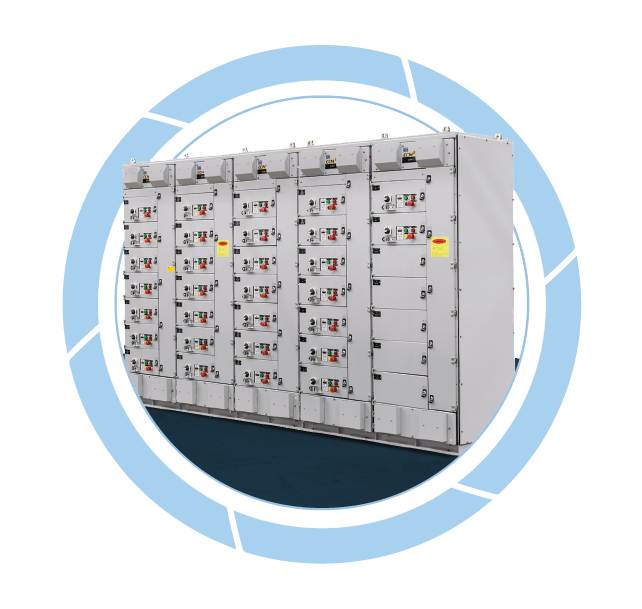
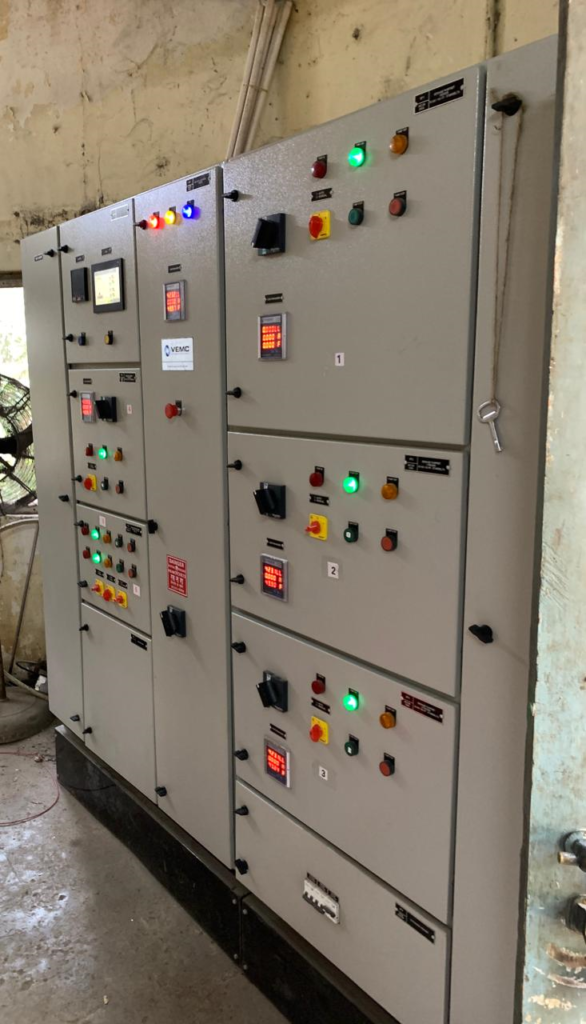
A Variable Frequency Control Panel is used to control the speed of the electric motor and feed pump. These are widely used in drilling, pumping, and applications like conveyors and compressors. VFD panels use the frequency of the voltage applied, to alter the speed of the motors which provides very effective control due to constant flux density.

Most of the industrial applications require variable speeds at peak load conditions and constant speeds at normal operating conditions. In this blog, let’s look at the uses and benefits of VFDs.

  1. Power Switching and Protection: In case of any fault such as short-circuit or overload, a VFD panel holds a circuit breaker or a trip, which not only protects the drive but also the equipment connected to it.
  1. Saves Energy: In times of skyrocketing energy costs, a great amount of energy can be conserved when the motors are operated at variable speeds as per the requirement of the operation. Constant motor speed irrespective of the operation will naturally lead to wastage of energy and pile up the bills.
  1. Limits Starting Current: A VFD delivers low frequency when starting the motor due to which the motor draws less current which never exceeds its nominal rating.  In the absence of a VFD, a motor can draw up to 6 to 8 times more than the nominal current required while starting.
  1. Closed Loop Controlling: This is one of the greatest benefits of a VFD. Closed-loop working of VFDs maintains the speed of the motor at a constant level, even in case of input and load disturbances.
  1. Visual Control: VFDs have a number of field indicators installed to gain real-time information about their power consumption, frequency, and other diagnostic information. This is essential for the operator who may shift the frequency or take precautionary measures based on the monitored values.
  1. Smooth Operation: A VFD helps provide smooth operation especially when starting or stopping a motor. It also reduces the thermal and mechanical stress on motors and belt drives.
  1. High Power Factor: In-built power factor correction circuit in a VFD excludes the need for additional power correction devices. Low power factor results in poor utilization of power due to high reactive losses.
  1. Easy installation and maintenance: Pre-programmed VFDs are easy to install, connect and maintain. VFDs do however require protection from the environment as dirt or chemical accumulation may affect their lifespan.

As a renowned VFD control panel manufacturer, we would be happy to assist you in finding the best match based on your requirements. Feel free to get in touch with our experts on +91 98199 07445. One of India’s best control panel manufacturers, with 72 years of market experience, VEMC provides end-to-end services to its clients. VEMC is ISO 9001:2015 certified and a pioneer in the field of electromechanical engineering products, allied equipment, and services. Our sub-brand VEMCO Solar is a market leader in solar system solutions — be it solar plant erection, procurement, commissioning, solar metering system, or electrical connections. Being one of the leading custom control panel manufacturers, our valued clients are provided with tailor-made solutions to fit all their needs.

6 Tips to Finding the Right Solar Installer Basis Your Requirement

Finding the right solar installer could be a challenging task as the market is flooded with installers claiming to have the required know-how. There are a number of aspects that must be considered while choosing the right professionals in the field. Here are 6 tips that will guide you in your quest for the right installer:

  1. Expertise: As the solar industry is rapidly expanding, there is growing demand for competent professionals with the right skills and expertise. In India, many solar installers go through formal training courses offered by reputed institutes like Indian Institute of Solar Energy and Gujarat Energy Research and Management Institute (GERMI). Certificates from these institutes are the best authentication for skills, knowledge, and expertise.
  2. Track record, experience, and references: Projects with previous clients could provide a good understanding of the level of experience an installer has. An installer must be thorough with the systems installed for other clients and be able to confidently discuss and demonstrate the projects. Speaking to their past clients could be a great way to find out how their installation was handled.
  3. Reputation in the market: Many online forums and sometimes, even the installers’ websites or social media pages can provide valuable insights into their clients’ experiences. A pattern of negative comments and customer complaints would indicate that you need to select another installer.
  4. Use of subcontractors: While installation by subcontractors is a common practice in the industry, there must be complete disclosure and transparency about their expertise, reputation, and track record. It will be important to fix responsibilities and confirm who stands behind the quality of the system.
  5. Warranty: What is the warranty being offered on the equipment? To give you a rough estimate, the average warranty offered on solar panels in around 20 years, and that on batteries and inverters is 5-10 years. Warranties shorter than this can indicate that the quality of the equipment is not up to the mark. 
  6. Competitive quotes: Finally, it is always recommended that you contact as many installers as possible and gather quotes, especially in a business-to-business scenario, where competing bids can help save expenses significantly. The contractors can prepare their bids only after visiting your facility to ascertain the various equipment, labour and logistics costs that will go into installing the system.

With the help of these tips, you can confidently stride towards the solar transformation of your facility.

If you need assistance on any solar engineering services, feel free to contact us on +91 98199 07445. We would be happy to assist you in finding the best match based on your requirements. As one of India’s best solar companies, with 72 years of market experience, VEMC provides end-to-end Solar EPC services to its clients. VEMC is ISO 9001:2015 certified and a pioneer in the field of electromechanical engineering products, allied equipment, and services. Our sub-brand VEMCO Solar (Check out our solar story) is a market leader in solar system solutions — be it solar plant erection, procurement, commissioning, solar metering system, or electrical connections. At VEMCO Solar, our valued clients are provided with customized solar services solutions to fit all their needs.

Banishing The General Myths About Solar Power

If you are looking for ways in which you can be ‘energy smart’ with renewable energy sources that could lessen the effects of global warming on our environment, opt for solar energy. It is a truly sustainable source and has gained popularity across the globe. While solar panels are becoming a popular choice for many, some are still sceptical about it. We are here to help you find out the truth behind some of the common myths.

Solar energy is too expensive

Over the last 10 years, investment in solar energy has been increasing, and the price of solar electricity has dropped by 89%. In India for example, in July 2020, solar power tariff was INR 2.36 per unit, in an auction of 2 GW capacities by the Solar Energy Corporation of India. Significant technological advancements and increased adoption of solar energy has, over time, made production more efficient, reliable, and scalable. That has eventually made it cheaper than energy produced from coal. 

Solar panel installation is too complex and demands a lot of maintenance

The installation of solar panels is as simple as installing any other household appliance, and can be completed in a week by a reliable manufacturer. The panels would need a periodic light cleaning to get rid of the debris, leaves or dust that might obstruct the sun’s rays. A battery-based system might need more cleaning and are relatively more expensive than a system without batteries. 

Solar panels do not work in all weather conditions

It’s a very common misconception that solar panels produce little or no energy during winter. Solar panels can withstand harsh weather conditions and are, in fact, extremely efficient in colder temperatures. For solar panels to generate electricity, you only need one thing — sunshine. Solar energy systems and solar panels are not powered by heat but light. So, regardless of the temperature, solar panels will continue to produce energy as long as they receive sunlight. However, the output will be slightly lower during winter than summer. 

Do the prices of solar panels depend on the size of your home?

The installation of a home solar plant will depend largely on the energy consumption pattern of the household rather than the size of a house. Accordingly, the number of solar panels required will have to be calculated. Based on the number of panels, space availability, and your choice between off-grid and grid-connected power plants, the price will be ascertained.

If we can use clean coal, why invest in solar energy?

Solar power is one of the cleanest forms of renewable energy. Unlike fossil fuels, generating electricity from the sun’s rays does not harm the environment. No harmful substances are released and there are no carbon emissions or pollutants. On the other hand, there is no such thing as ‘clean coal’, and both coal mining and coal-fired power plants affect the environment adversely. 

Hope we managed to debunk some of the common myths about solar energy. It’s time to choose clean and sustainable forms of energy and solar is one of the best options

Do you have other questions around solar energy? Feel free to contact us on +91 98199 07445. With 72 years of market experience, VEMC provides end-to-end EPC services to its clients. VEMC is ISO 9001:2015 certified and a pioneer in the field of electromechanical engineering products, allied equipment, and services. Our sub-brand VEMCO Solar is a market leader in solar solutions — be it solar plant erection, procurement, commissioning, net metering, or electrical connections. We would be glad to include you in our family. 

Future Of Solar Energy Looks Brighter Than Sunshine

Solar energy is clean, renewable, and can provide for a significant proportion of our energy requirements with the help of the latest technologies. According to International Energy Agency, it is, in fact, the cheapest form of electricity in history!

What’s the current state of solar?

According to Ministry of New and Renewable Energy, Government of India, India has achieved 5th position globally, in solar power deployment, and the solar tariff in India is very competitive and has achieved grid parity. The country’s solar power capacity has increased by more than 11 times in the last five years, from 2.6 GW in March 2014 to 30 GW in July 2019. 

If we succeed in improving production further, the energy systems like solar farms and CSP (concentrating solar power) plants would not only be considered as valuable energy resources, but also help create more energy than fossil fuels. It will also help reduce carbon emissions significantly.

Solar energy storage

The success of future energy systems depends on solar energy storage as it can store excess solar power onsite, which can be utilised later, when the sun isn’t shining. However, these systems have expensive lithium-ion batteries, which makes them heavy on the pocket. So, if the cost can be brought down and efficiency can be increased, the installation of these battery storages will become more commonplace in the future.

Floating solar farms

India is about to start work on the world’s largest floating solar energy project at Omkareshwar dam on the Narmada river. The project is expected to produce 600 MW solar energy starting 2022-23. A 100 MW floating plant is expected to become operational in Telengana soon. Spread over 450 acres, the project will have 4.5 lakh photovoltaic panels, and will be scalable in the future. 

Floating solar farms can help preserve land for agricultural and terrestrial ecosystems. It will also help countries that lack adequate land build utility-scale solar farms.

The future of solar panels: The Tesla Solar Roof

Going solar can reduce your electricity bill considerably. While rooftop solar installations are extremely beneficial, many may not like the way in which it changes the look of their homes. To solve this issue, companies like Tesla, are working on making the future solar panels more aesthetically pleasing, so that it could blend in with its surroundings.

Landowners and developers

Increased demand for solar energy can be a great opportunity for land owners, who can lease out their land for solar projects, in exchange for money. This would be a win-win situation for both property owners and solar project developers.

Solar energy is one of the most inexpensive and sustainable forms of power on the planet. With advancements in technology and encouraging government policies, we are all hopeful about a brighter future for the solar industry. That would also mean lesser pollution, reduced use of fossil fuels, lesser carbon emission, and a cleaner future for all of us. If you are keen on leveraging the advantages of solar energy, just contact us on +91 98199 07445. VEMCO Solar (Check out our solar story) offers end-to-end solutions and has empanelled channel partners with the Ministry of New and Renewable Energy, Government of India, for solar PV rooftop, small power plant system integrators and installation. Guided by the knowledge gained by VEMC over 72 years, our aim is to be by your side at every step of the way. VEMC is ISO 9001:2015 certified and a pioneer in the field of electromechanical engineering products, allied equipment, and services. Depending on your requirement, we provide off-grid, on-grid and hybrid solar system solutions as well.

Solar Net Metering VS Gross Metering

It’s 2021 and generating electricity has become easier than ever, with solar energy. While solar power is economical, storing electricity is quite expensive. Therefore, solar panel systems are often connected to the electric grid. So, if you are an on-grid solar consumer, whose rooftop systems are connected to the grid, then there are two ways of metering defined by the government – Net Metering and Gross Metering.

Net Metering

This is an arrangement where the exported solar power is adjusted against the imported energy in the electricity bill. Basically, if the electricity consumed by the user is more than the amount of electricity produced, then it is imported from the grid. On the other hand, if the amount of solar power generated is more than what is consumed by the owner, then they get compensated for the excess amount. For instance, if you use 10 units a day while the electricity generated by your rooftop system is only 6 units, then it will reflect that 4 units have been imported from the grid. Meanwhile, if you use only six units and produce 10 units a day, you will be compensated for the excess power, depending on the rate that is fixed by the state’s electricity regulatory commission. This arrangement can be done on a monthly, half-yearly or annual basis.

Gross Metering

In gross metering, a consumer won’t be able to directly use the electricity that is generated by their rooftop system. This is because the solar power generated is directly fed to the supply grid through a different circuit and the energy required for consumption is imported from the grid. Now that there are two circuits, you will have two meters – one that records the consumption of electricity and the other for production. So, your bill for the amount of electricity you consume will continue to be the same. But, you will be compensated for the total number of units of solar energy produced and fed into the supply grid at a fixed feed-in-tariff (FiT) — the payment for electricity exported to the grid from a renewable energy source.

Gross Metering or Net Metering?

When it comes to financial benefits and high energy requirements, gross metering seems more beneficial than net metering because the return on investment (ROI) from gross metering is fixed and so is the amount of solar power produced and exported. The ROI from net metering arrangement depends on the amount of solar energy you save. If you’re looking at installing a system sometime soon, you might not want to opt for gross metering given its present tariff rates, which are quite high. 

If you’re looking at long term benefits, it is advisable to choose net metering. With gross metering, you’ll be billed twice — once for your cumulative electricity consumption and then for the solar power your system generated and fed into the supply grid. In net metering, only one bill is generated and it gives you a measure of the total consumption of electricity as well as energy production.

However, it is recommended to get a cost comparison done from a professional before you make a purchase. At VEMCO Solar (Check out our solar story), we offer end-to-end EPC services to our valued clients. We have empanelled channel partners with the Ministry of New and Renewable Energy, Government of India, for solar PV rooftop, small power plant system integrators and installation. Guided by the knowledge gained by our parent brand VEMC over 72 years, our aim is to be by your side at every step of the way. VEMC is ISO 9001:2015 certified and a pioneer in the field of electromechanical engineering products, allied equipment, and services. Depending on requirement and feasibility, we offer off-grid, on-grid and hybrid solar system solutions as well. Please feel free to contact us on +91 98199 07445. 

5 Solar Panel Technologies Shaping the Future Of Solar Power

Solar is already the world’s fastest-growing energy technology. It is cost-efficient and scalable and now, with new solar panel technologies, the future looks bright for renewable energy as it promises to improve efficiency and lower costs further.

Here are five solar technologies that are likely to impact the solar industry.

Floating Solar Farms 

Floating solar farms, also known as floatovoltaics, are a new and efficient way of solar plant installations on ponds, lakes, and man-made dam reservoirs instead of being fixed on the ground. They not only offer greater efficiency but also cost less to install than traditional land-based solar panels. Floatovoltaics can help generate large amounts of electricity without taking up valuable real estate, produce clean solar power, and prevent noxious algae production (which reduces water treatment costs), among other things. Also, the power production of floatovoltaics is high because floating solar panels are surrounded by water bodies which act as natural coolants improving efficiency rates and minimising energy waste.

BIPV Solar Technology

BIPV (building-integrated photovoltaics) systems comprise photovoltaic (PV) materials that can be integrated into the structure of a building such as roofs, skylights, canopies, curtain walls, or facades, during the initial construction. BIPV solar technology has two purposes — while it serves as the outer layer of a building/structure and generates electricity for onsite use, it also exports electricity to the power grid so that it can be utilised later. BIPV installations significantly reduce operational carbon emissions of buildings, produce on-site clean electricity without additional land area, enhance the visual appearance of buildings, and reduce electricity consumption.

Solar Skin

Conscious homeowners, who feel that solar panels interfere with their home’s aesthetic appeal, can now go green with solar skins. This PV technology uses selective light filtration so that the sunlight is filtered and reached the solar cells beneath. Not only homes, solar skins can work well for businesses and offices too – they are customisable and display anything you want, be it a type of roof or logos, advertisements, and flags. With a rail-less racking system and fine finish, solar skins are aesthetically pleasing.

Solar Fabric

Solar fabric technology combines flexible solar panels with fabric to create a canopy that generates electricity when exposed to light. When PV cells are embedded into your t-shirts, stoles, winter coats, or other garments, it will not just keep you warm, but also power your phone and supply energy for other needs while you’re on the move. With development and advancement of solar fabric technology, it will help save on installation costs and solar panel mounting.

PVNB Technology

The PVNB (photovoltaic solar noise barriers) are technologies that aim to lower noise levels, shield sensitive receptors from noise generated by road traffic and produce clean and sustainable energy. This technology can help with soundproofing (especially areas near railway and road infrastructure), light transmission, resisting weathering and UV rays, and generating energy sustainably.  Would you like to know how you can use solar energy to your advantage? We, at VEMCO Solar would be glad to assist you. Be it solar plant erection, procurement, commissioning, net metering, electrical connections, or anything related to solar, we will be the right partners for you! Guided by the knowledge gained by VEMC over 72 years, our aim is to be by your side at every step of the way. VEMC is ISO 9001:2015 certified and a pioneer in the field of electromechanical engineering products, allied equipment, and services. Depending on your requirement, we provide off-grid, on-grid and hybrid solar system solutions as well. Please feel free to contact us on +91 98199 07445.

Debunking 5 Common Myths About Solar

If you are looking for ways in which you can be ‘energy smart’ with renewable energy sources that could lessen the effects of global warming on our environment, opt for solar energy. It is a truly sustainable source and has gained popularity across the globe. While solar panels are becoming a popular choice for many, some are still sceptical about it. We are here to help you find out the truth behind some of the common myths.

Solar energy is too expensive

Over the last 10 years, investment in solar energy has been increasing, and the price of solar electricity has dropped by 89%. In India for example, in July 2020, the solar power tariff was INR 2.36 per unit, in an auction of 2 GW capacities by the Solar Energy Corporation of India. Significant technological advancements and increased adoption of solar energy have, over time, made production more efficient, reliable, and scalable. That has eventually made it cheaper than energy produced from coal.

Solar panel installation is too complex and demands a lot of maintenance

The installation of solar panels is as simple as installing any other household appliance and can be completed in a week by a reliable manufacturer. The panels would need a periodic light cleaning to get rid of the debris, leaves or dust that might obstruct the sun’s rays. A battery-based system might need more cleaning and are relatively more expensive than a system without batteries.

Solar panels do not work in all weather conditions

It’s a very common misconception that solar panels produce little or no energy during winter. Solar panels can withstand harsh weather conditions and are, in fact, extremely efficient in colder temperatures. For solar panels to generate electricity, you only need one thing — sunshine. Solar energy systems and solar panels are not powered by heat but by light. So, regardless of the temperature, solar panels will continue to produce energy as long as they receive sunlight. However, the output will be slightly lower during winter than in summer.

Do the prices of solar panels depend on the size of your home?

The installation of a home solar plant will depend largely on the energy consumption pattern of the household rather than the size of a house. Accordingly, the number of solar panels required will have to be calculated. Based on the number of panels, space availability, and your choice between off-grid and grid-connected power plants, the price will be ascertained.

If we can use clean coal, why invest in solar energy?

Solar power is one of the cleanest forms of renewable energy. Unlike fossil fuels, generating electricity from the sun’s rays does not harm the environment. No harmful substances are released and there are no carbon emissions or pollutants. On the other hand, there is no such thing as ‘clean coal, and both coal mining and coal-fired power plants affect the environment adversely.

Hope we managed to debunk some of the common myths about solar energy. It’s time to choose clean and sustainable forms of energy and solar is one of the best options

Do you have other questions about solar energy? Feel free to contact us on +91 98199 07445. With 72 years of market experience, VEMC provides end-to-end EPC services to its clients. VEMC is ISO 9001:2015 certified and a pioneer in the field of electromechanical engineering products, allied equipment, and services. Our sub-brand VEMCO Solar is a market leader in solar solutions — be it solar plant erection, procurement, commissioning, net metering, or electrical connections. We would be glad to include you in our family.

What is the Importance of a Solar Panel Mounting Structure?

The demand for solar power is increasing worldwide as more and more countries are capitalizing on the benefits of this form of sustainable energy. For a solar power plant to operate successfully, the installation must be done right and the mounting structure plays a crucial role in that. This structure is support that holds the solar panels on roofs, building facades, or on the ground. If anything goes wrong with the structure, it would affect the entire solar project (which is ideally expected to be working for at least 20-25 years).

So, let’s take a look at the factors to be kept in mind.

Angle 

Paying attention to the orientation and placement of solar panels is vital. For a fixed roof-mounted solar energy system, the angle should be equal to the latitude of the installation site. Generally, pitch angles between 30 and 45 degrees are suitable for most locations. That helps ensure that the panels produce maximum energy while they are being exposed to the highest intensity of sunlight for a long period of time.

Direction

Since there is maximum sunlight in the south, it is advised that you place your solar panels facing south. While east and west work well too, north is one direction that might not work well.

Location

Given that different parts of the earth receive sunlight for different lengths of time, you must check your latitudinal and longitudinal location. One of the simplest ways to locate the latitude and longitude of your location would be to open Google Maps and right-click on the place.

Shade Area

Solar panels work best when there is no shade cast upon them. So, ensure that there are no shadow areas or trees, or structures that can cast a shadow, around. In fact, even if a single solar panel in the solar array is covered by a shade, the output of the whole system will be compromised.

Surface of Installation

Ahead of installing the solar panels, make sure that the surface is smooth and sturdy, and can carry the weight of the whole solar panel system. 

Solar panel supplier

Although a mounting structure looks like easy work, it involves certain technicalities. Therefore, it’s advised to purchase the mounting structure from a solar panel manufacturer. 

Check out the pros of buying a mounting structure from a solar panel supplier:

Customized stand: A solar company can customize a stand according to specific requirements such as the structure of the stand, positioning of holes, and customizing the weight, height, and length.

Installation service: When you buy a mounting structure from a solar company, they not only provide you with installation service but also make sure that the installation is safe and secure. They also test it for you.

Consultation: The representative from a solar company has the required knowledge about installations and check the latitudinal and longitudinal location, direction, and angle, ensuring better performance of the solar panels. They can also guide a customer with everything they need to know.

Don’t get confused by the wide range of mounting structures available in the market. Preferably, consult an expert who will be able to guide you, based on your requirements. Should you have any queries, feel free to contact us on +91 98199 07445. We, at VEMCO Solar, would be happy to assist you switch to solar effortlessly.

With 72 years of market experience, VEMC provides end-to-end EPC services to its clients. VEMC is ISO 9001:2015 certified and a pioneer in the field of electromechanical engineering products, allied equipment, and services. Our sub-brand VEMCO Solar is a market leader in solar solutions — be it solar plant erection, procurement, commissioning, net metering, or electrical connections. We would be glad to include you in our family.

On-Grid Solar Could Change The Face Of The Energy Industry In India

Solar power is one of the most sustainable forms of energy. When you install a solar system, you choose from 3 types of solar power systems – On-Grid, Off-Grid and Hybrid. However, most consumers prefer on-grid solar systems to enjoy the benefits of net metering policies and avail credit on their electricity bills.

What is an on-grid solar system? 

An on-grid solar system or a grid-tied system is a solar power generation system that is connected to the local utility grid. This is the popular choice for corporates and commercial consumption as individual fluctuations – lesser or more – in energy production, get covered by the utility grid. Excess energy is sent to the grid’s power company in exchange for credit which can be cashed out at the end of a year. This is called net metering. As per the feed-in-tariff rates in your vicinity, you’ll be compensated for the extra power fed back to the grid. On the other hand, if your solar electric system is producing less power than you need, you can draw additional power from the grid. On-grid system also does away with the need to install battery back-ups. 

How much does an on-grid solar system cost?

An on-grid solar system costs around INR 45,000 to INR 65,000 per Kilowatt in India but the price varies according to the brand you chose. On an average, the on-grid rooftop solar system will cost you about Rs. 75 per watt.

Benefits of on-grid solar system

The various benefits include:

  • Significant reduction in electricity bills
  • Hassle-free installation
  • Easy maintenance as the system does not require batteries 
  • Longer life than an off-grid system
  • Government subsidies on installation of grid-tied rooftop solar systems
  • Advantage of net metering

How to get a subsidy?

Do you own an electricity meter? Do you have a valid identity proof and property papers to go through the installation of a grid-connected and battery-less solar system? 

If your answer to both the questions is yes, then you are entitled to claim for subsidies and other incentives from the government. 

However, the only thing to keep in mind is that an on-grid solar system won’t perform or generate electricity during a power outage. If the on-grid system continues to supply energy to the grid, the lives of the people working on the damaged grid will be at great risk.

There are several advantages of installing an on-grid solar system, which is why, many business owners, organisations and corporate customers are shifting to this eco-friendly lifestyle. By installing a grid-connected solar system, you are not only choosing an eco-friendly life, but also availing of credits on your electricity bills, courtesy net meters. Currently, this program is a huge success in Spain, Australia, Canada, Denmark, Italy and The United States. In India, it is still in the process but it is expected that very soon, on-grid solar power systems will change the face of the energy industry in the country.If you need a trusted partner who can help you switch to solar in a hassle-free way, VEMCO Solar is there for you. We offer end-to-end solutions and have empanelled channel partners with the Ministry of New and Renewable Energy, Government of India, for solar PV rooftop, small power plant system integrators and installation. Guided by the knowledge gained by VEMC over 72 years, our aim is to be by your side at every step of the way. VEMC is ISO 9001:2015 certified and a pioneer in the field of electromechanical engineering products, allied equipment, and services. Depending on your requirement, we provide off-grid, on-grid and hybrid solar system solutions as well. Just contact us on +91 98199 07445.

6 Things to Ask Solar Consultant

It is really important to let your guards down and learn everything about solar panels before you plan to get one for your residential or commercial space. Well, having a direct chat with solar consultants might be your guide over here. As they are associated with this field for a pretty long time, you can expect to get quality responses to all your queries. So, let’s learn about the 6 things that you should primarily ask your consultant, especially from Vijay Engineering and Machinery Company (VEMC).

1.Don’t forget to ask about the Financial Options:

Can you benefit from that tax credit? Does the solar energy consultant have any lease option or competitive loan by his side for the clients? Most companies will push for the Power Purchase Agreement. It will make your solar contractor the electric company. It means you are not going to own the system and just need to pay for the power it produces for your place. But, the solar contractor has every right to raise the rates. That’s why another loan or leasing program with a 0 down and 0 increase guarantee is always important for most customers.

2. Ask to check their design centre:

If you want, the consultant can sees the company’s design centre or operation office. Avoid letting them meet you at your place. You need to know more about the company and its precise workflow because you proceed further and get panels from their sides. When you have experienced groups like Vijay Engineering and Machinery Company (VEMC), you don’t have to worry much. With 72 years of experience, you can expect only the best from this source!

3. Ask for expansion of solar energy system in future:

This is another interesting point for you to jot down whenever you are dealing with the solar panel consultant for your queries. Ask them if they can expand the current solar system later if the need arises. With some countries becoming less dependent on fossil fuel, the consumers need to know if they can create a larger system in the near future for accommodating the power needed for their devices.

4. Ask more about the panels:

You should ask the consultant about the solar panels they are planning to install at your place. Always remember that not all panels are the same. Some are more durable and efficient than others. Experienced companies like Vijay Engineering and Machinery Company (VEMC) are able to produce around 75% more energy over the course of their working period. So, always research the panels through one third-party source to ensure that the products will last long.

5. Ask about the benefits of working with them:

There must be some benefits involved while working with a local solar contractor over a national brand. So, do ask about those benefits before you get yourself involved with their solar panels. Vijay Engineering and Machinery Company (VEMC) is one ISO 9001:2015 certified firm and a pioneer in the field of electromechanical engineering items, allied equipment, and all the necessary services. This company is CRISIL MSE-1 rated. They are known to present strategic expansion and consistency throughout for providing excellence in service, quality of product, and leadership. So, working with this team will save you a lot of money and time!

6. Ask if moving towards solar panel is a good call for you:

Well, the answer to such a question can be a complex one. It depends on multiple physical factors. How much are you currently paying on your electric bill? How much shade does your roof actually get? Why are you looking for solar panels? Is it because of the financial benefits or anything else? Make sure to get these questions answered first before you can opt for the solar panels.

Get help from Vijay Engineering and Machinery Company (VEMC):

If you are currently eyeing the most affordable solar panel system cost and panels that are designed to last long, then Vijay Engineering and Machinery Company (VEMC) is your name. VEMC Solar presents end-to-end solutions, starting from selecting the right set-up kin to the final selection of best Opex or Capex models. So, you can trust this team for getting all your solar panel queries answered.

How To Reduce Unexpected Long-Term O&M Costs With A Smart Solar Solution

Once a solar power plant is installed, the next aspect to be considered is operations and maintenance (O&M) management. It is a crucial aspect of any solar project since it mitigates the risks of unexpected costs and must never be overlooked. Efficient O&M ensures the generation of maximum power, while also providing a sizeable return on investment. No matter the scale of your photovoltaic (PV) module usage, you will always need an effective and efficient O&M solution. And you can do this by taking the SMART goals approach.

What is a SMART solar solution?

In management practices, SMART is an oft-used acronym for better guidance towards your set goals. SMART stands for:

  • Specific: Making sure that your objectives are well-defined and clear.
  • Measurable: Chosen criteria must be measurable to ensure the tracking of progress. 
  • Achievable: Keep your goals attainable. Impossible goals can lead to demoralization.
  • Realistic: Keep your objectives realistic, relevant, and within reach.
  • Timely: A clearly defined timeline is necessary along with target dates.

The SMART systematic approach towards making your goals clear and reachable will help reduce long-term O&M costs.

What are the steps to reduce unexpected costs?

  1. Preventative focus: In order to keep the equipment used in solar panels in top condition, it is necessary to conduct advanced analytics and condition monitoring testing. This reduces the possibility of any problems arising in the future, thus saving the time and money spent on remedial measures.
  2. Timely maintenance: Just as we abide by the user manual for maintaining other pieces of equipment, doing the same for solar solutions is always a good idea. Timely maintenance greatly reduces the possibility of errors and production loss. O&M providers like VEMC can offer planned maintenance schedules to maximise equipment performance and minimise downtimes.
  3. Spare management: Creating a detailed breakdown impact analysis of solar plant sites is necessary to prepare a priority matrix for spare management and better maintenance.
  4. Remedial maintenance: One of the main aspects of O&M is, of course, remedial maintenance. Any solar plant must have proper planning in place for repairs or replacement. This not only ensures immediate solutions but also helps avoid costly system failures.
  5. Safety: With the handling of large equipment comes the problem of ensuring the safety of everyone working around it. An experienced O&M provider will be equipped with skilled employees who perform their jobs with utmost care. They will also provide their maintenance personnel with the safety equipment needed to perform their jobs in a secure manner.

That said, it’s absolutely necessary to have an O&M plan in place for your solar plant to alleviate long-term costs. At VEMCO Solar, our valued clients are provided with customized plans to fit all their needs. VEMCO Solar offers end-to-end solutions and has empanelled channel partners with the Ministry of New and Renewable Energy, Government of India, for solar PV rooftop, small power plant system integrators, and installation. Guided by the knowledge gained by VEMC over 72 years, our aim is to be by your side at every step of the way. VEMC is ISO 9001:2015 certified and a pioneer in the field of electromechanical engineering products, allied equipment, and services. Please feel free to contact us on +91 98199 07445.

Industrial Process Pumps – An Overall Detail

In layman’s terms, a process or industrial process pump is a centrifugal pump, widely used in chemical processes, mostly in petrochemical industries and oil refineries. The design is mainly that of the back pull-out. Like most of the chemical pumps, these process ones are used for handling some of the aggressive chemical fluids.

These options are also highly suitable for higher system pressures and temperatures. So, if the process pump is used in any oil-based industry, it will generally comply with the requirements or API standards.

An Overview of the Industrial Pumps:

These industrial pumps are the most common and popularly used pump types for transferring fluids. It uses an impeller for displacing the water or any type of fluid by using its centrifugal force. This undisputed pump choice is perfect for delivering liquid from one location to another.  The industrial pumps are used in multiple sectors including municipal, agriculture, power generation plants, industrial, mining, petroleum, pharmaceutical, chemical, and all the other options. 

  • Reputed Industrial pumps distributors like Vijay Engineering & Machinery Company  in Mumbai work hard to deliver top-notch quality centrifugal pumps. These pumps are of high utility and can handle large volumes of liquids having high or low PH and fluids with flammable properties.
  • These pumps are mainly designed and suitable for liquids with low viscosity that pours much like oil or water. The more viscous ones, like 10 or 20 wt. oils at around 68 to 70 degrees F will need added horsepower for these pumps to work.
  • Due to the current design of centrifugal pumps they work out to be the effective solution for various applications. Moreover, because of few parts installation, maintenance remains easier and cheaper, when compared to positive displacement pumps.

The above information proves to be a great resource to gather insights about industrial pumps. It will further enable you to select the best industrial pump based upon your requirements.

Major factors affecting the selection of industrial pumps:

To get a better understanding of industrial water pumps in Mumbai, it is important to learn more about the factors, which actually affect their performance level. The major points are listed below for your reference:

  • MOC (MATERIAL OF CONSTRUCTION):  

The materials used for manufacturing the industrial pumps will definitely put a hold on the performance level. The performance level of the water pumps varies based on the material of construction.  Some of the materials used in pump construction are bronze, cast iron, manganese bronze, multiple grades of stainless steel, duplex steel, haster alloy metallurgy, and nickel-aluminium bronze

  • TEMPERATURE:

Another interesting factor affecting the performance rate of industrial pumps is the heat or temperature. The pumps are highly effective on their own within temperatures around 300 to 500 degrees F. It is important the temperature of any process liquid as some of the liquids when in contact with the atmosphere may solidify and hamper the complete process.

  • VISCOSITY:

A higher level of viscosity is difficult to pump up liquids. Higher viscosity liquids will act more like solid and will make pumping a difficult process. But, a smooth-flowing liquid can enhance the working mechanism of industrial pumps well.

  • SPECIFIC GRAVITY:

Generally speaking, specific gravity is the weight of the presented volume of liquid as expressed in relation to the weight of an equal volume of clear water as around 62 degrees F. It is mostly expressed as 1.0.

  • NPSH REQUIRED:

For better functions, it is important to learn about NPSH-A and NPSH-R as two major values.  NPSH-R is the suction pressure at which the cavitation has reduced pump performance by around 3%. NPSH-A is calculated from the suction portion system configuration. Note that NPSH available should always be greater than NPSH required. The concept of NPsh is extremely important while evaluating the selection of any chemical process pump.

  • MECHANICAL SEAL SELECTION:

Selecting the right mechanical seal can enhance the performance level of industrial pumps. The right mechanical seal needs to be wear and corrosion resistant with good thermal properties.

The leading experts:

If you are looking out for industrial pumps, then get in touch with Vijay Engineering and Machinery Company. Our evolution can be traced back to the year 1948. From a modest water pump supplier to an electro-mechanical solution provider, this monumental transformation has made VEMC a pioneer in the field of electromechanical engineering products, allied equipment, and services. We are the authorized master distributors of Kirloskar Group of Companies. Our key functional areas include Taloja MIDC, Bhiwandi, Mumbai, Ambernath MIDC, Tarapur, Navi Mumbai, Thane, Ratnagiri, and many more.
For additional details on the industrial pumps, feel free to visit our official website at https://www.vemc.co.in/ or give us a call on our official number at +91 22 4343 6655.

Is Solar Energy Still A Good Investment Under New MERC Norms?

Even though the recent revision of the Maharashtra Electricity Regulatory Commission (MERC) tariff has slashed the price for power distribution companies, what does it mean for the solar energy sector? Is it still a good investment?

Earlier, the Maharashtra State Electricity Distribution Company Limited (MSEDCL) had proposed that a considerable grid support charge should be added to net metering rooftop solar systems which have a capacity of over 10 kW.

Well, the good thing is that despite the looming possibility of solar power prices to rise amidst the coronavirus pandemic, the Commission decided to NOT levy any support charges to on-grid solar system installation on rooftops. This will hold until the total rooftop solar photovoltaic module capacity of the state reaches 2 GW. 

The fact is that the decision was taken against the regulatory mandate to impose grid support charges in an attempt to reduce additional tariff burden on non-solar consumers. An additional banking charge has also been approved that includes an energy adjustment of 7.5% for HT and 12% for LT of the excess generated energy which will be fed back into the grid.

Also, the commission has exempted additional fixed charges behind the meter rooftop solar to ensure that such installations are registered primarily for grid security.

These latest changes, indeed make both off-grid solar system and on-grid solar system a good investment option. Plus, you have Vijay Engineering and Machinery Company to provide you with the best solar solutions and maximise your savings.

How Revised MERC Tariff Is Going To Affect The Consumers

The coronavirus pandemic has not only slowed down everyday life but has also wreaked havoc on India’s economy as businesses and trades all across the nation are floundering to stay afloat, and the average middle-class individuals are struggling to make ends meet in the absence of functioning work sources. In this bleak scenario, the recent revision of the Maharashtra Electricity Regulatory Commission (MERC) tariff has slashed the price for power distribution companies in an attempt to boost the state’s economy but is it enough? Or is it time to switch to more renewable sources of energy like solar street lights, solar inverters, etc.

Having been applied since April 1, the MERC rates have been reduced for the first time in 10-15 years. 

The Impact of the Revision on Consumers

The tariff has been reduced by 5-7% for domestic consumers, while industrial and commercial consumers now avail the benefit of the prices being reduced by 10-12%. But compared to these high benefits, the tariff has been barely reduced for agriculture consumers – farmers received only a 1% reduction in electricity costs.

These revisions are for a period of five years and will allow power distribution companies to supply to consumers at a much lower rate. 

Still find it costly? Well, all you have to do is switch to a “solar” lifestyle with VEMCL’s aid! From solar rooftop to ground mount solutions and off-grid to on-grid solutions, we are here to make your smart transition easier with your particular need specific customised solutions.

Impact Of Pandemic COVID – 19 On Solar Business

There is no section of human life that hasn’t been affected by the novel coronavirus pandemic. This includes the solar energy business too, which has taken a hit as well, but unlike other sectors, not only has it not been too severely affected but is also expected to recover a lot quicker!

Many global industry analysts had predicted that there would be a shortage of solar wafers, module glass, and other components in China, which would, in turn, lead to a rise in solar component prices, but thankfully, no such escalation has been observed, though there have been disruptions in the supply chain. 

When it comes to the solar energy business, China dominates the PV modules market with India as one of its biggest buyers. In fact, Chinese firms provide 80% of the solar cells and modules used in India as they make up for 40-60% of the total cost of a solar energy project. Luckily, nearly 80% of the solar industry in China has already recovered and whatever supply chain disruptions have taken place are expected to be fully restored in some time. 

When it comes to the solar energy business, China dominates the PV modules market with India as one of its biggest buyers. In fact, Chinese firms provide 80% of the solar cells and modules used in India as they make up for 40-60% of the total cost of a solar energy project. Luckily, nearly 80% of the solar industry in China has already recovered and whatever supply chain disruptions have taken place are expected to be fully restored in some time. 

As the curve of the pandemic has almost flattened in China, employees are gradually resuming work as restrictions are being eased, which means that export of many solar energy-related materials like PV panels, aluminium frames, used in the creation of solar grid system, and other key components like solar inverters, module mounts, etc. has now become possible. 

Industrial Air Compressor: Application, Uses & Working

Industry-used air compressors are very different from your regular home-used air compressor. If you are unaware of industrial air compressors’ features and capabilities, it would be tough to use them in the industry.

How does compressed air work? 

The compressed air basics are apparent. Compressed air is only air that is held under pressure more significant than the atmosphere. Compressed air technology has been around for decades, but it has progressed like any other technology. It is commonly used commercially and residentially, but compressed air technology’s industrial applications are enormous.

 An air compressor functions similarly to that of your car engine. Pistons press down on a combination of air and gasoline in your car engine. The mixture compresses and then ignites, which generates energy. An air compressor does the same thing, in the simplest form. A piston forces air down in the compressor, pressurizes it, and stores it in the underlying tank. The air compressor used today can hold vast quantities of pressurized air in its tanks because of technology.

Most Common Industry Applications

Air compressors are used in various industrial applications, from the production of pharmaceuticals and food and beverages to nuclear power and the production of chemicals and petrochemicals. The design, engineering, and service capabilities provide a broad cross-section of industries with efficient operations and cost savings. Industries that routinely use highly compressed air volumes include the following:

Petrochemical / Chemical

Chemical & petrochemical plants require compressed air of very high quality. Additionally, these plants also choose inherently safe systems regardless of the unsafe environments that might occur.

Pharmaceutical

As with the chemical and petrochemical industries, there are stringent criteria for compressed air for pharmaceutical applications. It is essential to provide compressed air of the highest quality, especially when the air contacts raw materials or finished products.

Food and Beverage

Again, the Food and Beverage Industries demand high-purity air supplied consistently as with pharmaceuticals. The atmosphere that could come into contact with the substance of food or drink must be safe.

Manufacturing

In general, compressed air quality may vary widely in manufacturing applications, depending on the use. Some applications need an air of general-purpose, while others require a mixture of general-purpose and instrument grades of higher quality.

Metal Manufacturing

Air compressors are used for several processes at the finishing end at metal production plants. Pressurized air is used as newly shaped metals take shape to power the pneumatic tools that cut raw metal supplies into measured lengths and specified conditions. The grinding tools that smooth out and clean the surfaces of metal items are often used by air compressors to power them.

 Ships Building

The shipbuilding processes involve a complex arsenal of instruments and machinery, many of which depend on air compressors. Air-powered tools are used to cut the pieces, smooth the surfaces, refine the edges, and attach separate components into one during shipbuilding phases where the parts are made. Further rounds of pneumatic tools are used after the assembly stages to paint and apply finishes to different naval vessel details.

Uses

Energy Air is, first of all, used to store and transfer energy for mechanical work. It is used to power pneumatic manufacturing machinery, air-operated lathe chucks, pressure clean parts, and manufacturing to convey or cool components.

On the other hand, active air is needed as a dynamic and integral part of a specific method. In this situation, the air comes into contact with the product; the air quality is, therefore, essential.  The air compressor dealers in Navi Mumbai ensure clean, dry air quality, or CDA quality for short, is improved using oil-free compressors and treating the air using one of the many quality air tools available. 

5 Basic Questions Need to Ask Before Purchasing the Air Compressor

A compressor has a wide variety of applications in various businesses and manufacturing industries. When you think about an air compressor, the one thing that pops in mind is that it is present at almost every shop from the garage to the dentist’s office. The popularity of the compressor is because it is reliable and can work in virtually any setup and keep well to the pace. But many a time people are made fools just because they don’t know anything about compressors while buying one. Here is a checklist of questions that will help buy a new compressor. Answering these questions will help in finalizing the right air compressor based on your needs.

What is the application for which the compressor is required?

The answer to this question decides the type of compressor that you are going to buy. The size of the compressor is determined by the most crucial factor that is the type of application you are using it. Also decide how long you intend to use the compressor whether it is 10 or 20 hours a day, five days a week, or only occasionally. Buy a perfect compressor like a screw compressor if your demands are consistent. If the needs are constant, get a compressor that is designed for a duty-cycle which equals or exceeds specified requirements.

Where will the compressor be placed?

The second main question that you have to answer before buying a compressor.

For example, if it is to be installed outdoors, the compressor would require superior protection against rain and heat. The compressor must have adequate ventilation for proper functioning since most reciprocating compressors are air-cooled. The compressor should not be placed inside of a closet. The closet, in most cases, won’t have enough ventilation to handle the heat produced by the compressor. Also, be mindful that sunlight doesn’t fall on the equipment and the noise generated it.

How much PSI do you require?

The PSI of the compressor will differ based on the type of work that you perform. The demand for compressor pressure depends on the needs of the tools that you are using. Check the system that requires the highest volume of air and use that as a reference to select the compressor. Also, be careful that you do not overpressure the system. Go according to the specification of the manufacturer. The pressure also determines whether the unit should be a single-stage or two-stage compressor.

How much airflow (CFM) does your operation require?

Cubic feet per minute or CFM is the measure of airflow created by the compressor. Sometimes the ideal volume of air is not exactly the ideal CFM ratings. In that case, take a load cycle on the existing compressor for all shifts if possible. Installing a flow meter on the new compressor for a nominal cost can save you thousands in the long run. Once you have determined your flow requirements, you can match that to consider the needs for future growth. Oversized compressors will use more power and increase the cost of power in the long run.

What is the type of control system that you need?

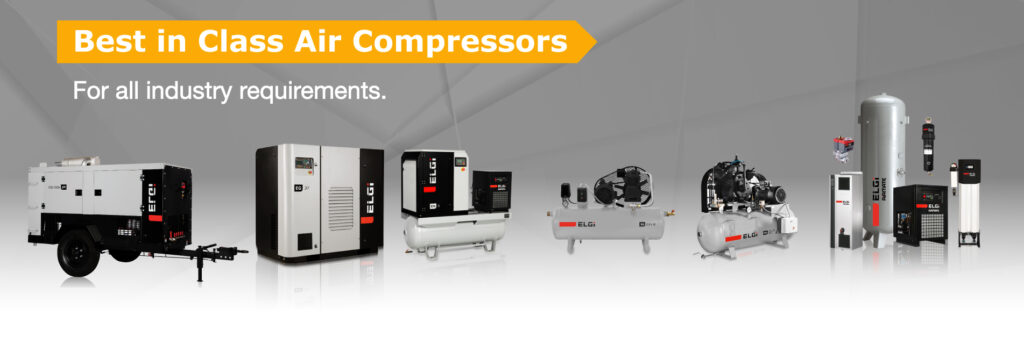
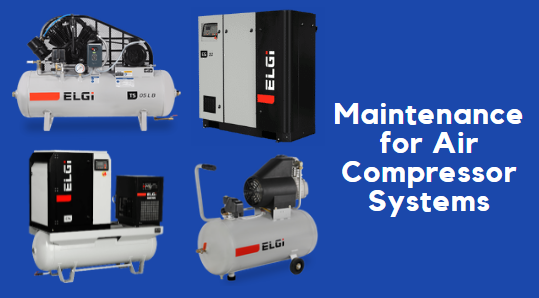
There are three variants of a control system that can be employed in a shop. The first is the start/stop system, the second is the constant speed control, and the last one is the dual control system. The Elgi air compressor has various types and will suit perfectly for your specifications.

Bottom line

Compressors help in maintaining the quality of the shop and efficiency. You can go for a screw air compressor that would be the best choice due to capabilities and functionality.