
VEMC-Blogs

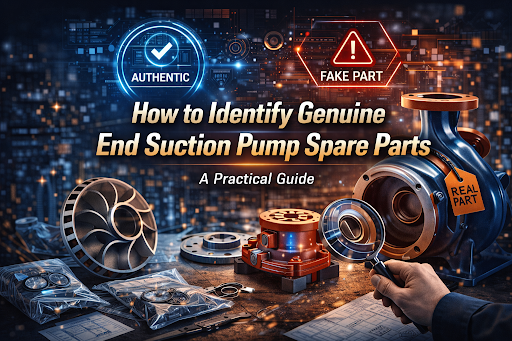
How to Identify Genuine End Suction Pump Spare Parts: A Practical Guide

Identify Genuine End Suction Pump Spare Parts

Introduction

In industrial pumping systems, the reliability of your equipment depends not just on the pump, but also on the quality of its spare parts. Using substandard or counterfeit components can lead to frequent breakdowns, reduced efficiency, and increased maintenance costs.

When sourcing end suction pump spares, it is essential to ensure authenticity to maintain performance, safety, and long-term durability.

Why Choosing Genuine Spare Parts Matters

Genuine spare parts are specifically designed to match the original pump’s specifications, ensuring:

  • Proper fit and compatibility 
  • Optimal efficiency and performance 
  • Longer service life 
  • Reduced risk of unexpected failures 

On the other hand, non-genuine parts may compromise system reliability and increase lifecycle costs.

Key Components in End Suction Pumps

Understanding the main components helps in identifying genuine parts:

  • Impeller 
  • Shaft 
  • Mechanical seal 
  • Bearings 
  • Wear rings 
  • Casing 

Each component plays a critical role in maintaining pump efficiency and performance.

How to Identify Genuine End Suction Pump Spares

1. Check Manufacturer Branding & Markings

Genuine end suction pump spares will have:

  • Clear brand markings 
  • Part numbers 
  • Manufacturer logos 

Avoid parts with missing or unclear identification.

2. Verify Material Quality

Authentic parts are made from specified materials such as:

  • Cast iron 
  • Stainless steel 
  • Bronze 

Poor-quality or lightweight materials are often a red flag.

3. Inspect Packaging

Original spare parts typically come in:

  • Proper branded packaging 
  • Sealed boxes with labels 
  • Documentation or certificates 

Damaged or unbranded packaging may indicate counterfeit products.

4. Ensure Dimensional Accuracy

Genuine parts are manufactured to precise tolerances. Any mismatch in size, fitting, or alignment can affect performance.

5. Purchase from Authorized Sources

Always source end suction pump spares from:

  • Authorized dealers 
  • OEM-approved suppliers 
  • Trusted service providers 

This ensures authenticity and warranty support.

6. Check Certifications & Documentation

Look for:

  • Quality certifications 
  • Test reports 
  • Compliance with industry standards 

7. Compare Performance & Finish

Genuine parts typically have:

  • Smooth finishing 
  • Proper machining 
  • Consistent quality 

Rough edges or poor finishing may indicate inferior manufacturing.

Risks of Using Non-Genuine Spare Parts

Using counterfeit or low-quality spares can lead to:

  • Reduced pump efficiency 
  • Increased energy consumption 
  • Frequent failures and downtime 
  • Damage to other pump components 
  • Higher maintenance and replacement costs 

Best Practices for Spare Parts Management

  • Maintain a record of original part specifications 
  • Follow preventive maintenance schedules 
  • Replace parts proactively rather than reactively 
  • Work with trusted suppliers for consistent quality 

Frequently Asked Questions (FAQs)

1. How can I verify if a spare part is genuine?

Check for manufacturer markings, packaging, certifications, and purchase only from authorized suppliers.

2. Are genuine spare parts more expensive?

While they may have a higher upfront cost, they offer better durability and lower long-term costs.

3. Can non-genuine parts damage my pump?

Yes, they can cause improper fit, increased wear, and even failure of critical components.

4. How often should pump spares be replaced?

Replacement depends on operating conditions, but regular inspection helps identify wear early.

5. Why is dimensional accuracy important in pump spares?

Incorrect dimensions can lead to:

  • Misalignment 
  • Reduced efficiency 
  • Mechanical damage 

6. What are the most commonly replaced pump parts?

  • Mechanical seals 
  • Bearings 
  • Impellers 
  • Wear rings 

7. Where should I buy end suction pump spares?

From authorized dealers or trusted suppliers to ensure quality, compatibility, and warranty.

Ensuring the authenticity of end suction pump spares is crucial for maintaining system efficiency, reliability, and longevity. By following proper identification practices and sourcing from trusted suppliers, businesses can avoid costly downtime and ensure smooth operations.

Investing in genuine spare parts is not just a maintenance decision, it’s a long-term performance strategy.

Quick Tip

Always source end suction pump spares from authorized and reliable suppliers to ensure performance and peace of mind.

Quality spare parts are not an expense, they’re an investment in efficiency, reliability, and long-term savings.

Need help sourcing genuine pump spares? Let’s connect and ensure you get the right parts for your system.
Types of Industrial Pumps and Their Applications: A Complete Guide

Industrial Pumps and Their Applications

Introduction

Industrial pumps play a critical role in moving fluids efficiently across a wide range of applications—from water supply and HVAC systems to chemical processing and power generation.

With multiple pump types available, selecting the right one can significantly impact efficiency, reliability, and operating costs. This is why businesses often rely on experienced industrial pump suppliers for proper selection, sizing, and application support.

What Are Industrial Pumps?

Industrial pumps are mechanical devices used to transfer liquids, slurries, or gases from one location to another by increasing pressure or flow.

They are designed to handle:

  • Clean water 
  • Chemicals 
  • Oils and fuels 
  • Slurries and wastewater 

Main Types of Industrial Pumps

Industrial pumps are broadly classified into two main categories:

1. Centrifugal Pumps

These are the most commonly used pumps in industrial applications. They operate using centrifugal force generated by a rotating impeller.

Common Types:

  • End suction pumps 
  • Horizontal split casing pumps 
  • Vertical inline pumps 
  • Multistage pumps 

Applications:

  • Water supply and distribution 
  • HVAC systems 
  • Irrigation 
  • Fire fighting systems 

Advantages:

✔ Simple design
✔ Low maintenance
✔ Suitable for high flow applications

2. Positive Displacement Pumps

These pumps move fluid by trapping a fixed amount and forcing it through the discharge.

Common Types:

  • Reciprocating pumps 
  • Gear pumps 
  • Screw pumps 
  • Diaphragm pumps 

Applications:

  • Oil and gas 
  • Chemical dosing 
  • Food and beverage processing 
  • High-viscosity fluids 

Advantages:

✔ Accurate flow control
✔ Suitable for high-pressure applications
✔ Handles viscous fluids effectively

Specialized Industrial Pump Types

1. Submersible Pumps

Used for pumping liquids from below ground level.

Applications:

  • Sewage systems 
  • Borewells 
  • Drainage 

2. Diaphragm Pumps

Ideal for handling corrosive or hazardous fluids.

Applications:

  • Chemical industries 
  • Pharmaceutical processes 

3. Gear Pumps

Designed for high-viscosity fluids like oils and lubricants.

Applications:

  • Oil transfer 
  • Fuel handling 

4. Multistage Pumps

Used where high pressure is required.

Applications:

  • Boiler feed 
  • High-rise building water supply 

Key Industrial Applications of Pumps

1. Water & Wastewater Management

  • Treatment plants 
  • Distribution systems 

2. HVAC Systems

  • Chilled water circulation 
  • Cooling towers 

3. Oil & Gas Industry

  • Fuel transfer 
  • Pipeline transport 

4. Chemical & Process Industries

  • Handling corrosive fluids 
  • Dosing applications 

5. Power Plants

  • Cooling water systems 
  • Boiler feed operations 

How to Choose the Right Industrial Pump

Selecting the right pump depends on:

  • Flow rate and pressure requirements 
  • Type of fluid (viscosity, temperature, corrosiveness) 
  • Operating conditions 
  • Energy efficiency 
  • Maintenance requirements 

Working with reliable industrial pump suppliers ensures:

  • Correct pump selection 
  • Long-term efficiency 
  • Reduced operational risks 

Frequently Asked Questions (FAQs)

1. What is the most commonly used industrial pump?

Centrifugal pumps are the most widely used due to their simplicity and suitability for high-flow applications.

2. How do I choose between centrifugal and positive displacement pumps?

  • Use centrifugal pumps for high flow, low viscosity fluids 
  • Use positive displacement pumps for high pressure or viscous fluids 

3. What factors affect pump efficiency?

  • Pump design 
  • Operating conditions 
  • Fluid characteristics 
  • Maintenance practices 

4. Why is proper pump selection important?

Incorrect selection can lead to:

  • Energy losses 
  • Frequent breakdowns 
  • Reduced system performance 

5. What is the lifespan of an industrial pump?

With proper maintenance, industrial pumps can last 10–20 years or more depending on usage.

6. Do industrial pumps require regular maintenance?

Yes. Routine maintenance ensures:

  • Efficient performance 
  • Reduced downtime 
  • Longer equipment life 

7. How can industrial pump suppliers help?

Experienced industrial pump suppliers provide:

  • Technical consultation 
  • Pump sizing and selection 
  • Installation support 
  • After-sales service 

Industrial pumps are the backbone of fluid handling systems across industries. Understanding the different types and their applications helps businesses make informed decisions that improve efficiency and reduce costs.

Partnering with trusted industrial pump suppliers ensures you get the right solution tailored to your operational needs, delivering reliability, performance, and long-term value.

Signs Your Compressor Oil Separator Needs Replacement: A Complete Guide

Compressor Oil Separator Needs Replacement

In compressed air systems, maintaining air quality and system efficiency is critical. One of the most important yet often overlooked components is the oil separator. It plays a key role in separating oil from compressed air, ensuring clean output and protecting downstream equipment.

Over time, however, oil separators degrade, leading to performance issues, higher energy consumption, and potential system failures. Recognizing the early warning signs can help prevent costly downtime.

What Is a Compressor Oil Separator?

A compressor oil separator is a component used in oil-injected air compressors to remove oil from compressed air before it is discharged from the system.

Its main functions include:

  • Separating oil from compressed air 
  • Returning oil back to the compressor for reuse 
  • Ensuring clean, oil-free air output 
  • Maintaining system efficiency 

Why Is Timely Replacement Important?

A worn-out oil separator can lead to:

  • Increased oil carryover 
  • Reduced air quality 
  • Higher energy consumption 
  • Damage to downstream equipment 
  • Increased maintenance costs 

Replacing it at the right time ensures optimal performance and longer compressor life.

Key Signs Your Oil Separator Needs Replacement

1. Increased Oil Carryover

If you notice oil in the compressed air lines or at the outlet, it’s a clear sign the separator is no longer functioning effectively.

2. High Pressure Drop

A clogged separator creates resistance, leading to:

  • Increased pressure drop across the separator 
  • Reduced system efficiency 
  • Higher power consumption 

3. Frequent Filter Clogging

If downstream filters are clogging faster than usual, excess oil may be passing through due to separator failure.

4. Increased Energy Consumption

When the separator becomes inefficient, the compressor works harder—resulting in higher electricity usage.

5. Oil Leakage or Excess Consumption

A failing separator may cause:

  • Higher oil consumption 
  • Visible oil leaks in the system 

6. Poor Air Quality

Contaminated compressed air can impact:

  • Product quality (in manufacturing) 
  • Equipment performance 
  • End-use applications 

7. Unusual Noise or System Stress

Restricted airflow due to a clogged separator can cause the compressor to operate under stress, sometimes resulting in abnormal noise.

What Causes Oil Separator Failure?

Common reasons include:

  • Normal wear and tear 
  • Poor maintenance practices 
  • Operating beyond recommended pressure limits 
  • Use of low-quality oil or filters 
  • High operating temperatures 

Best Practices to Extend Oil Separator Life

  • Follow recommended maintenance schedules 
  • Use high-quality compressor oil 
  • Monitor pressure drop regularly 
  • Replace filters on time 
  • Ensure proper operating conditions 

Frequently Asked Questions (FAQs)

1. How often should an oil separator be replaced?

Typically, oil separators should be replaced every 3,000 to 6,000 operating hours, depending on usage and operating conditions.

2. What happens if I don’t replace a faulty oil separator?

Ignoring replacement can lead to:

  • Increased energy costs 
  • Damage to compressor components 
  • Contaminated air supply 
  • System breakdown 

3. How do I check if my oil separator is clogged?

Monitor the pressure drop across the separator. A significant increase indicates clogging.

4. Can I clean and reuse an oil separator?

No, oil separators are typically not reusable and should be replaced once clogged or worn out.

5. Does oil quality affect separator life?

Yes. Poor-quality oil can lead to faster clogging and reduced separator efficiency.

6. Is oil carryover always due to separator failure?

Not always. It can also be caused by:

  • Overfilling oil 
  • Faulty scavenge lines 
  • Incorrect operating conditions 

7. What are the cost implications of delayed replacement?

Delaying replacement can increase:

  • Energy bills 
  • Maintenance costs 
  • Risk of equipment failure 

The oil separator is a small but critical component in ensuring the efficiency and reliability of your compressed air system. Identifying early warning signs and replacing them on time can save significant costs and prevent operational disruptions.

A proactive maintenance approach ensures:
✔ Clean compressed air
✔ Energy efficiency
✔ Extended compressor life

Noticing any of these warning signs? Consult our experts to assess your system and ensure optimal compressor performance.

Email: marketing@vemc.co.in

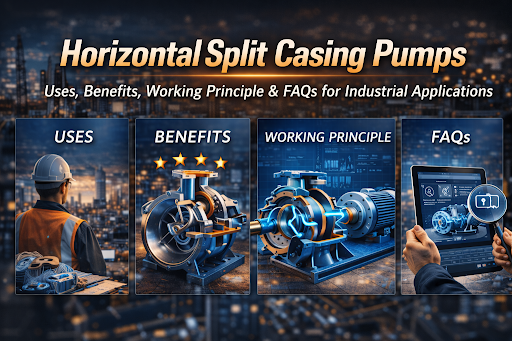
Horizontal Split Casing Pumps: Uses, Benefits, Working Principle & FAQs for Industrial Applications

Horizontal Split Casing Pumps

In high demand industrial environments, pumping systems must deliver consistent performance, high efficiency, and minimal breakdown. This is where horizontal split casing pumps play a critical role.

Known for their robust construction and ability to handle large flow rates with stable operation, these pumps are widely used across industries such as water supply, HVAC, fire protection, and power generation.

For businesses actively searching for horizontal split casing pumps Mumbai, understanding their design, working, and advantages is essential for making the right investment.

What Are Horizontal Split Casing Pumps?

Horizontal split casing pumps are centrifugal pumps featuring a casing that is split horizontally along the shaft centreline. This allows easy access to internal components like the impeller, shaft, and bearings without disturbing the piping system.

Core Components:

  • Double suction impeller 
  • Pump shaft 
  • Bearings & seals 
  • Split casing (upper & lower halves) 

Working Principle

These pumps operate on the centrifugal force principle:

  • Fluid enters the pump through the suction nozzle 
  • The double suction impeller draws water from both sides 
  • Centrifugal force increases fluid velocity 
  • The volute casing converts velocity into pressure 
  • High-pressure fluid exits through the discharge nozzle 

This design ensures hydraulic balance, reducing axial thrust and improving efficiency.

Key Industrial Applications

1. Municipal & Industrial Water Supply

  • Bulk water transfer 
  • Distribution networks 
  • Water treatment plants 

2. HVAC Systems

  • Chilled water circulation 
  • Cooling towers 
  • District cooling systems 

3. Fire Fighting Systems

  • Hydrant systems 
  • Sprinkler systems 
  • High-capacity emergency water supply 

4. Power Plants

  • Cooling water circulation 
  • Boiler feed auxiliary support 

5. Industrial & Process Applications

  • Refineries 
  • Chemical plants 
  • Manufacturing units 

Key Benefits of Horizontal Split Casing Pumps

1. High Efficiency & Energy Savings

The double suction impeller reduces losses and improves efficiency, making these pumps ideal for continuous-duty applications.

2. Easy Maintenance

The top casing can be removed without disturbing the motor or piping, leading to quick inspection and reduced downtime.

3. Long Operational Life

Balanced hydraulic forces reduce wear on bearings and seals, enhancing durability.

4. High Flow Capability

Perfect for applications requiring large volumes of water at moderate heads.

5. Low Vibration & Noise

Ensures stable and smooth operation, even under heavy-duty conditions.

Why Industries Prefer Horizontal Split Casing Pumps in Mumbai

Mumbai’s industrial landscape demands uninterrupted operations and reliable infrastructure. Businesses looking for horizontal split casing pumps in Mumbai benefit from:

  • Proven performance in demanding environments 
  • Availability of skilled service support 
  • Faster spare parts accessibility 
  • Custom-engineered solutions for varied industries 

Selection Criteria: How to Choose the Right Pump

Before selecting a pump, evaluate:

  • Flow rate (m³/hr) 
  • Head (meters) 
  • Type of fluid (clean, corrosive, temperature) 
  • Efficiency requirements 
  • Installation space & alignment 
  • Maintenance accessibility 

Frequently Asked Questions (FAQs)

1. What is the difference between single suction and double suction pumps?

Single suction pumps draw fluid from one side of the impeller, while double suction pumps draw from both sides, offering:

  • Higher flow capacity 
  • Better hydraulic balance 
  • Reduced axial thrust 

2. Why are horizontal split casing pumps preferred for fire fighting systems?

Because they offer:

  • High reliability 
  • Large flow rates 
  • Easy maintenance during emergencies 
  • Compliance with fire safety standards 

3. Are horizontal split casing pumps energy efficient?

Yes. Their hydraulically balanced design and optimized impeller reduce energy losses, making them highly efficient for long-duration operations.

4. What maintenance is required?

Routine maintenance includes:

  • Bearing lubrication 
  • Seal inspection 
  • Alignment checks 
  • Periodic performance monitoring 

5. Can these pumps handle dirty or chemical fluids?

They are primarily designed for clean or slightly contaminated liquids, but with proper material selection, they can handle certain chemicals.

6. What is the typical lifespan of these pumps?

With proper maintenance, horizontal split casing pumps can operate efficiently for 15–25 years or more.

7. How do I select the right horizontal split casing pumps in Mumbai?

Work with a trusted supplier who offers:

  • Application engineering support 
  • Proper pump sizing 
  • After-sales service 
  • Genuine spare parts availability 

Horizontal split casing pumps are a cornerstone of industrial fluid handling systems, offering unmatched efficiency, reliability, and ease of maintenance.

For industries exploring horizontal split casing pumps Mumbai, investing in the right solution ensures:

  • Operational efficiency
  • Reduced downtime
  • Long-term cost savings

Need help selecting the right pump for your HVAC or water system? Connect with our experts for the right solution.

Email: marketing@vempl.co.in

Solar Plant Design Impact on ROI

Solar Plant Design Impact

When a solar plant delivers less energy than projected, the problem typically starts at the design stage, not with the equipment or weather. While many businesses focus on module quality and inverter brands, the real difference between a profitable solar installation and a disappointing one often lies in design decisions made months before commissioning. Understanding how design choices affect your returns helps ensure your solar investment performs as expected.

Tilt Angle, Orientation, and Shading: The Foundation of Energy Yield

Module orientation and tilt angle determine how much sunlight your panels capture throughout the year. A deviation of just 10-15 degrees from the optimal angle can reduce annual energy generation by 5-8%. In regions like Mumbai, the ideal tilt is typically between 18-20 degrees, but many installations simply follow the roof slope without proper analysis.

Shading is equally critical. Even partial shading on a few modules can create significant mismatch losses across entire strings. Parapet walls, nearby structures, or rooftop equipment that seem minor during site visits can cast shadows during peak generation hours. A thorough shading analysis considering seasonal sun paths protects your energy yield and prevents localised hotspots that accelerate module degradation.

Module and Inverter Selection: Matching Technology to Application

Choosing the right modules goes beyond wattage ratings. Temperature coefficients, degradation rates, and warranty terms directly affect long-term performance. Modules with lower temperature coefficients maintain better efficiency in hot climates, protecting your returns over 25 years.

Inverter selection requires matching capacity, MPPT (Maximum Power Point Tracking) ranges and efficiency curves to your specific plant design. Oversized inverters waste capital while undersized units cause clipping losses during peak generation. The DC-to-AC ratio must be optimised through simulation based on your site’s irradiance profile, not generic rules of thumb.

Understanding PR and CUF: Measuring Design Quality

Performance Ratio (PR) and Capacity Utilisation Factor (CUF) are the metrics that separate well-designed plants from average ones.

PR measures how much of the theoretically available solar energy your plant converts into usable electricity. A well-designed plant typically achieves 75-82% PR, accounting for real-world losses like soiling, temperature, inverter efficiency, and cable losses. Poor design choices in cable sizing, string configuration or cooling can drop PR by 10-15 percentage points, directly reducing your returns.

CUF indicates how much energy your plant generates compared to its rated capacity over a year. While CUF depends partly on location, design factors like orientation, shading management and inverter sizing significantly influence it. Higher CUF means more units generated per kilowatt installed, directly improving your payback period.

The Direct Link Between Design Quality and ROI

Every percentage point of energy yield lost due to design flaws translates into reduced revenue over the plant’s lifetime. On a 100 kW installation, a 10% yield loss can mean lakhs in lost income over 25 years.

Quality design from a reliable solar EPC company ensures your plant meets projected generation targets from day one. Proper cable sizing, earthing design, string configuration and monitoring integration might seem like engineering details, but they determine whether your solar investment delivers expected returns or becomes a source of ongoing disappointment.

Professional solar energy consulting services evaluate these design elements upfront, reducing uncertainty and protecting your investment through engineering discipline rather than optimistic assumptions.

A high-performing solar plant is the outcome of careful design, not just quality hardware. As a trusted solar EPC company in Mumbai, VEMC combines rigorous engineering, quality components and practical operations considerations to maximise performance ratio and ROI. 

To discuss your project, contact us on +91 8976951701, +91 9819907445, 022 43117133 or email marketing@vemc.co.in.

Frequently Asked Questions

1. What is a good Performance Ratio for a solar plant?

 A well-designed solar plant typically achieves 75-82% PR, accounting for real-world losses like temperature, soiling, and inverter efficiency.

2. How does shading affect solar panel performance?

 Even partial shading on a few modules can create significant mismatch losses across entire strings, reducing overall energy generation and causing localised hotspots.

3. What is the ideal tilt angle for solar panels in Mumbai?

 The optimal tilt angle in Mumbai is typically between 18-20 degrees to maximise annual solar energy capture.

4. Why is inverter sizing critical for ROI?

 Oversized inverters waste capital while undersized units cause clipping losses during peak generation, both directly reducing your returns.

5. How long does it take to recover investment in a commercial solar plant?

 With proper design and execution, commercial solar plants typically achieve payback in 4-6 years, depending on tariff rates and energy consumption patterns.