

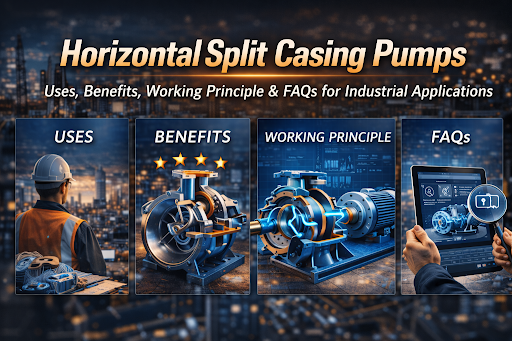
In high demand industrial environments, pumping systems must deliver consistent performance, high efficiency, and minimal breakdown. This is where horizontal split casing pumps play a critical role.
Known for their robust construction and ability to handle large flow rates with stable operation, these pumps are widely used across industries such as water supply, HVAC, fire protection, and power generation.
For businesses actively searching for horizontal split casing pumps Mumbai, understanding their design, working, and advantages is essential for making the right investment.
What Are Horizontal Split Casing Pumps?
Horizontal split casing pumps are centrifugal pumps featuring a casing that is split horizontally along the shaft centreline. This allows easy access to internal components like the impeller, shaft, and bearings without disturbing the piping system.
Core Components:
- Double suction impeller
- Pump shaft
- Bearings & seals
- Split casing (upper & lower halves)
Working Principle
These pumps operate on the centrifugal force principle:
- Fluid enters the pump through the suction nozzle
- The double suction impeller draws water from both sides
- Centrifugal force increases fluid velocity
- The volute casing converts velocity into pressure
- High-pressure fluid exits through the discharge nozzle
This design ensures hydraulic balance, reducing axial thrust and improving efficiency.
Key Industrial Applications
1. Municipal & Industrial Water Supply
- Bulk water transfer
- Distribution networks
- Water treatment plants
2. HVAC Systems
- Chilled water circulation
- Cooling towers
- District cooling systems
3. Fire Fighting Systems
- Hydrant systems
- Sprinkler systems
- High-capacity emergency water supply
4. Power Plants
- Cooling water circulation
- Boiler feed auxiliary support
5. Industrial & Process Applications
- Refineries
- Chemical plants
- Manufacturing units
Key Benefits of Horizontal Split Casing Pumps
1. High Efficiency & Energy Savings
The double suction impeller reduces losses and improves efficiency, making these pumps ideal for continuous-duty applications.
2. Easy Maintenance
The top casing can be removed without disturbing the motor or piping, leading to quick inspection and reduced downtime.
3. Long Operational Life
Balanced hydraulic forces reduce wear on bearings and seals, enhancing durability.
4. High Flow Capability
Perfect for applications requiring large volumes of water at moderate heads.
5. Low Vibration & Noise
Ensures stable and smooth operation, even under heavy-duty conditions.
Why Industries Prefer Horizontal Split Casing Pumps in Mumbai
Mumbai’s industrial landscape demands uninterrupted operations and reliable infrastructure. Businesses looking for horizontal split casing pumps in Mumbai benefit from:
- Proven performance in demanding environments
- Availability of skilled service support
- Faster spare parts accessibility
- Custom-engineered solutions for varied industries
Selection Criteria: How to Choose the Right Pump
Before selecting a pump, evaluate:
- Flow rate (m³/hr)
- Head (meters)
- Type of fluid (clean, corrosive, temperature)
- Efficiency requirements
- Installation space & alignment
- Maintenance accessibility
Frequently Asked Questions (FAQs)
1. What is the difference between single suction and double suction pumps?
Single suction pumps draw fluid from one side of the impeller, while double suction pumps draw from both sides, offering:
- Higher flow capacity
- Better hydraulic balance
- Reduced axial thrust
2. Why are horizontal split casing pumps preferred for fire fighting systems?
Because they offer:
- High reliability
- Large flow rates
- Easy maintenance during emergencies
- Compliance with fire safety standards
3. Are horizontal split casing pumps energy efficient?
Yes. Their hydraulically balanced design and optimized impeller reduce energy losses, making them highly efficient for long-duration operations.
4. What maintenance is required?
Routine maintenance includes:
- Bearing lubrication
- Seal inspection
- Alignment checks
- Periodic performance monitoring
5. Can these pumps handle dirty or chemical fluids?
They are primarily designed for clean or slightly contaminated liquids, but with proper material selection, they can handle certain chemicals.
6. What is the typical lifespan of these pumps?
With proper maintenance, horizontal split casing pumps can operate efficiently for 15–25 years or more.
7. How do I select the right horizontal split casing pumps in Mumbai?
Work with a trusted supplier who offers:
- Application engineering support
- Proper pump sizing
- After-sales service
- Genuine spare parts availability
Horizontal split casing pumps are a cornerstone of industrial fluid handling systems, offering unmatched efficiency, reliability, and ease of maintenance.
For industries exploring horizontal split casing pumps Mumbai, investing in the right solution ensures:
- Operational efficiency
- Reduced downtime
- Long-term cost savings
Need help selecting the right pump for your HVAC or water system? Connect with our experts for the right solution.
Email: marketing@vempl.co.in