

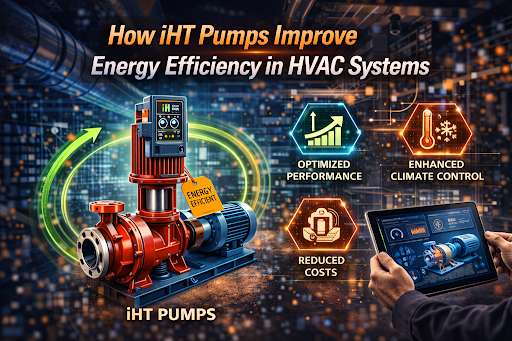
How iHT Pumps Improve Energy Efficiency in HVAC Systems
HVAC (Heating, Ventilation, and Air Conditioning) systems account for nearly 40% of energy consumption in commercial buildings. Pumps circulating chilled or hot water through these systems play a critical role in overall efficiency. However, many installations rely on pumps that run inefficiently, consuming far more power than necessary. This is where iHT (intelligent Hydro Technology) pumps make a difference, delivering energy savings through smarter design and operation.
Understanding BEP and Its Impact on Energy Consumption
Every pump has a Best Efficiency Point (BEP), which is the specific flow and head combination where it operates most efficiently. At BEP, the pump delivers maximum output with minimum energy input and mechanical stress. Operating away from BEP increases power consumption, generates heat and accelerates wear on components like bearings and seals.
In HVAC applications where pumps run continuously, even small deviations from BEP translate into significant annual energy waste. iHT pumps are designed to operate closer to BEP across varying load conditions, ensuring optimal performance and reduced electricity bills.
Matching Pump Curve to System Curve
A common mistake in HVAC design is selecting pumps without considering the system curve, which represents the relationship between flow rate and the pressure required to overcome friction losses in pipes, valves, and coils. When the pump curve does not match the system curve properly, the pump either overworks or underperforms. Oversized pumps waste energy by generating excess pressure that must be throttled using valves. Undersized pumps struggle to meet demand, causing comfort issues and equipment strain. iHT pumps address this through precise curve matching, ensuring the pump operates efficiently at the actual system operating point rather than at a theoretical maximum.
Variable Flow and VFD Integration
HVAC systems rarely operate at full load throughout the day. Cooling and heating demands fluctuate based on occupancy, weather, and time of use. Traditional fixed-speed pumps cannot adapt to these changes, running at full speed even when partial flow is adequate. This is where Variable Frequency Drives (VFDs) integrated with iHT pumps deliver substantial savings.
VFDs adjust motor speed in response to real-time demand, reducing power consumption dramatically. Since pump power is proportional to the cube of speed, even a 20% reduction in speed can cut energy use by nearly 50%. iHT pumps with built-in VFD compatibility provide seamless variable flow operation, maintaining system pressure while consuming only the energy required for actual load conditions.
The Cost of Wrong Pump Selection
Selecting the wrong pump for an HVAC application creates long-term inefficiencies that extend beyond energy waste. Oversized pumps lead to short cycling, excessive vibration, and premature failure of mechanical seals. Undersized pumps cause temperature control issues, reduced comfort and higher maintenance costs due to continuous high-load operation.
Incorrect pump selection also affects the entire system, causing valve wear, noise, and unstable pressure control. Consulting experienced industrial water pumps in Mumbai specialists ensure that pumps are sized correctly from the start, avoiding costly corrections later. VEMC, a trusted name among water pump dealers, offers expert guidance in selecting and integrating iHT pump solutions tailored to your HVAC requirements.
Contact us at +91 8976951701, +91 9819907445, 022 43117133, or email marketing@vemc.co.in to explore energy-efficient pumping solutions for your facility.
Frequently Asked Questions
1. What is BEP and why does it matter for HVAC pumps?
BEP (Best Efficiency Point) is where a pump delivers maximum output with minimum energy use and mechanical stress.
2. How much energy can VFDs save on HVAC pumping systems?
VFDs can reduce energy consumption by up to 50% in variable-load applications by adjusting motor speed to match demand.
3. What happens if my HVAC pump is oversized?
Oversized pumps waste energy, cause excessive vibration and lead to premature seal failure and higher maintenance costs.
4. Can iHT pumps work with existing HVAC systems?
Yes, iHT pumps integrate easily into existing systems during upgrades or retrofits with proper sizing and curve matching.
5. How do I know if my pump is operating efficiently?
High energy bills, frequent maintenance, unstable pressure, noise or inconsistent temperature control indicate inefficient operation.