

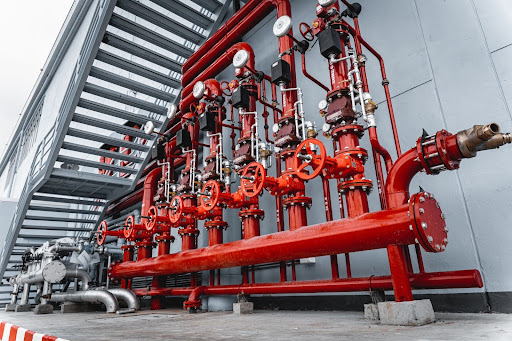
In fire safety and industrial equipment selection, you may often see specifications like “UL/FM approved” or “UL/FM listed” especially for pumps, valves, controllers, and other fire protection products. But what exactly does this mean, why does it matter, and how does it impact compliance, safety, and performance of your fire protection systems?
1. What Does UL/FM Approval Mean?
UL stands for Underwriters Laboratories, a globally recognized third party safety certification organization. When a product is UL Listed, it has been tested and evaluated against stringent safety and performance standards for that application.
FM refers to FM Approvals, part of FM Global (Factory Mutual) a major industrial insurer and technical testing body. FM certification focuses on loss prevention and operational reliability under real world conditions, beyond just safety.
When a product carries both UL and FM approvals (commonly noted as UL/FM approved or UL Listed/FM Approved), it means the product has passed coordinated testing protocols from both institutions, combining safety integrity with proven performance reliability.
2. What UL/FM Approval Applies to
The most common use of UL/FM approvals in industrial contexts is for fire protection equipment, including but not limited to:
- Fire pumps (electric, diesel or jockey)
- Fire pump controllers
- Valves, hydrants, hose systems
- Fire suppression system components
- Structural elements tested to NFPA standards
These products undergo rigorous testing procedures defined by UL standards (like UL 448 for fire pumps) and FM test protocols (e.g., FM 1319).
3. Why UL/FM Approval Matters
Assurance of Safety & Performance
UL certification confirms that a product meets internationally recognized performance and safety criteria. FM approval adds another layer of assurance by evaluating performance under simulated real world emergency conditions including rough use and stress scenarios.
Compliance with Codes & Standards
Many fire protection codes, including the National Fire Protection Association (NFPA) standards, require equipment to be UL Listed or FM Approved or preferably both for design compliance in high risk installations.
Preferred by Authorities & Insurers
Regulatory bodies, insurance companies, and project engineers often insist on UL/FM certified equipment for commercial buildings, high rise structures, oil & gas facilities, manufacturing plants, warehouses, airports, and hospitals.
Lower Risk and Operational Reliability
FM approved equipment is tested for durability and loss prevention, which can contribute to better uptime, fewer failures in emergencies, and in some cases lower insurance premiums due to reduced risk.
4. Difference Between UL and FM Approvals
| Aspect | UL (Underwriters Laboratories) | FM (Factory Mutual) |
| Primary Focus | Safety and standardized performance | Real-world reliability and loss prevention |
| Testing | Controlled lab-based performance testing | Simulation of operational conditions and failures |
| Insurance Impact | Optional but desired | Highly preferred by insurers |
| Industry Usage | Widely accepted globally | Strong acceptance in commercial/industrial fire systems |
When equipment carries both certifications, it offers dual assurance a stronger indication of quality and reliability than either certification alone.
5. Common Questions About UL/FM Approval
- Is UL/FM approval mandatory?
It depends on local fire safety codes, insurance requirements, and project specifications. In many critical and commercial applications, it is required or strongly recommended.
- Does UL/FM certification cover all fire-safety components?
No. UL/FM certification is product specific. Each product must be certified individually for the application it’s used in.
- What standards do UL/FM use for fire pumps?
For fire pumps, UL uses standards like UL 448, and FM has standards like FM 1319 and related performance requirements referenced with NFPA 20.
6. UL/FM Approval in Fire Pump Systems – Essential Takeaways
- Fire pumps that are UL/FM approved are tested for both safety (UL) and loss-prevention operational reliability (FM).
- These certifications make pumps suitable for commercial, industrial, and high risk installations.
- Products that are not UL/FM certified may meet basic standards but lack the confidence and acceptance required by many codes and insurers.
Conclusion
UL/FM approval is more than just a label it’s a symbol of internationally recognized safety, performance, and reliability for fire protection equipment. Whether you are specifying fire pumps, controllers, valves, or hydrant systems, choosing UL/FM-certified components ensures compliance with global standards, meets code and insurance expectations, and significantly improves fire safety outcomes.