

For many industrial users, compressor overheating feels like an unavoidable challenge—especially in Indian summers. But in most cases, the root cause traces back to two fundamentals: duty cycle and ambient de-rating. Understanding these can significantly improve the reliability and life of your compressed air system.
What Is Duty Cycle and Why It Matters?
A compressor’s duty cycle indicates the percentage of time it can safely run within a 10-minute period. For example, a 60% duty cycle means the machine can operate for six minutes and must rest for four. 75% models can run longer, and 100% duty cycle compressors are designed for continuous operation. Selecting the right duty cycle ensures the compressor matches your application’s load profile without pushing it beyond its limits.
How Exceeding Duty Cycle Leads to Overheating
When a compressor runs longer than its rated duty cycle, internal components—motor windings, valves, pistons, and oil—absorb more heat than they can dissipate. This cumulative heat pushes temperatures to unsafe levels, causing shutdowns, frequent tripping, reduced efficiency, or premature failure.
Air-Cooled vs Water-Cooled Compressors Under Heat Load
Air-cooled compressors rely on ambient air to remove heat. Their performance drops sharply in hot, poorly ventilated rooms. Water-cooled units, on the other hand, rely on a cooling water circuit, making them more stable under heavy and continuous loads. However, they require proper water quality and flow to maintain performance.
Ambient Temperature and De-Rating Curves
Every compressor has a de-rating curve—a chart that shows how performance reduces as ambient temperature rises. A compressor rated for 45°C may lose significant efficiency at 50°C. Ignoring this results in overheating, higher discharge temperatures, and lower air output.
Restricted Ventilation: The Silent Heat Multiplier
Even the best compressors overheat in cramped rooms, corners, or enclosures with inadequate airflow. Hot air recirculates, raising inlet temperatures and amplifiering thermal load. Poor ducting, blocked louvers, or misaligned cooling fans worsen the problem.
Signs of Compressor Thermal Stress
Be alert for:
- High discharge temperature
- Frequent thermal tripping
- Oil thinning or discoloration
- Drop in air output
- Burning smell or unusual vibrations
These are direct indicators that the compressor is operating beyond safe limits.
Sizing a Compressor for Indian Summers (40–50°C)
Work with experienced compressor dealers to select a model sized with proper de-rating at peak seasonal temperatures. This may mean choosing a higher kW model or a 100% duty-cycle design, especially for continuous or process-critical operations.
Best Practices for Ventilation and Heat Extraction
- Ensure forced ventilation or exhaust fans.
- Separate hot and cold air paths.
- Avoid placing compressors against walls.
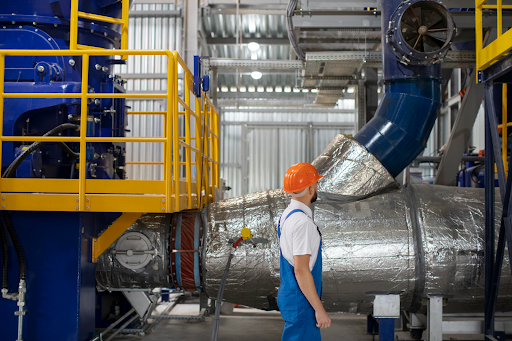
- Use insulated ducting for air-cooled units.
- Maintain clean coolers and filters.
When to Consider Backup or Alternate Compressors
If your demand frequently pushes a unit to full load, consider load-sharing through multiple compressors. This reduces thermal stress and builds redundancy during peak production.
Whether you’re planning an upgrade or troubleshooting overheating issues, consulting a trusted air compressor dealer like VEMC can help you size, design, and install the most reliable setup for long-term performance. Get in touch today, contact us: +91 8976951701, +91 9819907445, 022 43117133, or email us at marketing@vemc.co.in.